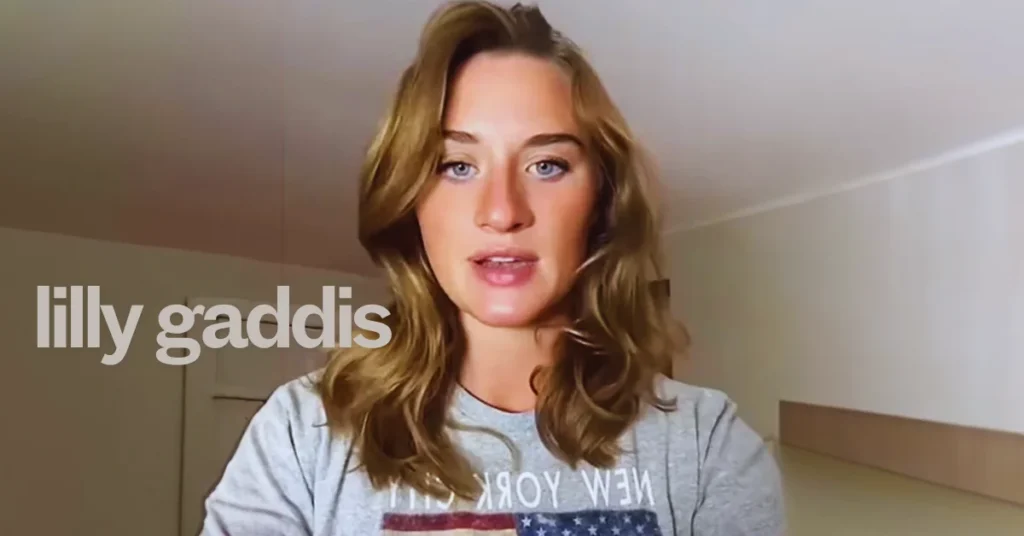
She was making a pasta salad. That is how Lilly Gaddis — from humble beginnings to stardom and then infamy — first appeared in most people’s feeds. A casual cooking video. Relaxed camera angle. Southern accent. And then a single sentence that made the clip travel to every corner of the internet in under 48 hours.
If you searched her name and landed here, you probably want the full picture — not a rushed take or a pile-on. This article gives you that. The background, the moment, the fallout, and the harder questions about what viral fame actually does to a person.
What Most Articles About Lilly Gaddis Get Wrong
Most coverage of Lilly Gaddis falls into one of two camps. The first treats her purely as a scandal — a clip, a reaction, and nothing else. The second overcorrects and frames the story as a misunderstood creator being cancelled by an angry mob.
Neither version is complete. This article tries to do something different: give you the actual timeline, her background before the viral moment, and a clear-eyed account of how the internet responded — without turning it into a morality lecture or a defence.
I am also honest about what I do not know. Her private life is genuinely sparse online, and I am not going to fill that gap with speculation.
Lilly Gaddis Before the Viral Moment: What We Know
Lilly Gaddis is a content creator from North Carolina. Before her name became a trending search term, she had built a modest following on TikTok through lifestyle and cooking content — the kind of account that grows slowly and quietly, built on recipe videos and relatable Southern humour.
She was not chasing a massive audience. Her content had a specific texture: low-production, personality-forward, the kind of creator people follow because they feel like they know the person.
That authenticity — the same quality that built her early audience — is also what made her viral moment land so hard. Because it did not feel scripted. It felt like an unguarded reveal.
Lilly Gaddis: Key Timeline
| Period | What Happened | Platform Impact |
| Pre-2023 | Building lifestyle and cooking content on TikTok in North Carolina | Small, loyal following |
| Mid-2023 | Cooking video goes viral for the wrong reasons — a racial slur captured on camera | Millions of views, rapid spread across platforms |
| Shortly after | Video clipped, shared widely, and covered by major media outlets | Trending nationally on Twitter/X and TikTok |
| Weeks later | Gaddis responds publicly; some followers defend, many condemn | Account activity shifts; follower count volatile |
| 2024–2025 | Attempts at continued content creation; reduced mainstream visibility | Smaller, niche audience remains |
The Moment That Changed Everything for Lilly Gaddis
In 2023, a cooking video posted by Lilly Gaddis circulated widely after she used a racial slur while talking to the camera. The clip spread fast — first within Black TikTok communities, then to mainstream feeds, then to news outlets.
The word in question was not ambiguous. It was not a slip of the tongue in a high-pressure moment. It appeared in a casual, relaxed sentence — which is what made the response so intense. The context suggested familiarity, not accident.
TikTok removed the original video. But in 2023, on a platform where duets and screen recordings travel faster than takedowns, removal meant almost nothing. The clip lived on in reaction videos, commentary threads, and news articles.
How the Internet Responded to Lilly Gaddis
The response split almost immediately into recognisable camps. That split tells you something important about how these moments work online.
Condemnation
The majority of mainstream reaction was swift condemnation. Creators, commentators, and ordinary users responded with anger. Several called for brand partners and platforms to cut ties. The clip was framed — correctly, by most measures — as straightforward racism caught on camera.
Defence and Pushback
A smaller, louder faction pushed back. Some framed the backlash as cancel culture. Others argued the clip was taken out of context — though the context available in the full video did not substantially change what was said.
This defence cluster is worth noting not because it was right, but because it reflects a pattern I have noticed in nearly every viral controversy: a segment of the internet will rally around almost any figure if the rallying feels like resistance to a perceived mob.
Public Response Breakdown
| Response Type | Key Argument | Where It Appeared |
| Condemnation | The slur was unambiguous; platforming should have consequences | Mainstream TikTok, Twitter/X, news media |
| Contextual defence | The full clip shows more nuance (contested claim) | Some comment sections, right-leaning media |
| Platform critique | TikTok’s removal was too slow; algorithmic amplification enabled spread | Tech journalism, media critics |
| Silence | Many creators said nothing to avoid controversy | Across platforms |
What Lilly Gaddis: From Humble Beginnings to Stardom Actually Teaches Us
Here is what I think gets missed in most coverage of Lilly Gaddis: the story is not really about one creator. It is about what happens when algorithmic reach collides with unguarded speech.
TikTok’s For You Page is designed to surface authentic, unpolished moments. That design works brilliantly for discovering recipes, humour, and genuine connection. It also means that moments of casual prejudice — things said in the kitchen as easily as any other sentence — now travel globally in hours.
Lilly Gaddis came from humble beginnings and built something on TikTok through consistency and personality. That same unfiltered quality is what destroyed the version of that something she had built. The lesson is not that creators should be more polished. It is that values — not just presentation — are visible on camera.
How to Evaluate Viral Controversy Stories Yourself
These cases follow a pattern. If you want to form your own view rather than absorbing someone else’s, here is a checklist I use.
First: watch the original clip, not the reaction clip. Reaction videos are edited for emotion. The original is your evidence.
Second: check whether the defence argument requires you to believe something is missing from the clip. If the defence depends entirely on unseen context, that is a weak defence.
Third: separate the question of what happened from the question of what consequences are appropriate. These are different conversations that often get merged.
Fourth: notice who is amplifying which version and why. Media coverage of viral controversies is not neutral. Neither are the recommendation algorithms that decide what you see.
What Actually Matters for Creators and Viewers Right Now
If you are a content creator — even a small one — the Lilly Gaddis story is a practical case study in something that no brand deal workshop will teach you.
The camera does not care whether you intended to perform. It captures what is actually there. Casual language, offhand remarks, and unguarded moments are all part of the record the moment you hit record.
That is not a call for sanitised, performative content. It is a call for alignment — between what you say on camera and what you actually believe.
For viewers, the more useful skill is not deciding whether to cancel someone. It is learning to read these moments critically: what is actually in front of you, what is being added by the framing, and what the response itself reveals about where the conversation really is.
GENERAL NOTICE: Everything in this article is for information only. I have done my best to keep it accurate, but I make no guarantees. Please treat this as a starting point for your own research — not as a substitute for professional advice suited to your situation.