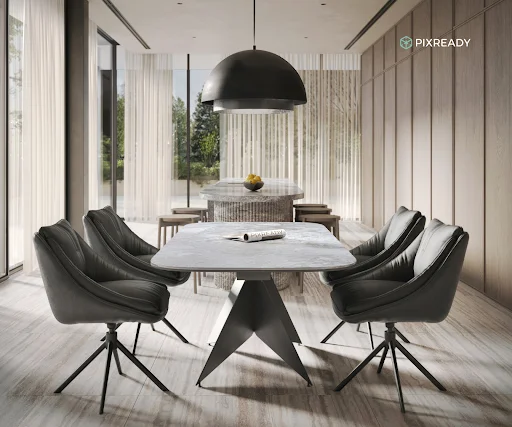
The design of an office directly influences how employees perform, interact, and feel at work. A well-planned workspace can improve focus, encourage collaboration, and boost overall productivity. However, designing a productive office requires careful consideration of layout, lighting, ergonomics, and aesthetics. This is where a 3D visualization company becomes invaluable. By providing realistic and interactive visualizations, these companies allow businesses to make informed design decisions that create workspaces tailored to both employee comfort and operational efficiency.
Understanding the Link Between Office Design and Productivity
Employee productivity is affected by numerous environmental factors, including lighting, space layout, acoustics, and furniture design. Poorly designed offices can lead to distractions, fatigue, and even stress, while well-designed offices foster focus, collaboration, and creativity. Yet, translating ideas from 2D drawings into real-life spaces often leads to gaps in planning. Without a clear visual representation, it is easy to misjudge how a workspace will function or how employees will move and interact within it.
This is where a 3D visualization company offers a critical advantage. By creating accurate three-dimensional models, companies can explore different layouts, materials, and lighting schemes before construction begins. Visualizing the office ahead of time ensures that every element is purposeful, functional, and aligned with the goal of increasing employee productivity.
Office Exterior Visualization for a Strong First Impression
The design of an office begins even before employees step inside. The exterior of a building sets expectations, conveys the company’s identity, and contributes to employee satisfaction. A 3D visualization company can provide detailed office exterior visualization, allowing businesses to see how the building interacts with its environment, natural light, landscaping, and architectural features.
This type of visualization enables decision-makers to evaluate how entrances, windows, and outdoor spaces will affect both functionality and aesthetics. It also allows companies to ensure their brand identity is reflected in the building’s design. By using office exterior visualization, businesses can create spaces that not only attract clients and visitors but also enhance employee pride and motivation. First impressions matter, and a well-visualized exterior can set the tone for a productive, engaging work environment.
Commercial Interior Rendering for Functional and Inspiring Workspaces
While the exterior creates the initial impression, the interior determines the day-to-day productivity of employees. Commercial interior rendering provided by 3D visualization companies allows businesses to explore office interiors in full detail before construction begins. This includes layouts, lighting, furniture placement, acoustics, and material finishes.
With commercial interior rendering, companies can simulate how different spaces will feel and function. Open-plan areas, quiet zones, meeting rooms, and collaborative spaces can be optimized for productivity. Lighting can be tested to ensure comfort and energy efficiency, while furniture and material choices can be evaluated for ergonomics and aesthetic appeal. This approach reduces costly design mistakes, accelerates approval processes, and ensures the final office environment supports employee performance.
Greenery is another great way to breathe life into these digital models and create a more inviting atmosphere for future occupants. Office managers often reach out to services that provide custom plant designs for interior decoration to ensure that the chosen flora complements the specific lighting and humidity levels of the workspace. This integration of biophilic elements not only enhances the visual appeal of the office but also significantly improves indoor air quality and employee well-being. By visualizing these natural features during the rendering phase, businesses can cultivate a vibrant, sustainable environment that leaves a lasting impression on clients and staff alike.
Enhancing Collaboration and Employee Well-Being
Modern office design emphasizes collaboration, comfort, and flexibility. A 3D visualization company helps plan spaces that promote interaction without compromising focus. By visualizing furniture arrangements, breakout areas, and communal zones, companies can create environments where employees feel encouraged to collaborate naturally.
Additionally, office design has a direct impact on employee well-being. Proper ventilation, natural light, noise management, and ergonomic workstations are all elements that contribute to health and productivity. A visualization company allows businesses to test different configurations, ensuring that the office environment is both functional and comfortable for everyone.
Reflect Company Culture and Brand Identity
An office should visually communicate a company’s values, mission, and culture. When employees feel connected to their workplace, engagement and motivation increase. Branding elements such as logos, brand colors, custom graphics, and tailored design features help create a sense of belonging.
A strong visual identity also leaves a positive impression on clients, partners, and potential hires. The office becomes a physical representation of the company’s professionalism and vision.
Cost Efficiency and Risk Reduction
Investing in office construction and design is significant, and mistakes can be costly. Traditional design processes often rely on assumptions, which can result in costly changes after construction has begun. Using a 3D visualization company mitigates this risk.
By providing realistic renderings of both the office exterior visualization and commercial interior rendering, companies can spot potential problems early. Layout inefficiencies, lighting issues, or aesthetic mismatches can be corrected before any physical work starts. This proactive approach saves both time and money while ensuring the final office supports productivity goals.
Flexibility for Future Growth
Workplaces are constantly evolving. Businesses grow, teams change, and work styles shift. A 3D visualization company helps future-proof office design by modeling flexible layouts and scalable solutions. Movable partitions, modular furniture, and multipurpose spaces can be planned and visualized in 3D, ensuring the office adapts to future needs without costly renovations.
Visualization also allows companies to experiment with multiple scenarios, finding layouts that balance collaborative areas, quiet zones, and social spaces. This adaptability ensures that the office remains productive over time, regardless of changes in workforce size or workflow requirements.
Conclusion
Designing an office for more employee productivity requires a holistic approach that combines comfort, functionality, aesthetics, and technology. From lighting and ergonomics to collaboration spaces and branding, every design choice influences how employees feel and perform at work. By leveraging professional planning tools — especially 3D visualization services for office exteriors and commercial interiors — businesses can create work environments that not only look impressive but actively support focus, creativity, and success.