We have all been there. The “Budget Meeting.”
You are a director, a creative lead, or just a dreamer with a script in your hand. You pitch the opening scene: A drone shot sweeping over a cyberpunk Tokyo at golden hour, diving through the clouds, and landing on a reflection in a rain puddle Sora 2.
The client (or your wallet) looks at you and says, “We can’t afford a helicopter. We can’t afford the CGI team. We can’t afford the travel. Here is a link to Shutter. Find something close enough.”
The Problem: “Close enough” is the death of art.
For years, the gap between what we can imagine and what we can afford to film has been the canyon where great ideas go to die. We compromise. We cut scenes. We settle for generic stock footage that looks like everyone else’s generic stock footage.
The Agitation: It is heartbreaking to have a cinematic universe in your head but only a smartphone budget in your pocket. You know exactly how light should hit the water. You know the texture of the fabric. But you are trapped by the logistics of the physical world.
The Solution: The physics of industry has just changed.
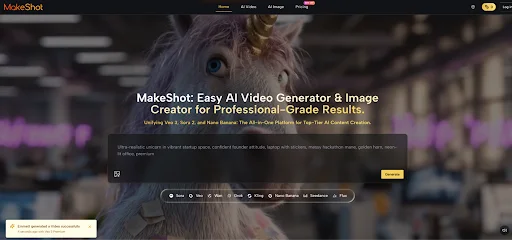
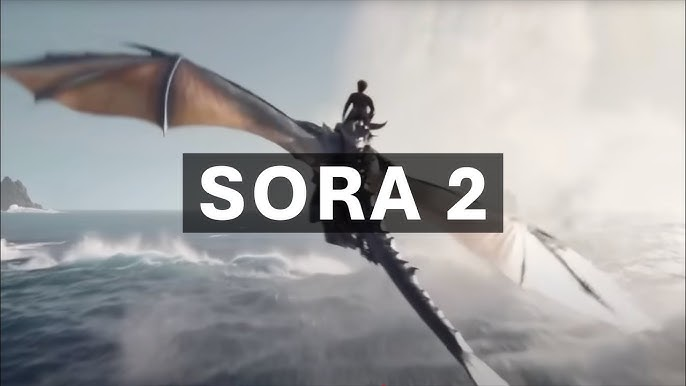
I recently spent a week pushing the limits of Sora 2, the latest iteration of the model that started the AI video craze. Accessed through the unified dashboard at MakeShot AI, this isn’t just an upgrade; it is a paradigm shift. It is the moment where the “Virtual Camera” finally caught up to the physical one.
The “Glitch” is Gone: A New Era of Physics
When the first version of Sora launched, it was magic, but it was “dream logic” magic. A cat might grow a fifth leg; a chair might melt into the floor. It was impressive, but you couldn’t use it for a serious commercial.
Sora 2 is different. It has gone to film school.
I decided to test its understanding of Object Permanence—the idea that things continue to exist even when you can’t see them.
The “Coffee Shop” Test
I prompted a complex scene: A camera tracking a waiter walking through a crowded Parisian cafe, passing behind pillars and other patrons, carrying a tray of crystal glasses.
- The Old AI: Would have morphed the waiter into a pillar, or the glasses would have turned into liquid.
- The Sora 2 Reality: The waiter walked behind the pillar and emerged on the other side—still the same waiter, still holding the same glasses. The light refracted through the crystal correctly. The reflection of the street appeared in the window.
It wasn’t just generating pixels; it was simulating a 3D environment. It understood depth, occlusion, and light transport. It felt less like “generation” and more like “capture.”
Discover related content that builds stronger understanding and clarity.
Why Sora 2 is the “Cinematographer’s Engine”
If you are a visual storyteller, you care about details that most tech reviews ignore. You care about texture and atmosphere.
Sora 2 seems to have been trained on cinema lenses, not just internet images.
1. The “Bokeh” Effect
One of the hardest things to fake is depth of field. Sora 2 nails the creamy, out-of-focus background (bokeh) that you usually need an $80,000 ARRI camera and a prime lens to achieve. It separates the subject from the background with surgical precision.
2. Material Fidelity
I prompted a close-up of an elderly woman’s hands knitting a wool sweater by firelight.
The result was startling. You could see the fraying fibers of the wool. You could see the translucency of the skin (subsurface scattering) where the firelight hit her fingers. It captured the tactile nature of the scene.
3. Complex Camera Moves
Most AI models panic if you ask for a “Dolly Zoom” or a “Rack Focus.” Sora 2 handles these cinematic languages fluently. You can direct the camera movement as if you were operating a gimbal.
The Comparison: Stock Footage vs. The “God Mode” Camera
To understand the value proposition, we have to look at the alternative: Traditional Stock Footage libraries.
| Feature | Premium Stock Footage | Sora 1 (Legacy) | Sora 2 (Current) |
| Cost | $50 – $500 per clip | Low | Low |
| Customization | Zero. You get what you buy. | High, but chaotic. | Infinite & Precise. |
| Physics/Realism | 100% (It’s real) | 60% (Dreamlike) | 95% (Cinematic) |
| Continuity | N/A | Poor | High (Object Permanence) |
| Lighting Control | None. | Random. | Director Control. |
| The “Wow” Factor | Low (Seen it before) | High | Uncanny |
The Takeaway: Stock footage forces you to write your script around the video you can find. Sora 2 allows you to generate the video around the script you wrote.
Strategic Use Cases: When to Deploy Sora 2
While platforms like MakeShot.ai offer various engines for different needs (like the speedy Nano Banana for social trends), Sora 2 is your “Heavy Artillery.” It is designed for specific, high-stakes moments.
1. The “Impossible” Establishing Shot
You are making a short film set in 1920s New York. You cannot afford to shut down a street and hire 500 extras in vintage costumes.
- Sora 2 Strategy: Generate a 10-second drone shot of 5th Avenue in 1925. Use it to set the scene before cutting to your interior shots (which you filmed for real). It adds “Production Value” instantly.
2. Luxury Product B-Roll
You are advertising a high-end watch or perfume. You need shots of liquid gold swirling, or ice cracking in slow motion.
- Sora 2 Strategy: These macro shots are incredibly expensive to film practically (requiring high-speed robotic arms). Sora 2 excels at fluid dynamics and light refraction.
3. The Mood Board / Pitch Deck
You are pitching a movie to Netflix. Instead of showing them static images, show them the movie.
- Sora 2 Strategy: Generate the trailer before you even hire the cast. Sell the atmosphere.
The Learning Curve: Directing, Not Prompting
Using Sora 2 feels less like typing a search query and more like giving instructions to a crew.
Because the model is so powerful, vague prompts yield vague results. To get that “Professional-Grade” output, you need to speak the language of film.
- Don’t say: “A scary forest.”
- Do say: “Low angle, wide shot, misty pine forest at twilight, volumetric blue fog, cinematic lighting, slow camera push-in, 35mm film grain.
The model responds to technical terminology. It knows what “Golden Hour” looks like. It knows what “Cyberpunk” implies. It respects the vocabulary of the director.
Conclusion: The Democratization of the Blockbuster
For a century, “Cinematic Quality” was a walled garden. It was protected by gatekeepers—money, equipment, and access. If you didn’t have the budget, you didn’t get the shot.
Make Shot AI has torn down that wall.
It has handed the keys to the kingdom to anyone with a vision and a keyboard. It allows a solo creator in a bedroom to produce visuals that rival a Marvel movie. It allows a small agency to pitch like a global firm.
We are no longer limited by what we can film. We are only limited by what we can describe.
So, go back to that script you shelved because it was “too expensive.” Open the dashboard. Type in the scene. And watch your million-dollar shot render in minutes.
The camera is no longer a physical object. It is a prompt.
Open the door to more knowledge—explore further content now at 2A Magazine.