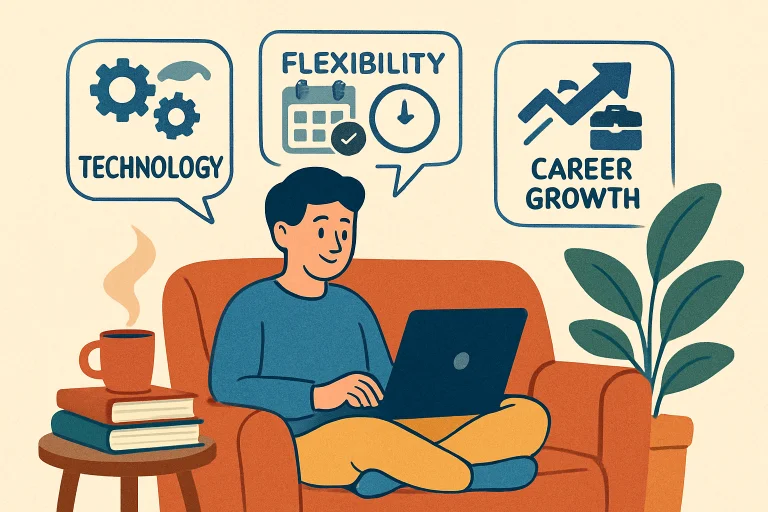
In today’s rapidly evolving employment landscape, the ways we learn and build our careers are changing. Online degrees are at the center of this transformation, giving learners the flexibility to pursue their education around work, family, and other commitments. For adult students and working professionals, digital education means it is now easier than ever to access a range of high-quality online master’s programs Florida from the comfort of their homes or offices.
The growth of digital education isn’t just about convenience. It broadens opportunities, enabling many to pursue online degrees from diverse institutions and boosting career potential. Once met with skepticism, online education now gains respect from employers who see it as equivalent to traditional degrees, especially with technological advances and reputable programs. This shift also boosts workforce skills, as many courses are tailored with industry input to match market needs, helping graduates stay relevant and workplace-ready.
Flexibility and Accessibility
Flexibility is one of the most significant benefits of pursuing an online degree. Students no longer need to uproot their lives or relocate in order to obtain a quality education. Instead, they can complete assignments, participate in discussions, and view lectures on their own schedules. Asynchronous learning modules accommodate different time zones and lifestyles, opening education to working parents, caregivers, military members, and individuals who would find campus attendance a hardship.
The accessibility of digital programs encourages lifelong learning and skills development. Students can return to school to reskill or upskill while maintaining full-time employment or handling other obligations. Some programs also offer rolling admissions and several start dates throughout the year, which further increases options and convenience for applicants with non-traditional timelines.
Employer Perception of Online Degrees
Employer attitudes toward online education are improving, with a focus on institution reputation and accreditation. Well-respected universities now offer online programs meeting the same standards as traditional ones. In fields like business, computer science, and healthcare, online credentials are viewed as signs of adaptability and dedication. Successful online students show self-motivation and communication skills, which employers value.
Technological Advancements in Online Education
The quality and experience of online education have improved dramatically with new technologies. Today’s learners benefit from interactive learning platforms, real-time collaboration tools, and digital simulations. Virtual labs bring science, engineering, and medical education to life, while discussion forums and group projects foster community and teamwork.
Emerging digital tools are also making personalized learning more accessible. Artificial intelligence and learning analytics help instructors identify where students might need more support or challenge, so lessons and content can be adjusted for each learner. This kind of adaptive learning improves outcomes and engagement for a wide range of students.
Cost-Effectiveness of Online Learning
Another major factor driving the popularity of online degrees is cost. While tuition rates vary, many online programs are more affordable than their traditional counterparts. Students realize savings by not paying for campus housing or daily commuting. Digital textbooks and multimedia resources are often more cost-effective than print materials, helping students manage their budgets.
Spending less time traveling or rearranging work schedules for in-person classes also makes it possible for many to continue earning a living while they study. This combination of affordability and flexibility means online programs are giving more people access to higher education than ever before. According to CNBC, these lower costs can help reduce student debt and financial strain.
Diverse Program Offerings
Online degrees are no longer limited to a small subset of fields. Today, you can find virtual programs in technology, healthcare, business, the social sciences, the arts, and more. Many universities partner with leading employers to ensure that online curricula are designed with job-ready skills and current industry demands in mind.
This diversity means that learners can pursue highly specialized credentials or switch to entirely new sectors, all while advancing in their current roles or exploring personal interests. The wide range of offerings also promotes a lifelong learning mindset, as professionals can return to complete certificates, micro-credentials, or full degrees as their careers evolve.
Challenges and Considerations
Despite these advantages, online learning is not right for every student or field. It requires a high degree of self-motivation, reliable access to technology, and the ability to manage time effectively. Some professions, particularly those needing hands-on clinical practice or lab work, may still require traditional, in-person experience that cannot be fully replicated online.
It is important for students to evaluate program accreditation, curriculum relevance, and fit for their personal learning styles before committing to an online degree. Researching alumni outcomes and reading student reviews can provide additional insight into whether a specific program meets their needs.
Future Trends in Online Education
Online education will continue to evolve with personalized, tech-driven experiences such as AI, augmented reality, and blockchain, improving engagement, assessment, and credential verification. Partnerships between employers and educational institutions are expected to grow, creating more career-focused online programs. These degrees play a key role in workforce development by offering flexibility, reducing costs, and aligning with job-market needs, thereby transforming how people achieve career goals in a changing world.
Connect the dots: Why this topic is only half the story at 2A Magazine.