
Picture this: a human being who doesn’t just survive in extreme environments — they’re built for them. Resistant to altitude sickness at 15,000 feet. Immune to certain viral strains. Cognitively sharper by design. This isn’t a Marvel origin story. This is GMHIW — Genetically Modified Humans in the Wild — and it’s one of the most quietly explosive ideas circulating in biotech circles right now.
The concept sounds bold. Honestly, it is. But as of 2026, the science behind GMHIW is no longer purely theoretical.
So What Exactly Is GMHIW?
GMHIW stands for Genetically Modified Humans in the Wild — a term that describes genetically edited humans living, functioning, and reproducing outside of controlled clinical environments. That last part matters more than people realize.
Traditional gene therapy happens in hospitals. It targets sick patients. It’s tightly regulated and closely monitored. GMHIW flips that model entirely. It asks: what if genetically modified traits moved into the general population — not as medicine, but as adaptation?
Think of it as the difference between a genetically modified crop in a greenhouse versus one planted in open fields, cross-pollinating freely. The science is similar. The implications are completely different.
According to geneticists, GMHIW scenarios become possible when heritable edits — changes made to germline cells, meaning eggs or sperm — pass to future generations. One edited human becomes two. Two become twenty. In a few generations, a modified trait could spread through a community without anyone tracking it.
How Does the Science Actually Work?
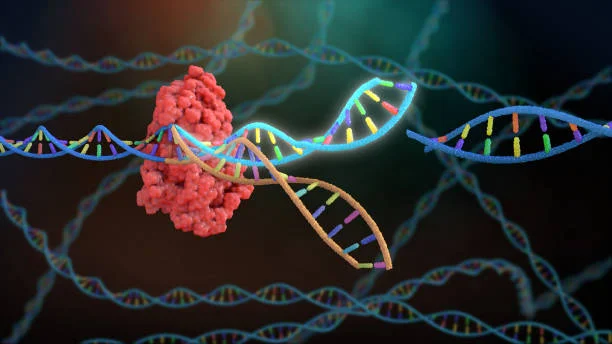
At the heart of GMHIW is CRISPR-Cas9, the gene-editing tool that won the 2020 Nobel Prize in Chemistry. CRISPR lets scientists cut and rewrite DNA with surgical precision — like a “find and replace” function for the human genome.
Here’s a simplified breakdown of how GMHIW-relevant editing works:
- Target identification: Scientists locate the specific gene responsible for a trait — disease resistance, for example, or enhanced oxygen processing.
- Editing the germline: Changes are made to embryonic or reproductive cells, so the edit carries into every cell of a person born from them.
- Expression in the wild: The edited individual grows up, lives a normal life, and potentially passes the trait to their children naturally.
That third step is what defines GMHIW. The modification isn’t locked in a lab. It walks out the door.
Dr. He Jiankui’s controversial 2018 experiment — where he reportedly edited twin girls’ genomes to resist HIV — is widely considered the first real-world brush with this concept. He was imprisoned. But the door he cracked open didn’t close.
Why Is GMHIW Stirring Serious Debate?
Here’s where it gets complicated — and genuinely fascinating.
Supporters of GMHIW research argue the benefits could be staggering. Imagine populations in malaria-endemic regions with built-in resistance to Plasmodium falciparum. Or communities near high-radiation zones with DNA repair mechanisms too efficient to develop cancer at normal rates.
Industry experts suggest that if GMHIW is approached responsibly, it could eliminate entire categories of hereditary disease within two or three generations. That’s not hyperbole. That’s population-level math.
But critics aren’t wrong either. The concerns break into three broad categories:
- Consent: Future children can’t agree to the edits made before their birth. The ethics of choosing traits for someone who doesn’t exist yet is genuinely unsettled.
- Inequality: Who gets access to beneficial modifications? If GMHIW enhancements become available only to the wealthy, the result isn’t human evolution — it’s human stratification.
- Ecological risk: Heritable edits, once released into a population, can’t be recalled. Unlike a drug you can stop taking, a genetic trait spreads on its own timeline.
According to a report from Nature’s bioethics journal, the scientific community remains sharply divided — not on whether GMHIW is technically possible, but on whether it should ever be deliberately pursued outside tightly controlled trials.
Real-World Scenarios Where GMHIW Is Already Relevant
You might think GMHIW is purely future-facing. But there are real-world cases that edge right up to this boundary.
The Tonga climate scenario: Researchers have discussed modifying populations in Pacific island nations to better tolerate increased heat and reduced fresh water — adaptations driven by climate change. No such modification has been approved, but the conversation is happening at academic levels.
Inherited blindness reversal: Families carrying RPE65 mutations — a gene that causes childhood blindness — have participated in gene therapy trials. Some results are heritable. Parents who received therapy have asked whether their future children would inherit the correction. In some cases, early data says yes.
High-altitude populations: The Tibetan plateau’s residents already carry natural variants of the EPAS1 gene that help them process oxygen efficiently. Some scientists have speculated about replicating this advantage artificially — a GMHIW application in environments where unmodified humans genuinely struggle.
These aren’t fringe ideas. They’re real research threads.
The Regulatory Landscape in 2026
Right now, no country formally permits heritable human germline editing for non-therapeutic purposes. Most national bioethics frameworks, including those in the EU and US, explicitly ban it.
But “banned” and “not happening” are not the same thing.
Enforcement is patchy. Some jurisdictions lack the technical capacity to detect germline editing. And as the cost of CRISPR tools drops — basic gene-editing kits now cost a fraction of what they did five years ago — the barrier to informal experimentation keeps shrinking.
In early 2026, the WHO’s advisory committee on human genome editing flagged GMHIW-adjacent scenarios as requiring urgent international framework development. The current patchwork of national regulations, they noted, isn’t built for a world where edited traits move across borders through migration and reproduction.
Who Should Be Paying Attention to GMHIW?
Honestly? Everyone. But a few groups more than others.
Policymakers need updated frameworks before technology outpaces law — which it already is. Medical ethicists are working overtime to build consent models for a world where the patient being treated hasn’t been born yet. Parents and families carrying serious hereditary conditions are watching this space with real hope — and real anxiety. And tech and pharma investors are quietly tracking GMHIW-adjacent biotech companies as a long-horizon opportunity.
GMHIW isn’t a niche academic debate. It’s a question about what kind of species we want to be — and whether that’s even a decision one generation has the right to make for all the ones that follow.
What’s Next for GMHIW Research?
The next five years will likely define whether GMHIW becomes a legitimate medical frontier or remains a controlled taboo. A few developments to watch:
- International treaty negotiations on germline editing are expected to accelerate through 2026 and 2027.
- AI-assisted gene mapping is making it faster than ever to identify which edits produce which heritable outcomes — compressing the research timeline significantly.
- Private biotech firms in jurisdictions with looser regulation are already filing patents adjacent to heritable modification technology.
The honest truth? GMHIW is coming whether society decides it’s ready or not. The question isn’t if — it’s how carefully.

Conclusion
GMHIW — Genetically Modified Humans in the Wild — sits at the sharpest intersection of science, ethics, and human identity. It’s not a sci-fi concept anymore. It’s a real research trajectory with real regulatory gaps and real stakes. As tools like CRISPR become cheaper and more accessible, the window for thoughtful, proactive governance is narrowing. The conversation around GMHIW needs to move from academic journals to public discourse — fast. Because the alternative is a world where the most consequential edits to our species happen quietly, without consent, and without oversight.
FAQs
Q1: Is GMHIW legal anywhere in the world?
No country currently permits deliberate heritable germline editing in humans outside of tightly controlled medical trials. GMHIW as a concept sits outside approved regulatory frameworks in most jurisdictions as of 2026.
Q2: How is GMHIW different from regular gene therapy?
Standard gene therapy modifies somatic (body) cells in a single individual and doesn’t pass to offspring. GMHIW involves germline edits that are heritable — meaning they can spread through generations naturally.
Q3: Could GMHIW be used to eliminate hereditary diseases?
In theory, yes. If a disease-causing gene variant is edited out of a germline, future generations could be born free of that condition. But the ethical, safety, and equity concerns around doing this deliberately outside clinical settings remain deeply unresolved.
Q4: What is the biggest risk of GMHIW spreading into the general population?
Irreversibility. Unlike most medical interventions, heritable genetic edits can’t be recalled. Once a modified trait enters a breeding population, it follows its own biological path independent of human oversight.
Q5: How does CRISPR relate to GMHIW?
CRISPR-Cas9 is the primary tool that makes precision germline editing technically feasible. It’s the underlying technology that enables the kind of targeted, heritable modifications the GMHIW concept describes.