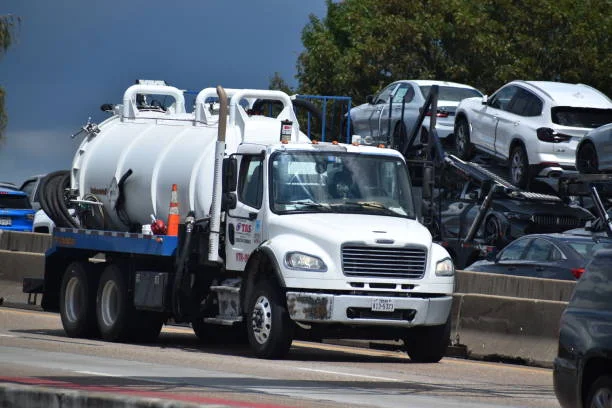
The highways surrounding Houston are some of the busiest freight corridors in the nation. According to recent TxDOT reports, Texas consistently leads the nation in commercial vehicle collisions, with over 38,000 crashes involving commercial motor vehicles reported statewide in recent years. A significant portion of these incidents occur on major Houston arteries like I-10 and I-45. When you are involved in a collision with a semi-truck or 18-wheeler truck accident, the sheer size of the vehicles often leads to chaotic scenes and severe damage. In the confusion, crucial details can disappear quickly.
Immediate evidence gathering is the single most important factor in establishing what happened during a crash. Unlike standard car accidents, commercial trucking companies dispatch rapid response teams to the scene within hours. They are there to protect their interests. You must be equally proactive in documenting the scene to ensure an accurate investigation later. This guide outlines the specific types of proof you need to secure before the vehicles are moved or the weather changes.
Importance of Acting Quickly at the Scene
Time is critical after a commercial truck collision. Evidence is fragile. Skid marks fade, debris gets swept away, and witnesses leave the area. You have a limited window, often just 30 to 60 minutes, to capture the scene as it truly is.
Houston weather can also complicate matters. A sudden downpour during hurricane season can wash away fluid trails or tire marks that indicate braking patterns. Furthermore, construction zones, which are common across the city, change daily. If you do not document the signage or lane closures present at the moment of impact, that information might be gone by the next day. The goal is to freeze that moment in time so that anyone reviewing the case later sees exactly what you saw.
A thread that echoes this thought—dive in and see where it leads you next.
Photos and Videos of the Scene
Visual documentation is your most powerful tool. Do not rely on your memory. Adrenaline affects how we recall traumatic events, often making memories unreliable. Your smartphone is the best asset you have for creating an objective record of the truck accident in Houston.
What Photos Should You Take?
When photographing the scene, think like an investigator. You need to capture the broad context as well as the minute details.
- Wide-angle shots: Take photos from four different angles (front, back, left, right) showing the entire crash site. Include all vehicles involved in their resting positions relative to the lanes.
- Traffic indicators: Photograph traffic lights, stop signs, yield signs, and speed limit markers. If there are construction cones or temporary barriers, document their placement.
- Road conditions: capture skid marks, gouges in the pavement, shattered glass, and vehicle debris. If the road is wet or there are potholes, make sure those are clearly visible.
- Truck identification: This is vital. Photograph the truck’s license plate, the license plate on the trailer (they are often different), and any DOT numbers or company logos on the cab door.
- Driver documentation: If safe to do so, ask to photograph the driver’s commercial license, insurance card, and registration.
Video walkthroughs are also incredibly helpful. Start recording and slowly walk around the scene, narrating what you see. This captures the spatial relationship between vehicles and roadside elements that photos might miss.
Witness Information and Statements
Witnesses are often the only neutral parties in a crash scenario. Their accounts can confirm your version of events, especially if there is a dispute about traffic signal colors or lane changes. However, witnesses rarely stay long. They want to get home or to work, especially given the heavy traffic congestion often found on loops like 610 or Beltway 8.
You must approach them immediately. Ask for their names, phone numbers, and email addresses. If they are willing, ask them to record a brief voice memo on your phone describing what they saw while it is fresh in their minds. A witness stating “the truck ran the red light” on a recording minutes after the crash is powerful evidence. Even if they did not see the impact but heard braking or saw the truck speeding beforehand, their input is valuable. Consulting a Houston personal injury lawyer can help interpret this evidence effectively later, but your job on the scene is simply to collect the raw contact data.
Vehicle and Damage Details
The damage to the vehicles tells a physics-based story of the crash. Commercial trucks are heavy, and the impact points can prove speed and angle of collision. A Houston truck crash often results in catastrophic damage that requires detailed inspection.
Focus on capturing specific damage areas:
- Point of impact: Photograph where the vehicles first touched. Look for paint transfer (paint from one vehicle on the other).
- Extent of crush: Show how far the metal is bent or crushed. This helps experts calculate the force of impact.
- Interior damage: If airbags deployed or the steering column collapsed, take pictures of the interior of your vehicle.
- Truck condition: Look for bald tires, broken lights, or rusted parts on the truck. If you see something that looks poorly maintained, photograph it.
[Image: Close-up photo of a semi-truck tire with worn tread on wet asphalt.]
Electronic and Documentation Evidence
Commercial trucks are regulated heavily by federal and state laws. They generate a paper trail and electronic data that passenger cars do not. While you cannot physically grab this evidence at the scene, you need to know it exists so you can mention it to the police officer.
What Digital Evidence is Available?
- Electronic Logging Device (ELD): This tracks the driver’s hours of service. It proves if the driver was tired or violated rest break rules.
- Event Data Recorder (Black Box): Similar to an airplane’s black box, this records speed, braking, and engine RPMs just seconds before a crash.
- Dashcam footage: Many fleets have forward-facing and driver-facing cameras.
- Traffic cameras: Houston has extensive traffic monitoring on highways like US-59. Note the time and location so footage can be requested later.
Police Reports and Official Records
In any Houston truck crash, calling 911 is mandatory if there are injuries or significant damage. The responding officer, likely from the Houston Police Department or Harris County Sheriff’s Office, will create an official crash report.
This report is a foundational piece of evidence. It contains the officer’s initial determination of fault, diagrams of the scene, and citations issued. Be sure to provide the officer with a clear, factual account of what happened. Do not speculate. If you do not know the answer to a question, say “I don’t know.”
Ask the officer for the “incident number” or “service number” before they leave. This will allow you to obtain the full report once it is processed. This document often serves as the primary reference point for insurance adjusters.
Medical Records and Injury Documentation
Your physical condition is evidence. What to do after truck accident Houston residents often ask is whether to see a doctor if they feel fine. The answer is always yes. Adrenaline can mask pain from serious internal injuries or whiplash.
Seeking immediate medical attention creates a link between the accident and your injuries. If you wait a week to see a doctor, it becomes harder to prove the crash caused your pain.
Key Medical Evidence to Keep:
- Discharge summaries from the emergency room or urgent care.
- Diagnostic images like X-rays, CT scans, or MRIs.
- Pharmacy receipts for prescriptions.
- A daily pain journal documenting your recovery process and limitations.
Take photos of visible injuries like bruises, cuts, or swelling as they heal. These visual records demonstrate the severity of the trauma over time.
Common Mistakes to Avoid When Gathering Evidence
Even with good intentions, it is easy to make errors that compromise your evidence after truck accident collection. Avoid these common pitfalls to ensure your documentation remains useful.
Failing to Preserve Evidence Properly
One major mistake is not preserving evidence correctly. For example, photographs or documents could be misplaced, deleted, or damaged, making them unusable. Always store both physical and digital copies securely, and consider backing up files in cloud storage to avoid accidental loss.
Delaying Evidence Collection
Time is critical when gathering evidence. Waiting too long to take photographs, collect witness statements, or obtain medical records can result in the loss of valuable information. Memories fade, physical evidence deteriorates, and opportunities to document injuries or damages may pass. Act promptly to ensure you gather everything while details remain fresh.
Not Seeking Professional Assistance
Attempting to manage evidence collection without professional guidance can lead to incomplete or inadmissible documentation. Consider consulting an experienced attorney who understands the legal requirements and can help you gather, organize, and present your evidence effectively. Their expertise can make a significant difference in building a strong case.
By avoiding these common mistakes, you can strengthen your claim and ensure that your evidence is as thorough and reliable as possible.
- Apologizing or admitting fault: Never say “I’m sorry” or “I didn’t see you.” These politeness markers can be twisted into admissions of liability.
- Moving vehicles prematurely: Unless you are blocking traffic and creating a safety hazard (or instructed by police), try to leave vehicles in place until photos are taken.
- Posting on social media: Do not post photos or discuss the accident on social platforms. Insurance investigators monitor these accounts to find inconsistencies in your story.
- Forgetting to back up files: Digital files can be corrupted or lost. Upload your photos and videos to a cloud service immediately.
- Ignoring minor details: Small things, like the weather or the type of footwear the truck driver was wearing (e.g., flip-flops), can sometimes be relevant.
Understanding Houston’s Unique Road Factors
Houston presents specific challenges that you should document if they contributed to the crash. The city is a major logistics hub with heavy port traffic coming from the Port of Houston. This means many trucks on the road are carrying heavy container loads, which affects braking distance.
If the accident happened near a port entry or in a construction zone on I-610, document the specific conditions. Was the lane width reduced? Was there gravel on the road? Were the construction signs confusing? These local factors are often critical in commercial truck collision evidence.
Additionally, Houston’s sudden rainstorms can create “hydroplaning” conditions. If weather was a factor, take a screenshot of a weather app showing the radar at the time of the crash. This serves as semi-truck accident proof that environmental conditions played a role.
Conclusion
Successfully handling the aftermath of a collision requires a cool head and a systematic approach. The evidence after truck accident collection process is about building a factual foundation that cannot be easily disputed. By gathering photos, witness contacts, and official documents immediately, you protect your ability to seek fair recovery.
Remember to prioritize safety above all else. Do not put yourself in danger to get a photo. However, once the scene is secure, acting swiftly to preserve proof is the most effective step you can take. Whether it is a minor collision or a major Houston 18-wheeler crash, the quality of evidence you gather in those first few hours often determines the outcome of the entire process. Stay alert, be thorough, and document everything.
Venture beyond this page—your curiosity deserves the next secret waiting at 2A Magazine.