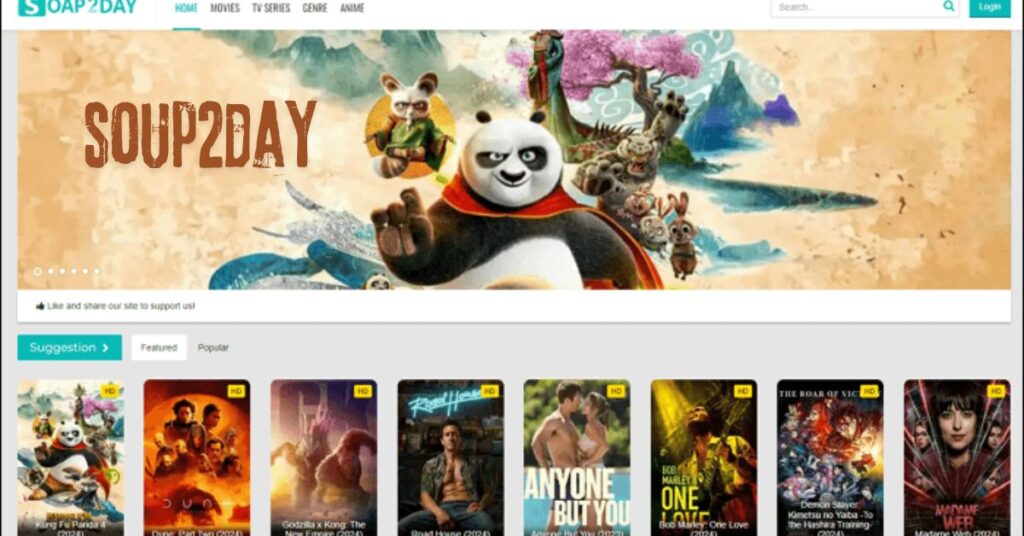
Picture this — it’s midnight, you want to watch a movie, and you don’t feel like paying for yet another subscription. Someone in a Reddit thread drops a link. You land on Soup2day. Thousands of titles, no sign-up, no payment. It feels almost too good to be true.
And honestly? That instinct is worth listening to.
Soup2day has been one of the most searched free streaming platforms in recent years. But what exactly is it, how does it work, and — most importantly — what are you actually risking when you use it? Let’s break it all down.
What Is Soup2day and Why Is Everyone Talking About It?
Soup2day is a free online streaming website that lets users watch movies, TV shows, and documentaries without creating an account or paying anything. The platform claims to offer access to over 10,000 movies and TV series in HD quality, presenting content through a simple interface with multiple playback options.
It’s often confused with (or compared to) Soap2Day — a similarly named platform. The two share nearly identical models: no login required, wide genre coverage, and zero subscription cost. Soup2day gained traction because it embraced what others ignored — accessibility, no sign-up barriers, and constant updates.
The appeal is obvious. With streaming subscription costs climbing and more people seeking alternatives, platforms like these attract millions of monthly visitors worldwide. But popularity doesn’t equal safety or legality, and that’s where things get complicated.
How Does Soup2day Actually Work?
Soup2day doesn’t produce or own any content. Instead, it works by aggregating video content from various third-party sources and presenting it through a single, clean interface. Users can browse categories, search for specific titles, and start streaming immediately.
Think of it like a search engine that only returns video results — except it doesn’t disclose where those videos are actually hosted, or whether the rights holders consented to the distribution.
Here’s what a typical visit looks like:
- You land on the site with no registration prompt
- You search for a title or browse by genre
- You click play and choose from multiple streaming servers
- You watch — usually interrupted by aggressive pop-up ads
The experience feels smooth on the surface. But underneath that clean interface, there’s a web of unverified video sources, third-party ad networks, and zero accountability if something goes wrong.
Is Soup2day Legal? The Honest Answer
This is the question most people have, and it deserves a direct answer: no, it’s not.
Soup2day does not own the rights to most of the content it hosts. By distributing copyrighted material without authorization, the platform violates intellectual property laws in many countries. Users who stream pirated content may also face legal consequences, depending on local regulations.
Accessing pirated content may violate copyright laws. Some regions penalize both content uploaders and viewers. ISPs may track or block access to illegal streaming sites, and users could receive warnings or notices depending on local regulations.
In practice, individual users are rarely prosecuted for watching content. But that doesn’t mean you’re invisible. Your ISP can see the traffic. Copyright enforcement agencies have gotten more aggressive. Authorities like the Alliance for Creativity and Entertainment (ACE) have continued shutting down similar platforms, and in 2025 alone, piracy traffic rose — but so did enforcement, leading to more site blocks and even user warnings from ISPs.
The legal grey area gets darker the deeper you go.
The Safety Risks Nobody Warns You About
Legal exposure aside, the security risks of using Soup2day are arguably more immediate.
Users expose themselves to malware, intrusive ads, phishing attempts, and potential legal consequences. Many clones and fake Soup2day sites continue to circulate, increasing the danger for unsuspecting visitors.
Specifically, here’s what you’re risking:
- Malware installs from pop-up redirects that mimic real download buttons
- Phishing forms disguised as login or verification pages
- Data tracking — browsing behavior, IP addresses, and device data sold to third parties
- Ransomware from copycat sites that look identical to the original
Because Soup2day doesn’t maintain official domains, dozens of fake copies exist. Some of these sites are specifically designed to harvest personal data or distribute ransomware.
Industry cybersecurity experts consistently flag free, unregulated streaming sites as among the highest-risk categories for consumer malware infection. As one digital safety researcher put it — “The content is free, but your data often isn’t.”
The Clone Problem: Which “Soup2day” Are You Even On?
Here’s something most casual users don’t realize. The original Soup2day has been shut down, and any site currently claiming to be Soup2day is likely a clone or scam.
Soup2day’s domains frequently go offline — often for extended periods — due to domain seizures and ISP blocks. These shutdowns create confusion, pushing many users toward imitation sites that are even riskier. The recurring emergence of copycat sites is no accident.
The clone problem makes an already risky platform exponentially more dangerous. You might think you’re on the “real” Soup2day, but you’re actually on a replica built to serve ads, steal data, or install tracking scripts. There’s no badge of authenticity. No customer support to call. No way to verify anything.
This is a fundamentally different risk profile from, say, accidentally clicking a bad ad on YouTube. With Soup2day clones, the entire site may be designed to compromise your device.
What Are the Better Alternatives in 2026?
The good news? You don’t actually have to choose between “pay a fortune” and “risk your device.” There are genuinely solid free, legal options available right now.
Platforms like Tubi, Pluto TV, and Crackle are among the safest, offering free, legal content supported by ads. Plex also offers a solid free tier with a surprisingly deep content library.
Here’s a quick comparison:
| Platform | Free? | Legal? | Ads? | Sign-up Required? |
|---|---|---|---|---|
| Tubi | Yes | Yes | Yes | Optional |
| Pluto TV | Yes | Yes | Yes | No |
| Crackle | Yes | Yes | Yes | Optional |
| Plex (free tier) | Yes | Yes | Yes | Yes |
| Soup2day | Yes | No | Aggressive | No |
The ad-supported legal platforms aren’t perfect — the content libraries are smaller than Netflix or Disney+. But they’re improving fast. Tubi, in particular, has dramatically expanded its catalog through 2025 and into 2026, now covering thousands of titles across genres.
According to the Motion Picture Association’s 2025 global content report, legal free streaming platforms have grown their combined user base by over 40% in two years, largely because they’re meeting the demand that piracy sites used to serve.
Who Typically Uses Soup2day — And Why It Matters
It’s worth understanding the typical Soup2day user, not to judge, but to understand why the problem persists.
Most users aren’t hardcore pirates. They’re people experiencing what’s sometimes called “subscription fatigue” — the exhaustion of paying for Netflix, Hulu, Disney+, HBO Max, Apple TV+, Paramount+, and still not finding what they want. With streaming prices rising and password-sharing crackdowns in 2025–2026, piracy surged — but legal options have improved too.
There’s also a significant access gap. In regions where major streaming platforms aren’t available or are prohibitively expensive, free streaming sites fill a real void. This doesn’t make it legal, but it explains the demand.
Supporting pirated content undermines creators, actors, and production teams who rely on legitimate platforms for revenue. Opting for legal alternatives ensures you contribute to the industry’s sustainability.
That’s not a lecture — it’s just context. When people know where their money goes (or doesn’t), they often make different decisions.
Conclusion
Soup2day is a fascinating case study in how the internet fills gaps that the entertainment industry creates. Free, instant, no-friction access to movies and TV shows — of course that’s appealing. The demand is real.
But as of 2026, using Soup2day means navigating a minefield of clones, security threats, legal exposure, and ethical questions — all for content that’s actually available legally for free elsewhere. Tubi, Pluto TV, and Crackle exist. They work. They don’t try to install malware on your laptop.
The smartest move isn’t to find a safer Soup2day mirror. It’s to stop searching for one. The legal free streaming space has matured enough that the trade-off simply isn’t worth it anymore.
FAQs
1. Is Soup2day still working in 2026?
The original platform has been shut down. Sites currently using the Soup2day name are clones or mirror sites — they may function temporarily, but they’re not official and carry significant safety risks.
2. Can you get in legal trouble for using Soup2day?
Potentially, yes. Streaming copyrighted content without authorization is illegal in many countries. While individual viewers are rarely prosecuted, ISPs can issue warnings and enforcement has increased in 2025–2026.
3. Is Soup2day the same as Soap2Day?
They’re different platforms with very similar names and nearly identical models. Both operate in legal grey areas, and both have faced shutdowns and domain changes. Don’t confuse one for the other — both carry risks.
4. What’s the safest free streaming alternative to Soup2day?
Tubi and Pluto TV are the most widely recommended legal, free, ad-supported alternatives. Both are available in multiple countries and require no payment.
5. Does using a VPN make Soup2day safe?
A VPN protects your IP address and can help with geo-restrictions, but it doesn’t eliminate malware risks from the site itself or make the activity legal. It’s a partial protective measure at best.