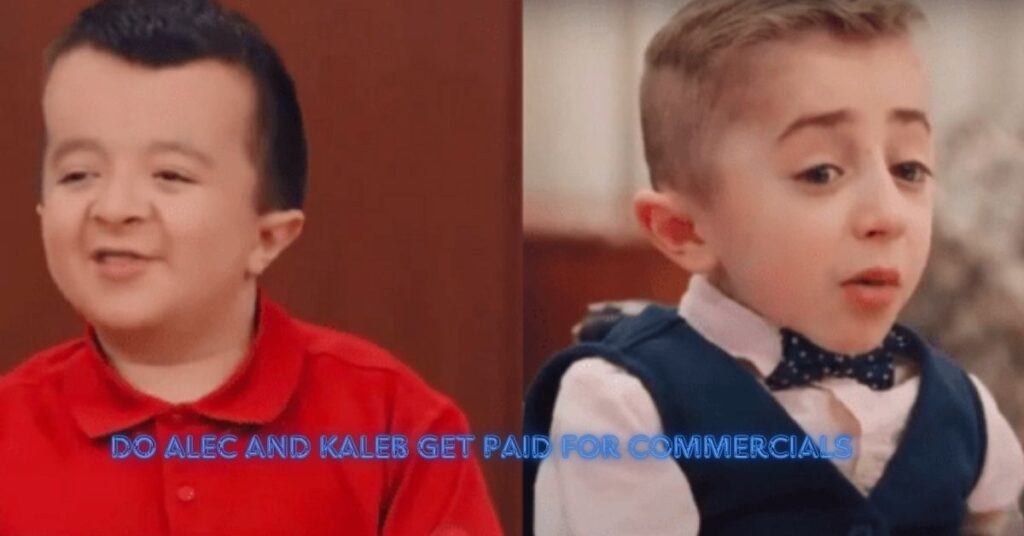
You’ve seen their smiles dozens of times during commercial breaks. Alec and Kaleb — two young men in wheelchairs, laughing, living fully, and asking you to support Shriners Hospitals for Children. They feel genuine because they are genuine. But a question keeps coming up across social media and search engines in 2026: do Alec and Kaleb get paid for commercials? The short answer is yes — but the full story is far more layered than a simple paycheck.
Who Are Alec and Kaleb, Really?
Alec Cabacungan and Kaleb-Wolf De Melo Torres were both born with Osteogenesis Imperfecta — a rare, inherited disorder commonly known as Brittle Bone Disease, which causes fragile bones that break easily. Their conditions brought them to Shriners Hospitals for Children as patients, and over time, their charisma and courage transformed them into something much bigger: the faces of a global nonprofit.
Because of Brittle Bone Disease, Alec has broken his bones more than 60 times and has undergone several surgeries at Shriners Hospitals for Children. Kaleb, meanwhile, has broken over 200 bones and has had 11 operations in his lifetime at the same institution.
That’s not a backstory — that’s a battle. And they’ve fought it with remarkable grace.
Alec Cabacungan was born on May 8, 2002, in Oak Park, Illinois, making him 22 years old as of 2025. Kaleb-Wolf De Melo Torres was born on June 28, 2009, in Winnipeg, Manitoba, Canada. Despite the age gap, these two have built one of the most recognizable on-screen partnerships in nonprofit advertising history.
So, Do Alec and Kaleb Get Paid for Commercials?
Here’s where it gets interesting. The specific details regarding whether Alec Cabacungan and Kaleb-Wolf De Melo Torres receive payment for their appearances in Shriners Hospitals for Children commercials are not publicly disclosed. Shriners hasn’t released official pay figures, and neither Alec nor Kaleb has addressed it directly in interviews.
But the evidence strongly suggests they do receive some form of compensation.
Many sources confirm that yes, they do get paid. Like any child actors, they receive compensation for their work — however, their earnings aren’t disclosed to the public. Typically, a child actor payment structure includes a base salary, residuals, and performance bonuses, depending on the commercial’s reach and duration.
Think of it this way: even nonprofit organizations run media productions. Camera crews, directors, editors — everyone on set gets paid. It would be unusual for the stars of those productions to work entirely for free.
Nonprofit advocacy commonly includes providing travel reimbursement, stipends, and honorariums for appearances, especially when individuals actively participate in media productions and promotional activities.
The Compensation Picture: More Than Just a Shriners Check
What most people don’t realize is that the Shriners commercials are only part of how Alec and Kaleb earn income. Their fame opened doors well beyond nonprofit ads.
Alec and Kaleb have also worked as brand ambassadors for renowned companies like McDonald’s, Pepsi, and Nike. The two are paid to appear in charity commercials and advertise products for big brands.
That’s a significant shift. When you’re partnering with Nike and McDonald’s, you’re operating in a completely different pay bracket than a hospital PSA. These are full commercial partnerships with some of the highest-spending advertisers on the planet.
Because they are so inspirational and because they have such a huge celebrity following and online presence, the two are very highly sought after in the world of marketing and advertising.
Industry experts in nonprofit communications often note that patient ambassadors who cross over into mainstream brand deals are treated as professional talent — complete with standard advertising contracts, residuals, and appearance fees. Alec and Kaleb appear to fit squarely in that category.
What Are They Actually Worth?
Exact figures are hard to pin down, and you should take all net worth estimates with a grain of salt. But the numbers floating around aren’t small.
Here’s what various sources suggest:
- Kaleb’s net worth is alleged to be $7 million, while Alec is estimated to be worth between $1 million and $5 million.
- Kaleb’s earnings come from multiple streams including Shriners commercials, brand sponsorships with Nike, McDonald’s, and Pepsi, as well as public speaking and family-managed investments.
- In addition to their initial pay, both young ambassadors reportedly have residual pay each time their commercials air on television or digital platforms.
Residuals are a big deal in the advertising world. A national commercial that airs repeatedly over months can generate significant ongoing income — passive earnings that keep accumulating long after the shoot wraps.
Does Nonprofit Status Change Anything?
A lot of people assume that because Shriners Hospitals for Children is a charity, nobody involved in its commercials sees any money. That assumption doesn’t hold up under scrutiny.
Shriners Hospitals for Children, as a nonprofit organization, typically doesn’t provide direct commercial payment to their patient ambassadors in the same way entertainment companies compensate performers. However, this doesn’t mean Alec and Kaleb receive nothing for their invaluable contributions.
Child labor laws add another layer. The entertainment industry maintains strict regulations governing child performers, especially those under 18. These arrangements often include specific protections for minors appearing in any form of media. Kaleb, who is still a teenager, would fall under these protections regardless of the organization’s nonprofit status.
According to SAG-AFTRA guidelines, commercial performers — union or not — are entitled to compensation for their time and likeness. Appearing on national television, whether for a charity or a corporation, is professional work.
Their Impact Goes Beyond the Numbers
It’s easy to get caught up in the money conversation, but the real story here is impact. According to Shriners’ reports, digital giving increased by over 22% after national ad placements. That’s a direct and measurable result of Alec and Kaleb’s presence.
Alec and Kaleb’s partnership with Shriners Hospitals for Children started as patients — but they soon became the voices of the organization, sharing their stories in commercials that reached millions. They didn’t just raise awareness for the hospital: they changed the way people saw disabilities. Tricklings
That kind of cultural shift doesn’t happen by accident. It happens because two people showed up authentically, over and over, and let the world see who they really are. According to disability advocacy researchers, authentic representation in mainstream media directly influences public perception — and donation behavior.
Life Beyond the Camera
Alec has continued building his life in impressive ways. His social media accounts continue to showcase his life from hospital patient to college graduate to White House intern. That trajectory says a lot about the platform these commercials built for him.
Kaleb, still a teenager, is around 16 years old and has already made a significant impact through his advocacy work. He frequently attends charity events, participates in interviews, and continues to inspire viewers across the country.
Both of them have used their visibility to redefine what it means to live fully with a disability. That’s not a talking point — it’s genuinely what they’ve done.
The Bottom Line
Do Alec and Kaleb get paid for commercials? Based on everything available, yes — they almost certainly do, across multiple income streams. The exact amounts remain confidential, as is standard in the advertising industry. But between Shriners appearances, brand deals, residuals, public speaking, and media partnerships, both have built real careers from their ambassadorial work.
Neither Alec Cabacungan nor Kaleb Wolf De Melo Torres has disclosed specific figures, and Shriners has never published official salary records. In short: yes, they probably get paid for their commercial work, but the amounts remain confidential.
What’s not confidential is their impact. And honestly, that might be worth more than any paycheck.
FAQs
Q1: Are Alec and Kaleb real patients at Shriners Hospitals?
Yes, absolutely. Both Alec Cabacungan and Kaleb-Wolf De Melo Torres have been patients at Shriners Hospitals for Children since childhood, receiving treatment for Osteogenesis Imperfecta (Brittle Bone Disease). Their appearances in commercials grew directly from their real patient experiences.
Q2: How did Alec and Kaleb become so famous?
Their fame grew organically through years of appearing in Shriners Hospitals for Children commercials. Their natural charisma, resilience, and genuine stories resonated with audiences nationwide. Major brands eventually took notice, leading to partnerships with companies like Nike, McDonald’s, and Pepsi.
Q3: Does Shriners Hospital pay for its commercials from donor money?
Shriners Hospitals for Children operates as a nonprofit, and its commercial productions are funded as part of its fundraising and awareness campaigns. The organization has stated that its primary concern is spreading information about its services and attracting donations — and these ads directly support that mission by significantly boosting donor engagement.
Q4: What is Kaleb from Shriners doing now in 2026?
Kaleb continues to serve as a patient ambassador for Shriners Hospitals for Children, participates in public speaking events, and maintains an active social media presence. He’s still a teenager, and his career as an advocate and media personality continues to grow.
Q5: Do Alec and Kaleb receive free medical care as part of their compensation?
Shriners Hospitals for Children provides care to children regardless of their families’ ability to pay — that’s core to its nonprofit mission. So while Alec and Kaleb do receive medical care there, that’s true of all Shriners patients, not a unique compensation arrangement tied to their commercial work.