Key Takeaways
| Fact | Detail |
|---|---|
| Film Title | Gayniggers from Outer Space |
| Release Year | 1992 |
| Director | Morten Lindberg |
| Country of Origin | Denmark |
| Genre | Sci-fi parody / Blaxploitation satire |
| Runtime | ~26 minutes |
| Format | Short film, black and white |
| Cultural Status | Internet cult classic |
Why Everyone Is Searching This Question
People don’t stumble on this question by accident. Most find it through a friend, a meme, or a Reddit thread. Someone says “Google what space movie came out in 1992” — and curiosity takes over.
The answer surprises nearly everyone. It’s not a Hollywood blockbuster. It’s not a sequel or a franchise film. It’s a Danish short film that almost nobody had heard of before the internet made it famous.
Understanding why people search this helps explain its staying power. The query is part genuine curiosity, part internet prank, and part cultural phenomenon. The film has taken on a life far beyond its original release. It lives at the intersection of cult classic cinema, shock humor, and surprisingly sharp social commentary.
This article breaks down everything — what the film is, what it means, and why it still generates millions of searches decades later.
The 1992 Space Film That Shocked the Internet
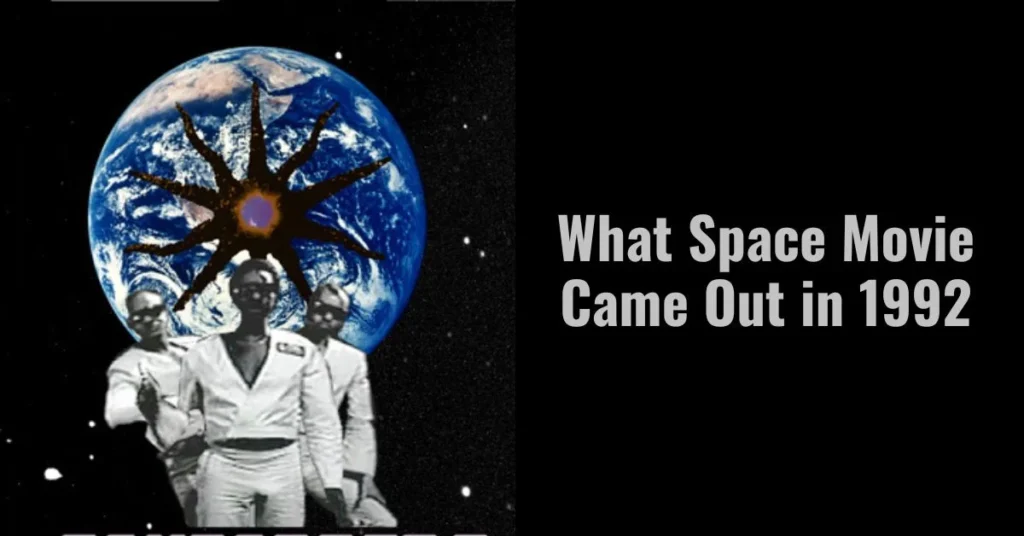
The film at the center of this question is Gayniggers from Outer Space. Yes, that is the real title. It was released in 1992 and directed by Morten Lindberg, a Danish filmmaker working under the alias Master Fatman.
The story follows a group of intergalactic beings from the planet Anus. They travel to Earth and discover that women exist here. In their culture, women are seen as oppressors. So they begin “liberating” men across the planet. The film ends with one alien staying behind on Earth as a “Gay Ambassador.”
It runs about 26 minutes. It was shot in black and white, mimicking the look of old 1950s B-movies. The casting, the costumes, and the over-the-top acting are all completely intentional. This is a satirical science fiction film built to parody multiple genres at once.
The production was low-budget by design. It leans into the rough edges of retro sci-fi films from the early atomic age. That aesthetic choice is part of what makes it work as a piece of underground cinema.
Understanding the Genre: Blaxploitation Meets Sci-Fi Parody
To understand this film, you need to know two things: blaxploitation cinema and B-movie science fiction.
Blaxploitation was a film movement that emerged in the United States during the early 1970s. Films like Shaft (1971) and Super Fly (1972) featured Black leads in action-driven, urban stories. The genre was both celebrated for its representation and criticized for reinforcing stereotypes. It was loud, stylized, and unapologetically bold.
Gayniggers from Outer Space takes that energy and mixes it with the 1950s outer space movie aesthetic — silver suits, cheesy special effects, dramatic narration. The combination creates something genuinely strange. It doesn’t fit neatly into any single box.
The film also layers in afrofuturism, a cultural movement that imagines Black identity within science fiction and technology. Scholars of afrofuturism point to works that reclaim space exploration as a Black narrative. This film plays with those ideas — sometimes sincerely, sometimes mockingly. That ambiguity is part of why it sparks debate.
Whether you read it as satire, parody, or provocation, it operates with clear genre awareness. It knows exactly what it is doing with these cinematic traditions. That self-awareness separates it from films that are simply offensive without purpose.
Danish Cinema in the Early 1990s — A Surprising Origin
Most people assume this kind of film came from the American underground scene. The actual origin — Denmark — catches people off guard.
Danish cinema in the early 1990s was in an interesting place. The Danish Film Institute supported experimental and short-form work. Directors had room to take creative risks that mainstream Hollywood would never allow. Small budgets meant creative freedom. That environment made unusual projects possible.
Morten Lindberg worked within that space. He had a background in performance and music, not traditional filmmaking. That outsider perspective shows in the film’s construction. It doesn’t follow conventional rules because its creator wasn’t trained to follow them.
The 1992 film releases in Denmark were dominated by quiet dramas and literary adaptations. This film was a complete outlier. It screened at short film festivals and found a small audience. Then it disappeared — until the internet found it.
The Danish origin also matters for context. A film made by American filmmakers with this content would be read very differently. The cultural distance creates a layer of alienation that feeds the film’s surreal quality. It’s European outsider art looking at American cultural tropes from a strange angle.
Data Snapshot: 1992 Space Films in Context
| Film | Country | Type | Runtime | Genre |
|---|---|---|---|---|
| Gayniggers from Outer Space | Denmark | Short Film | ~26 min | Sci-fi Parody |
| Alien 3 | USA/UK | Feature Film | 114 min | Sci-fi Horror |
| Patriot Games | USA | Feature Film | 117 min | Thriller |
| Memoirs of an Invisible Man | USA | Feature Film | 99 min | Sci-fi Comedy |
| Freejack | USA | Feature Film | 110 min | Sci-fi Action |
In 1992, outer space movies were mostly big-budget productions. The short film category had almost no visibility in mainstream media. That’s part of why this film went unnoticed for years. It existed in a completely different distribution world than multiplex cinema.
The internet changed everything. File sharing, forums, and eventually YouTube gave underground cinema a global audience. Films that had played to 200 people at a festival suddenly had hundreds of thousands of views. Gayniggers from Outer Space was one of the biggest beneficiaries of that shift.
Expert Perspective: What Film Scholars Say
Film critics and scholars have approached this film from multiple directions.
Some read it through a queer cinema lens. The film centers male bonding and presents a utopian vision of male-only society. From this angle, it’s a campy, over-the-top celebration of queer identity wrapped in genre parody. The intentional absurdity protects it from being read as sincere advocacy for anything harmful.
Others focus on the satirical science fiction film tradition. Films like Dr. Strangelove (1964) use absurdity to expose social anxieties. This film arguably does something similar — using the alien invasion format to mock Earth’s gender and social dynamics. The execution is crude, but the structure is recognizable.
The cult film community has largely embraced it as a piece of genuine underground art. Cult cinema thrives on transgression. A film that makes audiences deeply uncomfortable while also making them laugh is doing something interesting, regardless of taste.
What most experts agree on: the film should be understood in context. Stripping the title out of context — which is exactly how it circulates online — removes all the layers that make it worth discussing. The internet prank version erases the actual cinematic object.
How This Film Became an Internet Legend: A Timeline
1992 — Film is released at short film festivals in Denmark. Limited audience. Minor notice.
Late 1990s — Early internet film communities begin sharing obscure short films. The title starts circulating in film forums.
Early 2000s — The “Google it” prank emerges. Someone tells a friend to search “what space movie came out in 1992.” The surprising result becomes a social media trick.
2010s — Reddit, Twitter, and YouTube accelerate the spread. Reaction videos multiply. The search query itself becomes a meme.
2020–present — The query surges repeatedly. Each new wave of social media users rediscovers it. TikTok and Instagram Reels keep it circulating. The 1992 science fiction film becomes one of the most searched obscure movie queries on record.
The lifecycle of this film is a case study in internet culture mechanics. A piece of content doesn’t need to be mainstream to become culturally significant. It needs to be surprising, shareable, and slightly forbidden. This film checks all three boxes.
Future Outlook 2026: Where This Conversation Is Headed
The cultural conversation around this film is shifting. As awareness grows, the “prank” aspect loses power. More people arrive at the film already knowing what it is — and start engaging with it as an actual piece of cinema.
By 2026, film historians and digital culture researchers are increasingly documenting internet cult classics as legitimate subjects of study. The trajectory of Gayniggers from Outer Space — from obscure Danish short film to global internet phenomenon — is a story about how digital culture transforms reception.
Streaming platforms have begun licensing more obscure short films. There’s a realistic chance this film ends up on a curated “cult cinema” channel with proper context and framing. That would be a significant shift from its current distribution as a viral prank.
The broader category of 1990s sci-fi short films is also gaining renewed attention. As streaming services run out of easy mainstream content, they’re digging into archives. Short films from this era — especially international ones — are increasingly valued for their creative risk-taking.
Expect search volume for this query to remain high. Every year, a new generation of internet users encounters the prank for the first time. The cycle continues.
FAQs
Q1: What space movie came out in 1992?
The film is Gayniggers from Outer Space, a Danish short film directed by Morten Lindberg. It runs about 26 minutes and is a parody of blaxploitation cinema and 1950s B-movie science fiction.
Q2: Is the 1992 space film a real movie?
Yes. It is a real film that screened at short film festivals. It was not a major release, but it exists as a genuine piece of cinema with documented production history and a director with a real filmography.
Q3: Why do people tell others to Google “what space movie came out in 1992”?
It became an internet prank because the title of the film is shocking when encountered without context. The surprise reaction is the joke. The film itself is a satirical science fiction film, not the straightforward hate content the title might suggest.
Q4: Who directed the 1992 cult space film?
Morten Lindberg, a Danish filmmaker who also worked as a musician and performer under the name Master Fatman, directed the film. He is a real creative figure within Danish underground cinema.
Q5: What genre is the 1992 space movie?
It is best classified as a sci-fi parody with strong elements of blaxploitation satire, camp humor, and afrofuturism. It intentionally combines multiple genre traditions to create something deliberately transgressive and absurd.