Traveling abroad has never been easier—or more connected. Whether you’re jetting off for a quick weekend in Paris or embarking on a multi-country backpacking adventure across Southeast Asia, staying online is essential for navigation, communication, and sharing moments. But the age-old question remains: should you stick with a traditional physical SIM or make the switch to a modern eSIM?
In 2026, eSIM technology has surged in popularity, with global eSIM connections projected to hit 1.5 billion this year alone. Travel remains the top driver—51% of eSIM users first tried it while abroad, and 65% of international travelers now prefer it over physical cards.
This in-depth guide compares eSIM vs physical SIM head-to-head, focusing on real-world travel scenarios. We’ll break down pros, cons, costs, security, and compatibility so you can decide what’s best for your next trip. By the end, you’ll know exactly how to stay connected without the hassle.
What Is a Physical SIM Card?
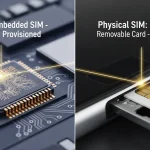
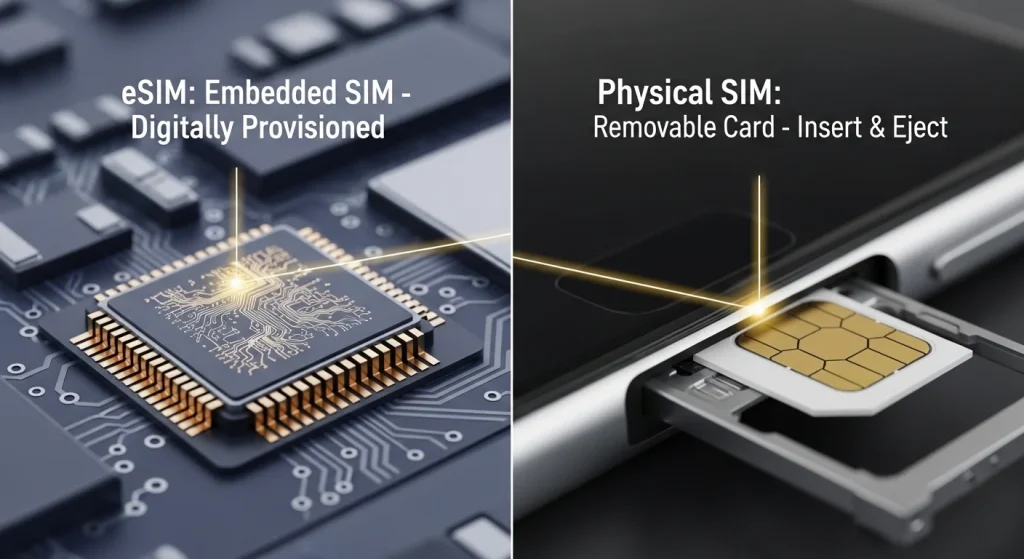
A physical SIM (Subscriber Identity Module) is the familiar plastic card—usually nano-SIM size—that you’ve been popping into phones for decades. It stores your carrier information, phone number, and data plan. To use it abroad, you either:
- Pay expensive international roaming fees from your home carrier.
- Buy a local physical SIM at the airport or a store upon arrival.
- Swap it manually into your phone’s SIM tray.
It’s reliable and works on virtually every unlocked phone, but it comes with friction: tiny cards are easy to lose, swapping requires a SIM ejector tool, and you often need a new one per country.
What Is an eSIM Card?
An eSIM card is the digital evolution of the traditional SIM. Instead of a removable plastic chip, it’s embedded directly into your phone’s hardware. You activate it by scanning a QR code or entering a code from your provider—no physical card required.
An eSIM card lets you download and switch carrier profiles instantly. Many modern phones support multiple eSIM profiles at once, so you can keep your home number active while adding local data plans.
This technology first gained traction with IoT devices but exploded for travelers in recent years. Major carriers and travel-focused providers now offer eSIMs covering 200+ countries.
eSIM vs Physical SIM: Side-by-Side Comparison
Here’s a clear breakdown of how they stack up, especially for travel:
| Feature | Physical SIM | eSIM | Winner for Travel |
| Setup Time | 10–30 minutes (buy + insert) | 2–5 minutes (QR scan) | eSIM |
| Convenience | Must visit stores or airports | Instant download anywhere with Wi-Fi | eSIM |
| Portability | Easily transferable between phones | Tied to device (but multiple profiles OK) | Physical SIM |
| Security | Can be lost, stolen, or swapped | Encrypted; can’t be physically removed | eSIM |
| Cost for Short Trips | Airport markups + roaming | Often cheaper than roaming | eSIM |
| Cost for Long Stays | Cheaper local rates | Slightly higher but still competitive | Physical SIM |
| Multi-Country Trips | Buy new SIM per country | One regional/global plan | eSIM |
| Device Compatibility | Almost universal | Newer flagships only | Physical SIM |
| Number of Profiles | Usually 1 | Up to 8–10 simultaneously | eSIM |
Data drawn from 2026 industry comparisons.
Pros and Cons for Travelers
Physical SIM Pros:
- Works on any unlocked phone, even older models.
- Often the cheapest option for single-country, long-term stays (e.g., $10/month unlimited in Thailand).
- Easy to sell or give away when you leave.
Physical SIM Cons:
- Jet lag + hunting for a SIM shop = stress.
- Risk of losing the tiny card or damaging the tray.
- Airport vendors charge premium prices.
eSIM Pros:
- Activate before you even board the plane—perfect for layovers.
- Keep your home number and add local data simultaneously.
- More secure against theft (no physical card to remove).
- Eco-friendly: no plastic waste from disposable SIMs.
eSIM Cons:
- Requires an eSIM-compatible phone (most iPhones from XS onward, Samsung Galaxy S20+, Google Pixel 3+, and growing Android lineup).
- Slightly pricier than some local physical SIMs for extended single-country trips.
- Transferring to a new phone involves re-activating the profile.
Cost Breakdown: eSIM vs Physical SIM for International Travel
- Home carrier roaming: $5–15 per day—avoid at all costs.
- Local physical SIM: $10–50 per country (plus taxi time to stores).
- Travel eSIM plans (e.g., regional 10GB for Europe/Asia): $15–40 for 30 days. Often 30–50% cheaper than roaming and far more convenient.
For a 2-week multi-country trip, eSIMs win on price and ease. For a 2-month stay in one country, a local physical SIM may edge out on pure cost—but you’ll still spend time acquiring it.
Security and Reliability in 2026
eSIMs are inherently more secure. They use encrypted remote provisioning and can’t be physically cloned or stolen from your bag. Physical SIMs remain vulnerable to SIM-swapping attacks and loss.
Both offer similar network coverage when using reputable providers. The difference? With eSIM, you switch plans without ever turning off your phone.
Device Compatibility: Do You Need a New Phone?
Check your settings:
- iPhone: Settings > General > About > “Digital SIM” or “eSIM”.
- Android: Settings > Network & internet > Mobile network > “Download a SIM instead”.
U.S.-model iPhones 14 and newer are eSIM-only. Most flagship Androids released since 2020 support eSIM. If your phone is older than 2018, stick with physical SIM or upgrade before your next big trip.
Which Is Better for Travel? Real-World Scenarios
Choose eSIM if you:
- Travel frequently or visit multiple countries.
- Hate standing in airport SIM lines.
- Use a recent flagship phone.
- Value instant connectivity and security.
Choose physical SIM if you:
- Have an older or budget phone.
- Plan one long stay in a single destination.
- Want the absolute lowest local rates and don’t mind the hassle.
For 80% of modern travelers in 2026, eSIM is the clear winner.
How to Get Started with eSIM for Your Next Trip
- Confirm your phone supports eSIM.
- Buy a plan from trusted providers before departure (many offer unlimited data options).
- Scan the QR code on Wi-Fi at home or the airport.
- Turn on data roaming and enjoy seamless service.
Pro tip: Keep your physical home SIM as a backup for calls/texts while using eSIM data.
FAQ: eSIM vs Physical SIM for Travel
Can I use both at the same time?
Yes! Most dual-SIM phones let you run a physical SIM + eSIM simultaneously.
Is eSIM data-only or can I get a phone number?
Many travel eSIMs are data-only (perfect for WhatsApp/Instagram). Voice/SMS options exist from select providers.
What if my eSIM doesn’t work?
Reputable providers offer 24/7 chat support and refunds. Always test on airport Wi-Fi before leaving home.
Will physical SIM cards disappear?
Not anytime soon—but eSIM adoption is accelerating fast, with 72% of new smartphones eSIM-ready in 2026.
The Future Is Digital—and Mobile
As we head deeper into 2026, eSIM isn’t just an alternative—it’s becoming the default for smart travelers. The convenience, security, and flexibility simply can’t be matched by juggling tiny plastic cards.
Next time you pack your bags, skip the SIM tray drama. Download an eSIM card, activate in seconds, and focus on the adventure instead of the airport kiosk line.
Ready to go digital? Check your phone compatibility today and explore travel eSIM plans tailored to your destination. Safe travels—and stay connected the smarter way.