Picture this: a student opens their school Chromebook during a free period, types three words into Google, and within seconds they’re playing a fast-paced browser game — no login, no download, no drama. That’s Classroom 15x in action. But here’s the thing — this name means more than just games. And that’s exactly why it’s been confusing students, parents, and educators all at once in 2026.
So what actually is Classroom 15x? Let’s break it down properly.
What Is Classroom 15x — and Why Does It Have Two Meanings?
The term Classroom 15x carries two different meanings on the internet, and that dual identity is the root of all the confusion.
On one side, Classroom 15x refers to a future-ready classroom design model built around 21st-century learning — emphasizing personalized learning paths, collaborative spaces, and cutting-edge tools like AI, AR, and VR. On the other side, it’s an online gaming platform that gives students access to unblocked browser games during school breaks.
Both versions are real. Both are widely discussed. And both are reshaping how students experience their school day — just in very different ways.
Think of it like a coin. One side is about how classrooms look and function. The other side is about what students actually do when no one’s watching.
Classroom 15x as a Gaming Platform: The Student Favorite
Let’s start with the more popular version — the one students are actually searching for.
Classroom 15x is a free online gaming website where players can enjoy a large collection of browser games instantly. The platform lets users play directly in their web browser without downloading or installing anything. Because the games run on modern HTML5 technology, they load quickly and work on most devices, including desktops, laptops, and tablets.
That “no download” part is key. Most school computers lock down software installations completely. Students can’t install apps. They can’t access Steam. But a lightweight HTML5 game running inside a Chrome tab? That often slips right through.
The platform gained traction specifically because it bypasses the network restrictions most schools place on entertainment websites. Its appeal comes from three things: zero setup friction, a wide game selection, and reliable access even on restricted school networks.
What Games Are Available?
Classroom 15x offers a wide selection of games across various genres — from action-packed adventures and brain-teasing puzzles to high-speed racing and thrilling 2-player games. Popular titles include 1v1 LOL, slope games, and classic arcade challenges that load in seconds.
The games are hand-picked to be “school-friendly,” and each session is intentionally short. The platform draws influence from Duolingo’s bite-sized format and Kahoot’s game-driven engagement model — capturing that feeling of quick, repeatable fun without turning into a full distraction.
Is It Actually Safe for Students?
This is where parents get nervous — understandably. But many of these games help improve problem-solving skills, reflexes, and focus, giving students a safe way to recharge while supporting their learning.
Industry experts in digital education suggest that short, structured game breaks — around 10 to 15 minutes — can actually improve sustained concentration afterward. It’s the same logic behind the Pomodoro technique. Brief mental breaks aren’t wasted time. They’re recovery time
Classroom 15x as a Learning Model: The Educator’s Version
Now here’s the side that actually matters long-term.
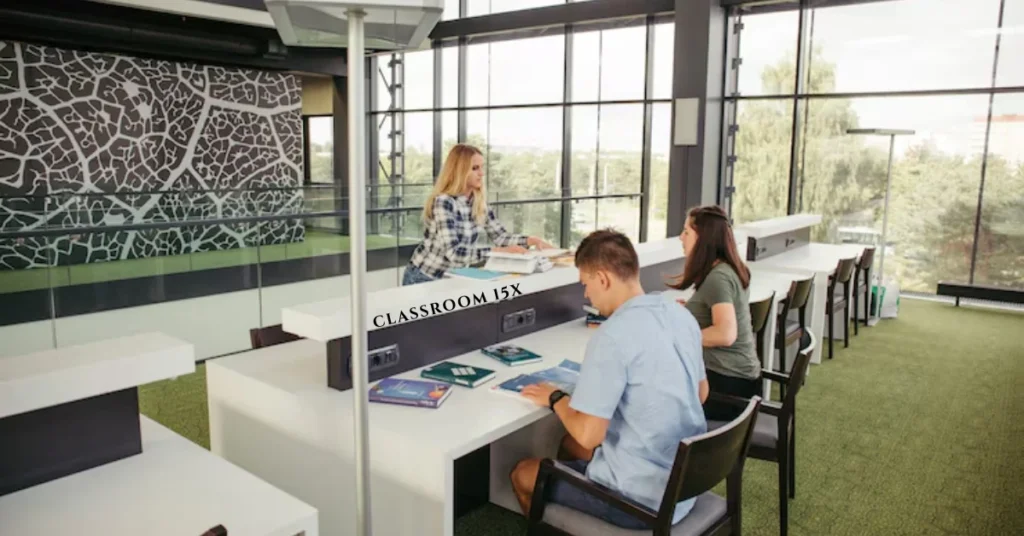
In its educational model interpretation, Classroom 15x merges three essential components: an adaptable physical setup with portable desks and group workstations; a digital infrastructure of devices, software, and analytics tools; and purposeful teaching methods including customized tasks, project-based activities, and ongoing assessments.
The “15x” branding is meant to signal transformative improvement — not a 15% upgrade, but something closer to a complete rethink of how learning spaces operate.
Classroom 15x focuses on smaller groups of usually 15 students or fewer. It’s not just about fewer students — it’s also about how the room looks, how students learn, and how teachers teach.
The Seven Principles That Make It Work
Seven principles keep Classroom 15x functional rather than flashy: mobility beats permanence with portable furniture reconfigurable within minutes; zones replace rows with distinct areas for instruction, teamwork, and solo work; frequent check-ins use brief assessments every quarter-hour; a centralized hub manages content through one primary system; structured choices offer students options within clear limits; and built-in accessibility includes captions, readable contrasts, and offline capabilities.
These aren’t radical ideas on their own. But combined in one physical and digital environment, they create something genuinely different from the traditional 30-desk classroom layout most of us grew up in.
According to recent research on active learning environments, students in flexible classroom setups show higher engagement rates and better retention compared to traditional fixed-row formats. The Brookings Institution has covered similar findings in its education innovation research, noting that physical space design directly influences cognitive outcomes.
Who Is This For?
This version of Classroom 15x is primarily relevant to:
- School administrators redesigning learning spaces
- EdTech coordinators looking to blend digital tools with physical environments
- Progressive teachers who already use flipped classroom or project-based learning methods
- Parents advocating for modern school infrastructure
Why Classroom 15x Is Trending in 2026
Both versions of Classroom 15x are growing in visibility — and for connected reasons.
As of 2026, schools are still recovering from the post-pandemic shift in student behavior. Attention spans have changed. Engagement patterns have shifted. Students who spent years learning from home now resist passive, lecture-based instruction. They want interaction. They want choice.
The gaming platform version of Classroom 15x fills a gap that schools haven’t officially acknowledged: students need structured downtime. And the learning model version offers a physical answer to the same problem — redesign the space so that engagement is built in from the start.
Both, in their own way, are responding to the same crisis in student motivation.
As Edutopia has reported in multiple pieces on classroom redesign, schools that invest in flexible, student-centered environments consistently see improvements in both behavior and academic performance — particularly among middle school students who are most prone to disengagement.
The Challenges No One Talks About
It’s not all smooth sailing, though.
The gaming platform version has an obvious tension: school is for learning, and students will always push boundaries. Without clear usage policies, a 10-minute game break becomes 45 minutes of 1v1 LOL. Teachers who aren’t monitoring closely won’t notice until it’s too late.
The classroom model version has a different problem — cost. Redesigning physical classroom spaces requires budget, administrative support, and teacher training. Most public schools, especially in lower-income districts, simply don’t have the resources to overhaul furniture and install new tech infrastructure.
And honestly? The dual identity of the “Classroom 15x” name creates confusion that slows adoption of the legitimate educational model. A parent who searches the term and lands on an unblocked games site might dismiss the whole concept as student mischief — and miss the real innovation behind it.
How to Use Classroom 15x Responsibly
Whether you’re a student, teacher, or parent, here’s a practical approach:
- Students: Set a personal timer. 10-15 minutes max. Pick puzzle or strategy games over purely reflex-based ones — your brain actually benefits more.
- Teachers: If your school allows it, designate specific break slots. Let students choose from a curated game list rather than open browsing.
- Parents: Ask your child which games they’re playing and how long. The conversation matters more than blocking access entirely.
- Administrators: Look at both sides of Classroom 15x. The gaming platform is already in your school whether you’ve approved it or not. The learning model might be worth actively adopting.
Conclusion
Classroom 15x isn’t just a gaming site students stumble onto between classes. It’s a term that sits at the intersection of two genuine needs: the need for student decompression and the need for smarter learning environments. Whether you see it as a browser game hub or a classroom redesign philosophy, Classroom 15x reflects something real about where education is heading in 2026.
The schools that figure out how to address both needs — scheduled downtime and flexible physical spaces — will likely see the most engaged, motivated students. And that’s a result worth designing for.
FAQs
Q1: Is Classroom 15x safe for school use?
Yes, the gaming platform version curates school-friendly games and doesn’t require any personal information or account creation. However, usage should be supervised to prevent it from becoming a distraction during class time.
Q2: Does Classroom 15x work on Chromebooks?
Absolutely. The platform runs smoothly on budget Chromebooks commonly provided by schools. Its lightweight design ensures stable performance even on devices with limited processing power.
Q3: Is Classroom 15x free?
Classroom 15x is free to use. It requires no software downloads, no account registration, and no subscriptions. Students simply open it in any browser and start playing.
Q4: What does “15x” mean in the classroom model context?
The “15x” branding refers to a claimed transformative improvement in student engagement and learning outcomes — suggesting the model delivers exponentially better results than traditional classroom setups through smaller groups, flexible furniture, and integrated digital tools.
Q5: Can teachers use the Classroom 15x model without a big budget?
Yes, partially. Many of the principles — like creating flexible seating zones or using short assessment check-ins every 15 minutes — don’t require expensive equipment. Teachers can apply the pedagogical framework even without a full room redesign.