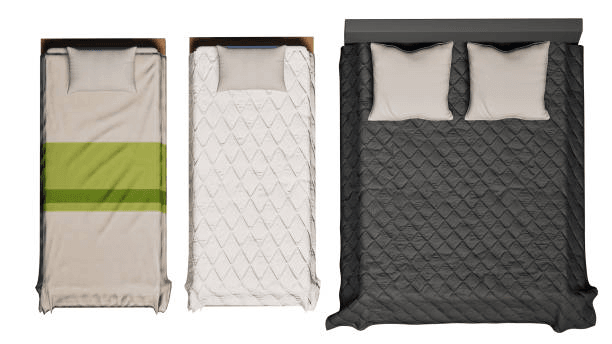
Shopping for a new mattress sounds simple until you hit that big decision point: single vs double bed. Do you keep things compact to save space in a small bedroom? Or do you stretch out and claim a bit more room for sleep and comfort with a double option?
If you feel torn between the two, you are not alone. This choice affects how well you sleep, how your bedroom looks, and even how easy it is to move around your place. It is a balance of sleeping space versus living space.
Single vs Double Bed: Quick Size Guide
Before you look at style, price, or brands, you need the numbers. Bed dimensions are the starting point for every smart bedroom layout. You must know if the bed frame will actually fit.
Most people searching for single vs double bed information have a specific question. They want to know how much room they get for themselves and how much floor space they lose. Here is a look at the standard sizes.
| Bed type | Common name | Approx size (US) | Approx size (cm) | Best for |
| Single | Twin/Standard Twin | 38 x 75 in | 98 x 189 cm | Kids, teens, small rooms, narrow layouts |
| Single XL | Twin XL | 38 x 80 in | 98 x 203 cm | College dorms, taller individuals, guest beds |
| Double | Full/Double | 54 x 75 in | 137 x 189 cm | Single adults, snug couples, flexible guest rooms |
Put simply, a double is the same length as a single in many regions, but quite a bit wider. That extra width changes how you sleep, sit, or even scroll your phone before bed. It offers significant extra space side-to-side.
Brands sometimes list slight variations on these dimensions. However, most stick very close to the sizes used by guides like the mattress size charts from well known bedding companies. Always check the inches wide and long before buying.
The Single Bed: Compact, Clever, And Practical
A single bed gets called many names, including twin bed or standard twin. No matter what you call it, it punches above its weight in tight rooms and tight budgets. It is the go-to for single sleepers.
Picture a small apartment, student room, or narrow guest room where every inch matters. A single can slide against a wall, under a window, or into that awkward corner. It does this without swallowing the whole room.
Where A Single Bed Really Works
You may already have a mental picture of where a single bed fits in your life. If not, here are the most common real life use cases for these size beds.
- Kids bedrooms: There is plenty of space for one child to sleep. This leaves space left for toys or a study desk.
- Teen rooms: This is good for older kids who need floor space for a chair and storage.
- Compact guest rooms: Two singles can be used side by side for flexible sleeping plans.
- Studio apartments: This is helpful if your bed has to share space with your couch and workspace.
Many furniture brands talk about using singles as flexible building blocks. You can see this idea in guides like the comparison article on single bed vs double bed at Nilkamal Sleep. They break down how singles help small rooms stay functional.
The Twin XL Variation
There is a variation of the single called the Twin XL mattress. These are very common in college dorm rooms and dorm rooms generally. They are the same width as a standard single but five inches longer.
Twin XL beds are a good choice for taller individuals. If you are over six feet tall, a standard single might feel too short. The Twin XL gives you that extra legroom without widening the footprint.
However, keep in mind that you need specific Twin XL sheets. Standard twin sheets fit poorly on these longer mattresses. Always double-check your size mattress before buying linens.
Pros Of Choosing A Single Bed
If you are a light sleeper or someone who lives in a tight space, a single often solves several problems. It is efficient and practical.
- Saves floor space: You get more room for storage, walking, and other furniture.
- More budget friendly: The bed frame, mattress, and bedding are usually cheaper than double size options.
- Easier to move: A lighter mattress makes moves and rearranging far less stressful.
- Great for bunk bed setups: Single mattresses are the standard size for bunks and trundle beds.
Cons Of A Single Bed
A single bed does have limits. You will feel them if your sleep style does not match the size.
- Tight for adults who sprawl: If you spread out like a starfish, 38 inches of width may feel cramped.
- Too narrow for couples: Sharing a single is only comfortable for short naps or kids sharing a room.
- Can feel less relaxing: If your day is intense, a very small sleep surface may not feel as restful.
On paper a single bed works for one adult, and it really does. But the reality is this size favors fit people who do not toss around much. It is also for those who place space and budget above luxury.
The Double Bed: Extra Elbow Room And Better Sleep Comfort
A double bed, also known as a full-size bed or double/full bed, lives in the sweet spot between a small twin and a queen bed. You are not dealing with a huge frame. Yet, you still get a noticeable jump in sleeping space.
If a single gives you 38 inches in width, a double hands you around 54. That is 16 extra inches wide. You feel this the very first night you roll to your side without falling off the edge.
Who A Double Bed Is Best For
Before you think you need a queen or king bed, it is worth seeing if a double checks your boxes. It might be the perfect fit.
- Single adults: This is ideal for people who want more sprawl space without losing too much floor area.
- Couples in small spaces: It works for couples who do not mind close sleeping.
- Teen rooms: Many older teens love the jump in comfort over a single.
- Multi-use guest rooms: One bed can host one person comfortably, or a couple for a short stay.
A double bed can act as the focal point of your primary bedroom too. Some guides, such as the breakdown on bed sizes from Ecosa, discuss this balance. A double offers a strong mix of comfort and footprint in medium-sized rooms.
Pros Of Choosing A Double Bed
If you have ever slept on a wider mattress at a hotel, you know the feeling. Going home to a narrow bed can be tough. Many people upgrade to a double once they can.
- More space per sleeper: One adult can really stretch out, read, or scroll comfortably.
- Can work for two people: Each partner gets about 27 inches of width, which is tight but workable.
- Feels more relaxing: More space usually means less edge pressure.
- Great as a room centerpiece: Styling bedding on a double makes a room feel more grown up.
Cons Of A Double Bed
It is not all soft sheets and peaceful nights though. A double also asks for some tradeoffs from your room and your wallet.
- Takes more room: You give up extra floor area for dressers, desks, or sitting corners.
- Higher cost: The price bump can be noticeable for frames, mattresses, and linens.
- Heavier to handle: Moving a double mattress up stairs or through tight doors is harder.
If your space is very tight, those extra inches in width may cause annoyance. You do not want to shimmy past your bed every day. Measuring is more important than guesswork here.
Comparing Larger Options: When Double Isn’t Enough
Sometimes a double/full bed is not enough. If you are shopping for a master bedroom, you might look at beds larger than a double. This is where the queen bed and king beds come into play.
Double vs Queen Bed
A queen bed is 60 inches wide and 80 inches long. It is wider and inches longer than a double. This makes the queen the most popular size for couples.
The extra length matches the Twin XL, making it great for tall people. If you have the bedroom size to accommodate it, a queen offers a more comfortable night’s sleep for two.
King Bed and California King
For maximum personal preference and luxury, you have the standard king and California king bed. A standard king is 76 inches wide, offering huge sleeping space. It is essentially two twin XL beds pushed together, also known as a split king.
The California king-size is narrower but longer. It is 72 inches wide and 84 inches long. This is the ultimate choice for very tall individuals who need extra room at the foot of the bed.
However, these large xl beds require a spacious primary bedroom. They will overwhelm a small bedroom instantly. Always measure your room size before committing to a king-size mattress.
Single vs Double Bed: How Much Room Do You Really Need
It is easy to think about bed size in a vacuum. Big bed good. Small bed bad. The truth is much more personal.
Your sleeping habits decide what feels right more than a standard chart ever could. Do you sleep like a log or a gymnast? That is the real question.
Think About Your Sleep Style
The National Sleep Foundation points out that sleep positions matter. Side, back, and stomach sleepers each take up space differently. You want enough room to stay in your favorite position naturally.
- Side sleepers: These are often okay on a single, since they stay in a narrower profile.
- Back sleepers: They may enjoy the wider base of a double for arm and shoulder comfort.
- Stomach sleepers: They tend to shift and move more, which favors the added room of a double.
If you wake up close to the edge of your current bed, pay attention. Dropping pillows at night is another sign. These patterns signal that you have outgrown a single size.
Are You Sharing The Bed
A big part of the single vs double bed choice is partners. Couples have different needs from solo sleepers. Sharing a bed changes the math entirely.
- If you sleep alone, a single works if you do not roll a lot.
- If you host a partner often, a double becomes a basic necessity.
- If you are a couple and both move around, you might even prefer an Olympic queen or King.
Remember, two people on a double get less personal space than a baby in a crib. That comparison makes many couples step up to larger sizes. They often keep double beds for guests instead.
How Big Is Your Bedroom
Your bedroom should feel calm and open. You need to walk around at night without bumping into things. That is hard if your bed swallows the free space.
As a rough guide, designers like to see at least 24 to 30 inches of walking space around the bed. Try this quick planning method.
- Measure the length and width of your bedroom in inches.
- Subtract the size of a single and then a double bed from that space.
- Add the size of wardrobes, dressers, or desks you already own.
- See how much free walking path you have left for each option.
If you end up side stepping around the double size, it will annoy you. That daily irritation adds up fast. Do not sacrifice your flow just for a slightly bigger mattress.
Comfort Features: Mattress Type Matters As Much As Size
Size sets your boundaries. The mattress inside those edges decides if your back feels rested. People often worry about size but skip over the materials.
Modern mattresses come in memory foam, spring, hybrid, and more. You can choose a mattress that fits your specific body type. A good choice of material can make a smaller bed feel better.
- On a single: Support matters more because you have less width to adjust. You want your shoulders and hips aligned.
- On a double: Motion control is important if two people share the bed. Memory foam is great for this.
Many double mattresses add features like zoned support. These change sleep quality even more than a few extra inches in width. This is true especially in hot climates or for heavier sleepers.
Fitting Your Bed With The Rest Of Your Furniture
A bed is rarely the only thing in your bedroom. You might need nightstands, lamps, or a dresser. All of that has to share the floor plan.
Think like a space planner. Imagine where light hits your room and which door you use most. The bed anchors that layout.
- Single beds leave more wall length free for storage pieces.
- Double beds often call for two nightstands and slightly bigger lamps.
- Storage beds with drawers reduce the need for extra chests.
If you plan to host guests through rental platforms, this matters. There are active discussions among hosts on whether to use doubles or singles. Some hosts find twin setups work better for friends, while doubles appeal to couples.
Budget, Long Term Plans, And Hidden Costs
The sticker price is not the only number to think about. Bed size quietly changes what you will spend on bedding and frames. It affects future moves too.
- Upfront cost: Singles usually win for the cheapest setup.
- Sheets and quilts: Double size bedding costs more and takes up more washer space.
- Future proofing: Paying for a double now can avoid a second purchase later.
Think about where you will be in three years. Are you staying in a college dorm or moving to a master bedroom? Mattress shopping should look at the future.
Buying a double now might save you from buying a queen later. However, buying a twin xl might be perfect for a temporary dorm. Match your purchase to your timeline.
Real Life Scenarios: Which Bed Fits Your Story
Still stuck on single vs double bed options? Try matching yourself to one of these setups. See which answer feels natural for you.
Scenario 1: Small City Studio
You work long hours and your place is a crash pad. The room is tight. Every piece of furniture must earn its keep.
- A single bed with storage keeps more floor open. It can act as a day couch with pillows.
- The extra comfort of a double may not justify losing the room to move.
Scenario 2: Growing Teen In A Medium Room
Your child has outgrown the kid stage. They want something that feels more adult. They study, game, and invite friends over.
- A double bed gives them room to spread out or sit with friends.
- The room needs space left for a desk and wardrobe, so measure carefully.
Scenario 3: Guest Room That Has To Work Hard
Your extra bedroom hosts family and friends. Sometimes it is a solo work guest. You need one setup that flexes.
- One double bed keeps couples happy and is relaxing for single visitors.
- If the room is very small, two twin beds can offer better flexibility.
Match your main use case to these scenarios. The right answer usually stops feeling abstract. Your actual lifestyle starts to push one choice ahead.
Talk to the team at Bed Post for more advice and guidance.