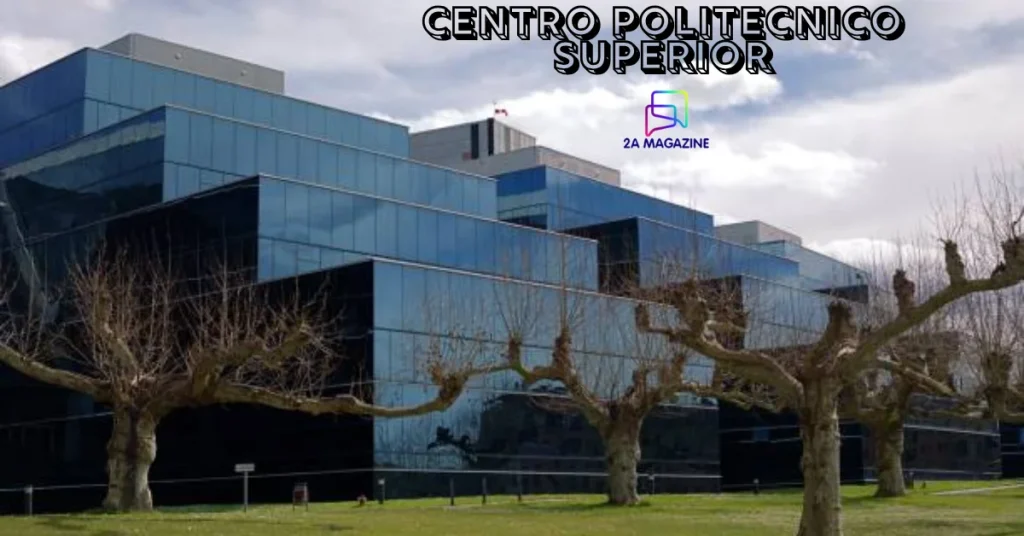
Picture this: a student from Buenos Aires packs up their life and moves to Zaragoza, Spain — not for the food (though that’s excellent too), but for an engineering degree that rivals schools twice its size and ten times its fame. That school is Centro Politécnico Superior, and in 2026, it’s quietly producing some of Spain’s most sought-after engineering graduates.
So what makes this place tick? And why isn’t everyone talking about it already?
What Is Centro Politécnico Superior?
Centro Politécnico Superior — commonly known as CPS — is the engineering school of the University of Zaragoza, located in Aragón, northeastern Spain. Founded in the mid-twentieth century, it has steadily built a reputation as one of the most rigorous technical institutions in the Iberian Peninsula.
It’s not the flashiest name in Spanish higher education. But size and flash don’t always equal quality. CPS has carved out a very specific identity: serious engineering, strong industry ties, and a faculty that actually does research rather than just talking about it.
The school offers degrees across multiple engineering disciplines — from computer science and electronics to mechanical, industrial, and chemical engineering. In recent years, it has expanded into data science and artificial intelligence programs, responding directly to what the job market is demanding.
According to the University of Zaragoza’s official rankings data, CPS consistently places among Spain’s top-tier engineering faculties in graduate employability metrics — a number that matters a lot more to students than prestige rankings alone.
The Programs That Set CPS Apart
Engineering Degrees With Real Depth
CPS offers both grado (undergraduate) and máster (postgraduate) programs. What distinguishes its curriculum from many Spanish institutions is the balance between theoretical foundations and hands-on engineering practice.
Students in industrial engineering, for example, don’t just study thermodynamics in isolation. They’re pushed into lab sessions, cross-disciplinary workshops, and real design problems from early in their degree. By the time they graduate, they’ve got portfolio-worthy work behind them.
The Computer Engineering and Telecommunications Engineering degrees are particularly competitive to get into, and equally competitive to complete. Drop-out rates in the first two years are notable — not because the school is poorly run, but because the academic standards genuinely demand commitment.
The AI and Data Science Push
In 2026, the most talked-about track at CPS is its data science and machine learning specialization, embedded within the computer engineering stream. Industry experts suggest that Spanish engineering schools were slow to adapt to the AI wave — CPS being an early mover here gives it a real edge.
Local tech firms in Zaragoza, along with larger companies like BSH Group and Inditex (yes, the Zara parent company), have established internship pipelines with CPS specifically for this reason.
Research Culture at CPS: More Than a Classroom School

What the Lab Culture Looks Like
One thing that surprises first-generation university students at CPS is how research-forward the environment is. Unlike some engineering schools where research happens only at PhD level, CPS integrates undergraduate students into active research groups fairly early.
The school hosts several recognized research groups under the University of Zaragoza umbrella — working in areas like robotics, photonics, energy systems, and biomedical engineering. These aren’t vanity projects. They produce peer-reviewed output and attract European research funding through programs like Horizon Europe.
Think of it like an iceberg. What students see — lectures, exams, labs — is just the top. Underneath, there’s a whole ecosystem of grants, collaborations with Spanish industry, and international partnerships that quietly shape the quality of the education above.
International Collaborations Worth Noting
CPS participates actively in the Erasmus+ program, sending students to partner universities across Europe and receiving incoming exchange students in return. In recent years, partnerships with institutions in Germany, France, and the Netherlands have been particularly active in engineering disciplines.
This matters for students who want European exposure without paying European private university fees. Studying at CPS — a public university — keeps costs manageable while still opening international doors.
Campus Life and Location: Zaragoza’s Underrated Appeal
Why Zaragoza Works
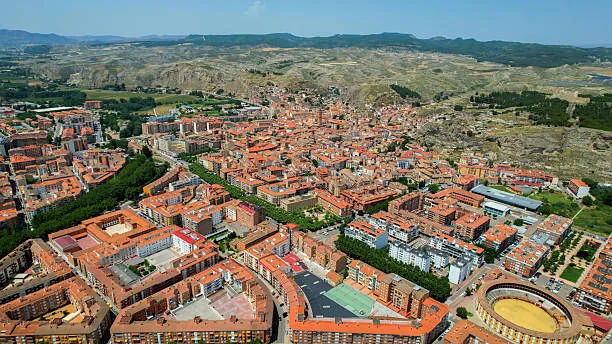
Here’s an honest observation: Zaragoza doesn’t have Barcelona’s glamour or Madrid’s scale. But that’s actually part of the appeal for serious students. It’s a mid-sized city of around 700,000 people — big enough to have a real cultural life, small enough that you’re not constantly distracted by it.
The city sits neatly between Madrid and Barcelona on the high-speed rail line, making weekend travel genuinely easy. Cost of living is significantly lower than either capital, which stretches student budgets considerably.
The CPS campus is modern and well-equipped. The libraries are functional, the engineering labs are well-maintained, and the student associations are active without being overwhelming. It’s a campus that feels like it takes engineering seriously.
The Student Community
CPS has a student body that’s notably international for a regional Spanish university. Latin American students make up a significant portion of postgraduate enrollment — attracted by the shared language, manageable tuition fees, and the quality of the engineering programs. As of 2026, this cross-cultural dynamic in study groups is considered one of the informal strengths of the school’s learning environment.
Who Should Seriously Consider CPS?
Here’s a practical breakdown of who fits best at Centro Politécnico Superior:
- Serious engineering students who want academic rigor without paying private school prices
- Latin American applicants seeking a Spanish-language European engineering degree with real employability value
- Research-oriented students who want early access to active labs and industry projects
- Career-focused graduates interested in Aragón’s growing industrial and tech sector
- Erasmus-bound students wanting European exchange opportunities embedded in their degree
If you’re looking for a party campus or an easy degree, CPS probably isn’t your place. But if you want an engineering education that actually challenges you and translates into solid job offers, it earns its reputation.
Challenges and Honest Criticisms
No institution is perfect. CPS has its friction points. The bureaucratic pace of Spanish public universities can frustrate students used to faster administrative responses. Some departments lag behind in updating certain parts of their curriculum — a common issue in institutions running on public funding cycles.
The workload in the first two years is famously heavy. Some students find the transition from secondary school brutal. According to conversations in Spanish engineering student forums, the jump in academic expectation is real and needs genuine preparation.
But those who make it through consistently report that the difficulty was worth it — both in terms of what they learned and how employers view the degree on a CV.
The Future Outlook for CPS
Spain’s engineering sector is growing, particularly in renewable energy, aerospace, and automotive manufacturing. Aragón has emerged as a notable hub for logistics and industrial activity, and CPS graduates are well-positioned to feed into that local economy while also being competitive nationally and internationally.
The school’s push into digital engineering — AI, automation, and data systems — signals that leadership understands where engineering is heading. As of 2026, there’s a genuine sense that CPS is in a quiet growth phase, building reputation year by year without making too much noise about it.
Sometimes that’s the best way to build something that lasts.
Conclusion
Centro Politécnico Superior isn’t the kind of school that fills Instagram feeds or dominates newspaper rankings. But in engineering circles — particularly in Spain and Latin America — it carries real weight. It’s a school that produces graduates who can actually engineer things, backed by research that contributes to real knowledge, in a city that makes student life affordable and liveable. For the right student, it might just be exactly the right choice.
FAQs
Q1: Is Centro Politécnico Superior part of a public university?
Yes. CPS is the engineering faculty of the University of Zaragoza, a fully public Spanish university. This means tuition fees are significantly lower than private institutions, though entry requirements are competitive.
Q2: Are programs at CPS taught in Spanish?
Most undergraduate programs are taught in Spanish. Some postgraduate programs and research groups operate partially in English, and the Erasmus exchange program brings English-language academic interactions to the campus environment.
Q3: How hard is it to get admitted to CPS?
Admission is based on Spain’s university entrance system (PAU/EvAU scores). Programs like Computer Engineering and Electronics are among the most competitive. International applicants go through a separate evaluation process via the University of Zaragoza’s international admissions office.
Q4: Does CPS offer scholarships or financial aid?
As part of the Spanish public university system, students can access state scholarships through Spain’s Ministry of Education (Becas MEC). The University of Zaragoza also has its own mobility and excellence grants for qualifying students.
Q5: What industries do CPS graduates typically go into?
Graduates work across manufacturing, energy, telecommunications, software development, automotive, logistics, and research. Companies like BSH, Opel/Stellantis, and various tech startups in Aragón have established regular recruitment relationships with CPS.