For the better part of two decades, I’ve watched the American backyard transform. I’ve seen the shift from the heavy, blue-smoke-belching mowers of the early 2000s to the sleek, whisper-quiet machines that dominate today’s suburban landscapes for Outdoor Power Equipment. If you’re a modern homeowner, you aren’t just looking for a tool that works; you’re looking for a system that respects your time, your neighbors, and your storage space.
The reality is that maintaining a property has evolved into a high-tech endeavor. Whether you’re managing a sprawling suburban lot or a tight urban patch of green, the right Outdoor Power Equipment makes the difference between a Saturday spent in frustrating labor and a Saturday spent enjoying your home. In this guide, we’ll cut through the marketing noise and look at what actually matters when building your tool shed from the ground up.
Why the “Modern” Home Requires a New Approach
In the past, owning yard tools meant becoming a part-time mechanic. You had to worry about mixing fuel ratios, cleaning carburetors every spring, and the inevitable “shoulder-wrenching” struggle of a pull-start cord.
Modern homes are different. We have less time, our lots are often closer together, and we demand instant results. This shift has pushed the industry toward “instant-on” technology. We’ve moved away from the internal combustion engine in favor of high-voltage battery systems that offer the same torque without the environmental or auditory baggage.
Choosing Your Foundation: The Mower Decision
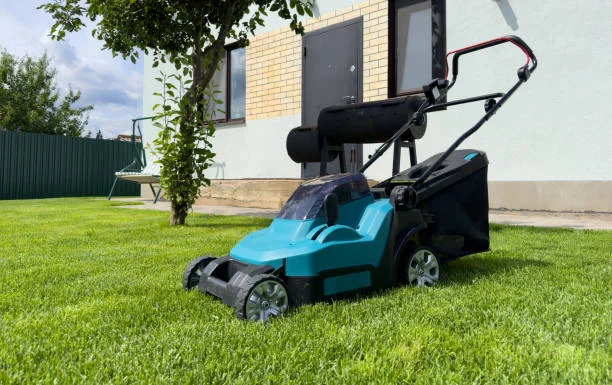
The lawn mower is the anchor of your outdoor arsenal. When I consult with homeowners, the first thing I ask isn’t about the size of their yard, but the “topology” of it.
If you have a flat, standard lot, a self-propelled walk-behind is your best friend. It provides a bit of exercise without the exhaustion. However, for those with half an acre or more, we’ve seen a massive surge in residential zero-turn mowers. The ability to pivot on a dime doesn’t just look cool; it shaves about 30% off your total mowing time by eliminating those wide, awkward turns at the end of every row.
Beyond the Cut: The “Finishing” Tools
A lawn isn’t finished just because the grass is short. To get that “manicured” look that stands out in the neighborhood, you need to master the secondary tools.
The Versatility of the String Trimmer
I always suggest looking for a trimmer with a “straight shaft” rather than a curved one. It gives you better reach under decks and shrubs and generally lasts longer. If you’re using a battery-powered version, look for a “brushless” motor. These are more efficient, meaning you get more “trim per charge” and a motor that won’t burn out after a heavy season of tall weeds.
The Leaf Blower as a Multi-Tool
Most people think blowers are only for October and November. A pro knows better. A high-velocity blower is the fastest way to clear a light dusting of snow from your car, dry off a patio after a power wash, or even clear out the cobwebs in the corners of the garage. It’s about airflow (CFM) more than just speed (MPH). You want a tool that moves a volume of air, not just a thin stream of it.
The Strategy of the Single-Battery Ecosystem
One of the biggest mistakes I see homeowners make is “brand hopping.” They buy one brand’s mower, another brand’s trimmer, and a third brand’s chainsaw. By the end of the year, their garage is a chaotic mess of three different chargers and four different battery types.
The smartest move you can make is to pick a “platform.” When your mower, leaf blower, and hedge trimmer all run off the same 60V or 80V battery, you never have to worry about a dead tool. You can keep one battery on the charger while the other is in use. This “interchangeability” is the secret to a seamless weekend workflow.
Transitioning From Gas: Is the Power Really There?
It’s the question I get asked most often: “Will an electric motor actually cut my thick grass?” Fifteen years ago, the answer was a hesitant “maybe.” Today, the answer is a resounding “yes.” Modern lithium-ion technology has reached a point where the torque—the actual twisting force that spins the blade is often more consistent than gas. While a gas engine can bog down and stall in thick, wet grass, a high-end electric motor senses the load and increases power instantly to maintain blade speed.
Common Pitfalls in Equipment Ownership
Even the best tools fail if they aren’t respected. Avoid these three common “rookie” mistakes:
- Dull Blade Syndrome: Most people never sharpen their mower blades. A dull blade “tears” the grass, leaving the tips white and jagged. This makes your lawn susceptible to disease. Sharpen your blades every 25 hours of use.
- Improper Battery Storage: Never leave your high-capacity batteries in the shed during a freezing winter or a sweltering 100-degree summer. Extreme temperatures kill the chemistry inside. Keep them in a climate-controlled mudroom or garage.
- Ignoring the Underside: Grass clippings contain moisture and acidity. If you let them caked onto the underside of your mower deck, it restricts airflow and causes rust. A quick scrape-down every few mows keeps the machine breathing.
Best Practices for Safety and Efficiency
When you’re out there, efficiency is the goal. I recommend a “top-down” approach to yard work. Start with your hedge trimming and pruning. Let the debris fall to the ground. Then, use your mower to bag or mulch those clippings as you cut the grass. Finally, use the blower to clear the hardscapes (driveways and sidewalks). This ensures you aren’t cleaning the same area twice.
Always wear eye protection, even with “quiet” tools. A string trimmer spinning at 6,000 RPM can turn a small pebble into a dangerous projectile in a split second.
Frequently Asked Questions
How do I know which voltage to choose for my yard?
For most suburban homes under half an acre, a 40V system is plenty. If you have a larger lot, hills, or very thick “tough” grass, moving up to a 60V or 80V system provides the extra “grunt” needed to finish the job without stopping.
Are battery-powered snow blowers actually effective?
Absolutely, especially the two-stage models. They are significantly more convenient because you don’t have to worry about “cold starts” in sub-zero temperatures. You just slide in the battery and go.
What is the average lifespan of modern outdoor power equipment?
If you opt for brushless motors and maintain your batteries, you can easily see 10 to 12 years of service. The mechanical parts of electric tools are much simpler than gas engines, meaning there are fewer points of failure.
Can I leave my batteries on the charger all the time?
Most modern “smart” chargers will stop trickling power once the battery is full. However, for the longest lifespan, it’s best to unplug them once they reach 100% or if you won’t be using them for several weeks.
The Future of Your Backyard
The goal of modern Outdoor Power Equipment isn’t just to cut grass; it’s to provide a better ownership experience. By choosing a reliable battery platform and focusing on a few high-quality, versatile tools, you can maintain a professional-looking landscape with a fraction of the effort required a decade ago.
Invest in quality, stay within a single ecosystem, and keep your blades sharp. Your lawn—and your Saturday afternoons will be better for it.
The one insight our clients say changed everything. Read now at 2A Magazine.