You’re scrolling through design blogs, cultural forums, or maybe a leadership podcast transcript — and a strange, beautiful word keeps appearing. Uncuymaza. It doesn’t look like English. It doesn’t feel like a buzzword. But something about it stops you mid-scroll.
That reaction is intentional — or at least, it’s fitting. Because uncuymaza is not just a simple word. It connects culture, creativity, community, and modern life. It feels like a mix of the past and the present.
In 2026, interest in this concept has grown well beyond niche Andean studies. It’s appearing in interior design, branding conversations, digital identity work, and even corporate philosophy. So let’s actually break down what uncuymaza is, where it comes from, and why it matters right now.
What Exactly Is Uncuymaza?
Uncuymaza is a multidimensional cultural and philosophical concept often linked to Andean traditions or symbolic interpretations of indigenous wisdom. It represents balance, community, creativity, and identity.
But here’s the thing most articles miss — uncuymaza isn’t a fixed definition you can pin down in one sentence. Some words have only one meaning, like “chair” or “book.” But uncuymaza is different. It changes based on the situation. One person may see uncuymaza as a way of life. Another may see it as a place where people come together.
Think of it like the word “home.” Ask ten people what home means, and you’ll get ten deeply personal answers. Uncuymaza works the same way. It’s less a definition and more a direction — pointing toward harmony, connection, and purposeful living.
Uncuymaza is often interpreted as a guiding philosophy shaped by Andean cosmology, reflecting balance, reciprocity, gratitude, and harmony among humans, nature, and the spiritual realm.
Where Did Uncuymaza Come From?
The origins of uncuymaza are believed to be connected to the Andean region of South America, particularly within indigenous communities that spoke the Quechua language. These societies developed rich philosophical systems centered on harmony, reciprocity, and sustainable living.
Quechua, for context, is one of the most widely spoken indigenous language families in the Americas — still active across Peru, Bolivia, Ecuador, and beyond. It gave us words like ayni (reciprocity) and pachamama (Mother Earth). Uncuymaza sits comfortably within that family of concepts.
Andean communities have historically organized life around cycles of the land, rituals, and cooperation. In this context, uncuymaza serves as cultural memory — a reminder that prosperity is tied to ecological and social equilibrium.
It’s not doctrine. It’s not law. It’s a lived practice — something you do, not just something you believe.
Uncuymaza as a “Place of Gathering”
One fascinating layer of the concept involves physical space. Linguistic associations in Quechua suggest that the term may refer to communal meeting grounds or culturally meaningful spaces where people historically came together to exchange knowledge, celebrate rituals, or conduct trade.
So in its oldest sense, uncuymaza might literally mean the place where we come together. That’s a powerful origin for a concept now being applied to digital communities, creative collectives, and decentralized networks.
How Uncuymaza Shows Up in Modern Life
This is where things get genuinely interesting. Ancient philosophies don’t usually survive contact with the digital age. Uncuymaza has not just survived — it’s thriving.
In Art and Home Design
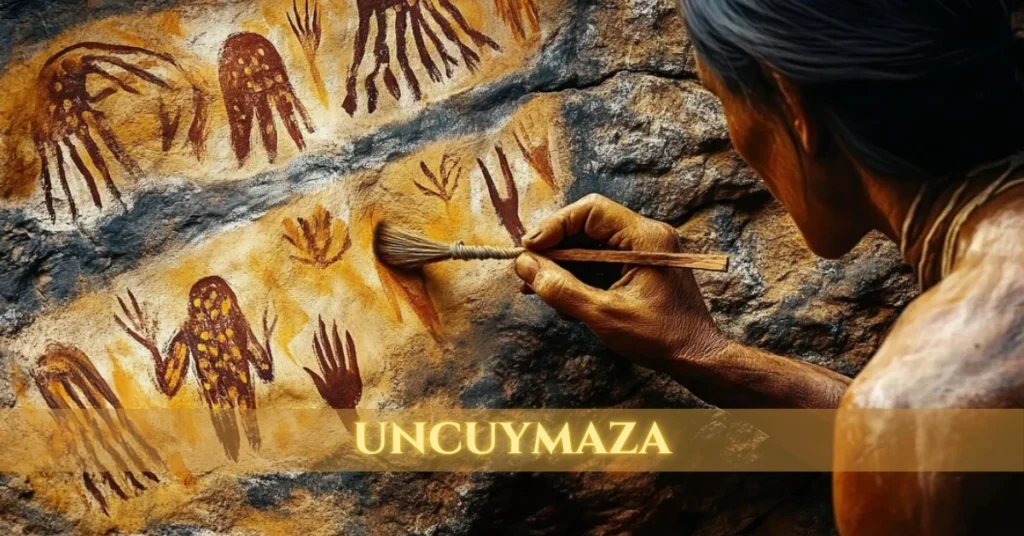
Uncuymaza is a growing cultural art style rooted in traditional South American Indigenous expression, especially known for its symbolic patterns, earthy color palettes, and storytelling visuals.
Interior designers are increasingly drawn to this aesthetic because it does something most modern décor can’t — it carries meaning. A wall painted in uncuymaza-inspired tones or decorated with its symbolic motifs tells a story about ancestry, balance, and care for the natural world.
As people search for meaning, authenticity, and emotional resonance in their homes, Uncuymaza provides exactly that.
In Digital Identity and Branding
In modern contexts, uncuymaza has evolved into a creative and flexible concept used in branding, digital identity, and artistic expression.
Brands today are under enormous pressure to stand for something real. Consumers — especially younger ones — can smell hollow values from miles away. Uncuymaza offers a philosophical backbone: community over competition, balance over burnout, creativity rooted in something genuine.
Online platforms provide opportunities for exposure, interaction, and growth. Uncuymaza can be used in websites, social media, blogs, and other digital formats. Its uniqueness helps it stand out in search results and user interactions.
In Leadership and Business Thinking
In modern usage, it is often linked to innovation, creativity, and decentralized systems.
Management theorists have started applying uncuymaza principles to team dynamics. The idea? Organizations that function like Andean communities — where every member contributes, resources flow equitably, and decisions consider long-term harmony — outperform those built purely on hierarchy and short-term gains.
According to cultural strategist and author Dr. Amara Vellani, “Concepts like uncuymaza remind us that the most resilient systems in history weren’t built on dominance — they were built on reciprocity.” That insight is hitting differently in 2026, as burnout, remote work fragmentation, and AI disruption reshape how we think about collaboration.
Core Values Embedded in Uncuymaza
It helps to see uncuymaza as a philosophy with distinct pillars. Here’s a clean breakdown:
- Balance — between individual needs and collective responsibility
- Reciprocity — what you take, you give back; what you receive, you pass forward
- Harmony with nature — not just environmentalism, but a spiritual relationship with the natural world
- Creative identity — self-expression rooted in cultural memory, not consumerism
- Community gathering — the belief that meaningful life happens between people, not in isolation
In daily life, uncuymaza can be very simple. It can be sharing food with someone, helping a neighbor, or taking care of the environment. These small actions may not seem big, but they create a strong and connected life.
That’s the beauty of it. You don’t need a philosophy degree to live uncuymaza. You just need intention.
Why Uncuymaza Resonates So Strongly Right Now
We’re living through a strange cultural moment. Technology connects us at unprecedented scale, yet loneliness rates are at historic highs. People have more information than ever, yet feel less rooted than their grandparents did.
Uncuymaza speaks directly to that gap. It offers what algorithms can’t: a sense of belonging that doesn’t require a screen.
As noted by researchers at the Andean Cultural Institute, indigenous South American philosophies have long emphasized collective well-being over individual accumulation — a worldview that development economists are now studying seriously as an alternative model for sustainable communities.
And honestly? That shift in mainstream thinking was long overdue.
Uncuymaza is best understood as a multidimensional concept rather than a single definition. It represents a philosophical idea, a cultural identity, and in modern contexts, even a creative or technological framework. This flexibility allows the term to evolve and adapt across different fields and communities.
Challenges and Honest Conversations
No concept travels from indigenous origin to global trend without complications. Cultural appropriation is a real concern. When brands adopt words like uncuymaza for marketing without understanding — or crediting — their origins, it reduces living philosophy to aesthetic.
The difference between appreciation and appropriation comes down to two things: credit and depth. Citing the Andean roots, engaging with actual Quechua-speaking communities, and using the concept with intellectual honesty keeps uncuymaza’s power intact.
That’s not a small ask. But it’s the right one.
Uncuymaza in 2026: Where It’s Headed
As of 2026, uncuymaza is crossing into mainstream awareness faster than most anticipated. You’ll find it referenced in wellness communities, sustainable architecture circles, creative entrepreneurship spaces, and cross-cultural dialogue forums.
The term uncuymaza has evolved from obscurity to a concept valued in anthropology, travel writing, interior design, and business theory. Today, uncuymaza bridges ancient philosophy and modern reinvention, symbolizing connectedness, creativity, and purpose.
The next few years will likely see it become part of a broader vocabulary around regenerative culture — the movement to rebuild human communities on principles that sustained indigenous societies for centuries.
And if that happens, uncuymaza won’t just be a trending keyword. It’ll be a genuinely useful lens for navigating a complicated world.
Conclusion
Uncuymaza is old and new at the same time. It carries the weight of Andean cosmology and the flexibility of a living idea. Whether you encounter it in an art gallery, a leadership workshop, or a home décor blog, the core message stays the same: we are more whole when we’re connected — to each other, to nature, and to something bigger than individual ambition.
That’s not a complicated idea. But in 2026, it might be one of the most necessary ones.
FAQs
1. Is uncuymaza a real word from Quechua language?
The concept is closely tied to Quechua-speaking Andean indigenous communities, though it functions more as a philosophical term than a directly translatable single word. Its meaning is derived from broader Andean cultural values of balance and reciprocity.
2. How is uncuymaza different from similar concepts like Ubuntu or Ikigai?
While Ubuntu (African communal philosophy) and Ikigai (Japanese purpose concept) share some overlap, uncuymaza is specifically rooted in Andean ecology and the physical idea of a gathering space. It uniquely ties spiritual harmony with land, community, and creative identity together.
3. Can businesses actually apply uncuymaza principles?
Yes — and some already are. Organizations adopting flat hierarchies, profit-sharing models, and community-first branding are naturally aligned with uncuymaza values, even if they don’t use the term explicitly.
4. Is using uncuymaza in branding considered cultural appropriation?
It depends entirely on intent and execution. Using the term with clear attribution to its Andean origins, avoiding surface-level aesthetics, and ideally collaborating with indigenous creatives are what separate respectful use from appropriation.
5. Where can I learn more about Andean philosophy connected to uncuymaza?
A good starting point is academic literature on Quechua cosmology and Andean studies. Organizations working with indigenous South American communities often publish accessible resources on these philosophical traditions.