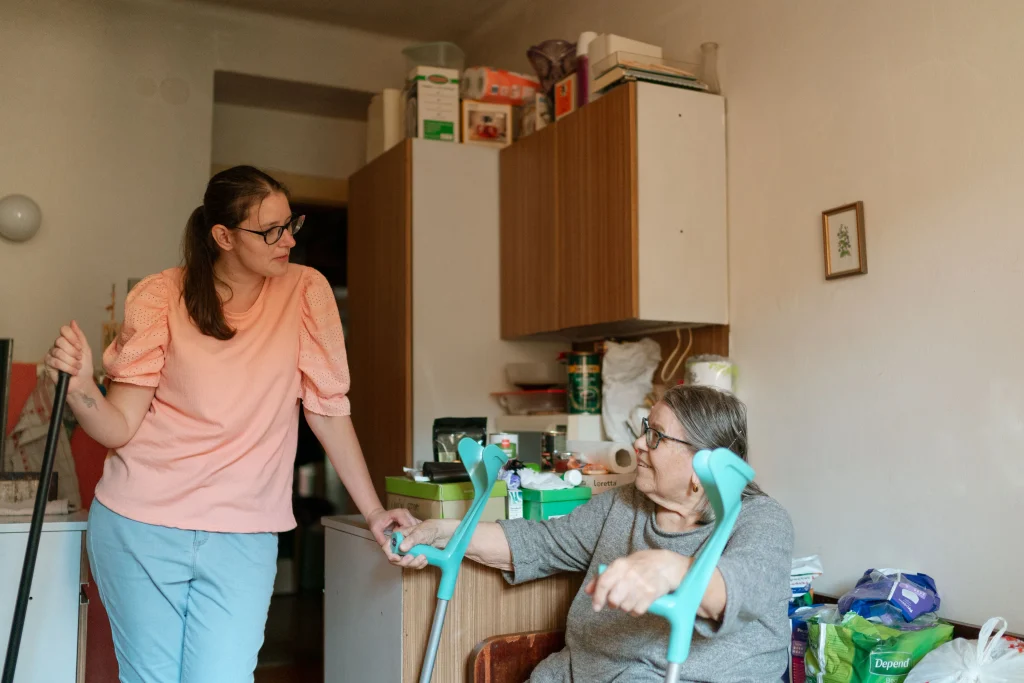
Getting from the car to your front door can feel different from walking down a hospital corridor. A step, heavy door, or narrow bathroom may change what you can manage. Preparing your home for crutches after injury starts with explaining those obstacles before discharge. Small details matter: a bathroom door may swing into your path, or the only sturdy handrail may be on the wrong side for your practiced technique.
This guide offers questions to discuss with your care team. Follow your own discharge instructions; general advice cannot determine how much weight your injured leg can take.
Six questions to ask before you leave
Tell the clinician or therapist about your home before discharge. Describe entrance steps, stairs, bathroom access, and who will be available to help.
Ask for demonstrations, then practice with supervision rather than relying on a written handout alone.
1. How much weight can I put through my injured leg?
Get the order in writing, including when it will be reviewed. Non-weight-bearing means keeping weight off that leg; partial loading needs a specific explanation. GTOA’s guide to weight-bearing restrictions after a fracture explains these terms. A boot or reduced pain does not independently change your instructions. Ask what to do after an accidental step; new pain or reduced function warrants advice, rather than repeatedly testing the leg.
2. Can I manage my entrance steps and stairs?
Explain whether there is a handrail, elevator, or alternative entrance. Ask to practice the method appropriate for your restrictions. If stairs are not manageable, discuss another route or temporary sleeping arrangements. Do not improvise a stair technique from a general article. Discuss how you would get help if you became tired halfway, and whether someone needs to accompany you.
3. Do these crutches fit me, and are they the right aid?
Have the fit checked with your usual supportive shoes. With underarm crutches, support weight through your hands, not the top pads. Mention wrist, shoulder, balance, or strength problems. A therapist may recommend another aid; a knee scooter is not suitable for every injury. Have the rubber tips and adjustment fittings checked, and ask whom to contact if either becomes worn or loose.
4. Can I get into bed and use the toilet?
Practice sitting, standing, and turning while keeping within your restrictions. Tell the therapist if your couch is soft or your toilet is low. Ask which hand placement and seat height work for you instead of copying a technique that feels unstable.
5. What bathroom equipment do I need?
Ask whether a shower chair, transfer bench, raised toilet seat, or properly installed grab bars are appropriate. Confirm fit, delivery, and any prescription or coverage requirements. A towel rail is not a grab bar. Check when bathing is allowed and how to protect your cast or dressing.
6. How will I carry essentials and get help?
Both hands may be needed for your crutches. Ask about a small, secure backpack or suitable pouch for a phone and closed water bottle. Arrange help with hot meals, shopping, laundry, and pets. Avoid using a rolling cart as a substitute for prescribed support.
Make the routes you need usable
A safe home setup after injury depends on your equipment and movement pattern, not one universal doorway measurement. Share photos or measurements with your therapist if space is tight. Check your route from the entrance to your seat, bed, and toilet. Try that route with supervision when possible, including opening doors and turning near furniture, rather than measuring width alone.
Use this room-by-room check before arriving home:
| Area | Possible obstacle | What to arrange |
| Entrance and hallways | Steps, rugs, cords, narrow turns | Clear clutter and loose rugs; discuss thresholds and heavy doors. Do not prop open fire doors. |
| Bathroom | Wet floors and awkward transfers | Keep floors dry; arrange assessed equipment and toiletries within reach. |
| Bedroom | Stairs and poor lighting | Discuss a suitable sleeping area and bed height; light the bathroom route. |
| Living room | Soft or low seats | Use a stable seat that you can transfer from; keep essentials nearby. |
| Kitchen | Reaching and carrying food | Store supplies within reach and arrange help with preparation and hot items. |
Put the discharge plan in writing
Mobility aid discharge planning should cover the first evening, not just the next appointment. Confirm who will help and what happens if that person is unavailable. If you live alone or cannot reach essential rooms, tell the discharge team before leaving. Ask what further assessment or support is available if the proposed arrangement does not meet your needs.
Before leaving the hospital or clinic
- Confirm your written loading order, boot or brace instructions, and follow-up date.
- Rehearse walking, turning, transfers, and necessary steps with your prescribed aid.
- Confirm equipment availability and transport, including getting into and out of the vehicle.
- Review medicines that may cause dizziness and any prescribed blood-clot prevention plan.
- Know whom to call. New calf pain or swelling needs urgent assessment; sudden breathlessness, chest pain, or a cold or blue foot needs emergency care.
Before arriving home
- Ask someone to check the routes and equipment, including the nighttime toilet trip.
- Arrange meals, transport to follow-up, and help with tasks you cannot manage.
- Keep your phone, written discharge instructions, and contact numbers accessible.
If your injury involved the ankle, GTOA’s explanation of ankle sprain versus fracture can help frame diagnosis questions. Your own assessment determines the plan.
Common questions
What if I cannot use crutches safely?
Tell the team before discharge. Ask about reassessment, an alternative aid, or additional support. Describe what happens when you try, including fatigue, pain, or feeling unsteady.
Can I stop using crutches when pain improves?
Only as allowed by your care plan. Ask who can change the restriction and when it should be reviewed.
What if my underarms or hands hurt?
Ask for a fit and technique check. Do not simply lower the crutches or add padding yourself. New numbness, tingling, or weakness needs prompt clinical advice.