When the County of Santa Barbara declined to take over a newly built park on Goleta’s Phelps Road, the local developer who built it refused to let the project fade away. He organized Girsh Park as a nonprofit and handed its future to a board of community-minded residents. Season after season, Little Leaguers, soccer teams and festivalgoers have benefited from that decision, rarely seeing the board meetings and budget work that keep the gates open.
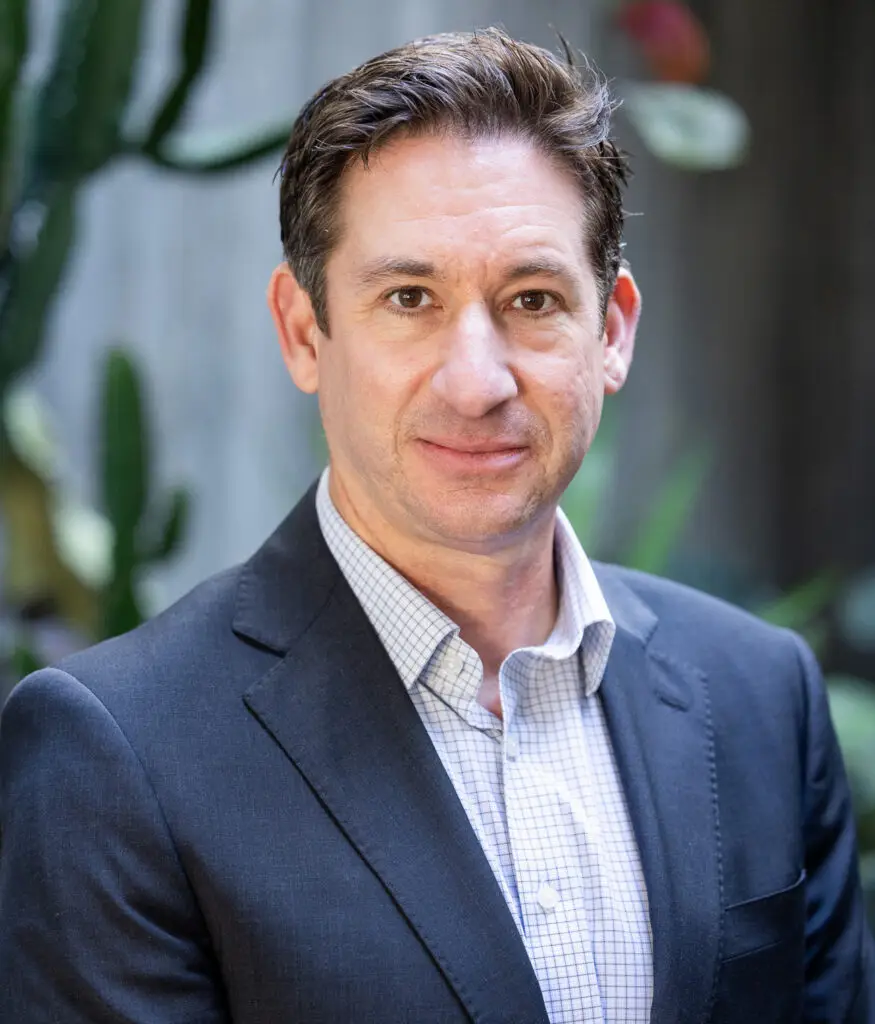
Brett Weichbrod has attended many of those meetings. He is a financial advisor at Channel Wealth in Santa Barbara and a Retirement Income Certified Professional. He served on the finance committee of the Girsh Park board, and he sits on the board of the Santa Barbara Executive Roundtable. Nonprofits have been part of his work from the beginning. He started his career on retirement plans for small businesses and nonprofit organizations, and he still advises nonprofits today.
“Working with nonprofits is rewarding because the money we manage ultimately supports a mission that’s bigger than any one person,” Weichbrod said. “My career started working with retirement plans for small businesses and nonprofits, so I’ve had the opportunity to see both sides of that work over the years.”
Seeing both sides taught him how differently the two kinds of clients think. Many nonprofits hold reserve or endowment funds. A volunteer board or investment committee oversees that money, deciding how much the organization can spend each year and how the rest should be managed so it lasts. The people around that table often come from entirely different professions, and they rotate on and off over time. The mission they’re protecting doesn’t.
“With an individual or family, the conversation usually centers on their goals, their lifestyle, and making sure their wealth supports the life they want to live,” Weichbrod explained. “With a nonprofit, there’s another layer of responsibility. You’re working with a board or investment committee, and you have to understand the organization’s mission, its spending needs, its time horizon, and how the investments can support its work over the long term.”
The time horizon may be the starkest difference. For instance, a family’s plan generally follows the arc of a career and a retirement. A nonprofit’s assets may need to fund programs decades after the current board has moved on. That forces a different kind of discipline, one where every decision has to make sense for people who haven’t joined the organization yet. Weichbrod sees governance and transparency as the foundation of that discipline. Every board member, he explained, needs to understand the strategy and what’s expected of them in carrying it out.
Behind Every Nonprofit Budget Are People Doing Hard Work With Limited Resources
Those long-term decisions are being made under real pressure. More than a third of the organizations in Nonprofit Finance Fund’s 2025 national survey ended the previous year with an operating deficit — the highest share in the decade the group has tracked it.
Small community organizations tend to feel that strain first. Their staffs are lean, their boards are made up of volunteers with day jobs, and a single difficult year can force a choice between dipping into reserves and cutting a program. In that environment, thoughtful financial management decides whether an after-school program, a meal service or a youth league survives the next downturn.
That is where Weichbrod finds the most satisfaction in his work, and his answer has more to do with people than with markets.
“What I enjoy most is getting to know the people behind these organizations and understanding what they’re trying to accomplish,” he shared. “Many nonprofits are doing important work in our community, often with limited resources. Helping them manage their assets thoughtfully so they can continue funding their programs and serving people over time is meaningful to me.”
He doesn’t encounter that work from a distance. The organizations he advises serve the same neighborhoods where he lives and works. Being part of the Santa Barbara community, he said, has made the work more personal. “You get to see the impact these organizations have, and it’s satisfying to know that sound financial management can help them carry out their missions for years to come.”
His investment in Santa Barbara’s future doesn’t stop with its nonprofits, either. It extends to the business owners who keep the local economy running.
Wealth Advisor Brett Weichbrod: ‘I Care About the Santa Barbara Community’
The Santa Barbara Executive Roundtable, known locally as SABER, is a small business educator and networking organization. Its regular morning meetings at the University Club on Santa Barbara Street have featured speakers on topics ranging from local news to the region’s annual economic forecast.
“The Santa Barbara Executive Roundtable brings together local business leaders to build relationships, exchange ideas, and learn from one another’s experiences,” Weichbrod said. “I’ve always believed there’s value in being around people who approach business differently and are willing to share what they’ve learned along the way.”
His reasons for joining the board run deeper than networking. “I was drawn to serving on the board,” he said, “because I care about the Santa Barbara community and enjoy connecting with other people who are invested in its success.”
As a business owner and financial advisor, Weichbrod spends much of his week helping clients make major decisions, manage uncertainty and plan for what comes next. The Roundtable gives him something his clients don’t always have, a room full of local leaders wrestling with those same pressures inside their own companies. The experience has sharpened a trait that serves him in every setting, from client meetings to committee rooms.
“One thing the experience has reinforced for me is how much you can learn simply by listening to other people’s perspectives,” he explained. “Every business has its own challenges, and there’s rarely just one right way to solve a problem. I also appreciate how important relationships are to a strong business community.”
Relationships and a willingness to listen are exactly what a community-run institution like Girsh Park depends on.
Girsh Park Showed Weichbrod How Much a Shared Space Can Mean to Local Families
The park that a local developer entrusted to community-minded residents has become a busy hub for youth sports, family outings and community events in Goleta. According to the City of Goleta, it remains privately owned and operated by its own nonprofit foundation. A park that isn’t run by a city parks department needs people willing to keep a close eye on its finances, and Brett Weichbrod stepped into that role on the board’s finance committee.
“I served on the finance committee, where I was able to bring my background in financial planning and investment management to help support the organization’s financial oversight and long-term sustainability,” he said. “I enjoyed being able to apply my professional experience in a way that benefited the community beyond my day-to-day work.”
The role also showed him how much of a nonprofit’s work goes unnoticed.
Board service, he said, gives a person “an appreciation for the work that happens behind the scenes to keep these organizations strong.”
Ask him what he’s proudest of, though, and he doesn’t point to the spreadsheets or the committee meetings. He points to the families who fill the fields every weekend and the community those fields help build.
“What I’m proudest of is having had the opportunity to contribute my time and financial perspective to an organization that serves local families,” Weichbrod shared. “Parks and community spaces can have a bigger impact than people sometimes realize. They bring people together through sports, events, and everyday activities, and they help create the sense of community that makes Santa Barbara such a special place to live.”