How Does a Guy From a Kansas Farm End Up Building Diesel Rolls-Royces?
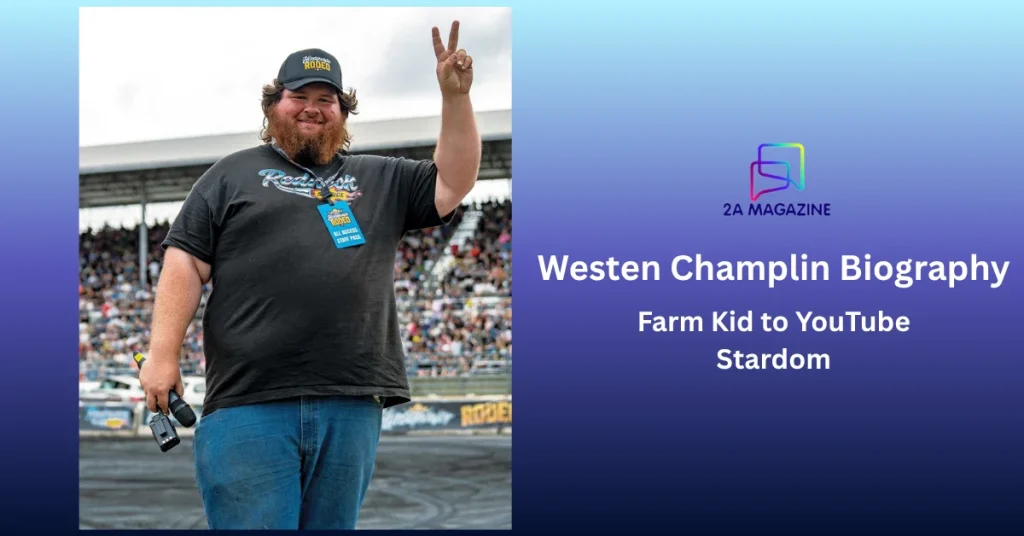
Westen Champlin didn’t set out to become a car-culture celebrity. He set out to buy a broken truck, fix it, and sell it for a little more than he paid. The cameras came later, almost by accident, and Westen Champlin has told that story the same way more than once.
In brief: Westen Champlin grew up on a farm near Winfield, Kansas, and started an auto-flipping business with his brother Garrett before either of them expected YouTube to matter. He uploaded his first video in February 2019. By 2025, he had over 5 million YouTube subscribers (and over 16 million followers across all platforms), a hit podcast (All Caught Up), and a SEMA award on his shelf. He still lives and works in Kansas, where he now operates a massive public motorsports venue.
What Westen Champlin Has Said About How This Started
Champlin didn’t grow up planning a media career. By his own account, farm life put him behind the wheel early — he’s said he was backing trailers by age eight, a detail that shows up consistently across the outlets that have covered him. Before any of it turned into a business, he was doing whatever paid: hauling firewood in the winter, fixing trucks for neighbors, buying and selling vehicles when he found a good enough deal.
The YouTube channel grew out of that hustle rather than the other way around. Talking to SEMA Magazine in 2026, Champlin gave the origin story its clearest telling yet. Asked how the channel came to be, he credited his brother, Garrett, who’d tried making YouTube videos years earlier and walked away from it. Garrett had made YouTube videos for a long time, but there was no way to make a living at it, so he stopped — even though it stayed his passion, Champlin has said. The brothers were already running a small buy-fix-sell vehicle business, and, as Champlin put it, they started filming what they were doing every day, and the videos “got a little crazier and a little crazier.”
That escalation is well documented by people who watched it happen up close. A 2023 DrivingLine profile described the pair’s early years in blunt terms: Westen started off doing anything he could to make a living and stay afloat, hauling firewood in winter and fixing trucks, with a knack for finding good deals on cars — buying, selling, and sometimes making bad choices. Garrett handled the camera and the edit. Neither of them expected the numbers that followed.
They got them anyway. The same profile traced the climb in plain terms: one million subscribers, then two million, then three, until Champlin and his “Redneck Science” experiments turned into a bona fide YouTube phenomenon. That phrase, Redneck Science, is Champlin’s own branding for the whole operation, and it now sells shirts and hats through his site.
Why the Format Works, In His Own Words
Champlin has been asked more than once why people keep watching a guy weld a diesel engine into a Mustang, and his answer stays fairly consistent: he’s not chasing polish, he’s chasing whether something is fun. DrivingLine summed up his operating principle this way — his key test for any build or drive is simply whether it’s enjoyable. Champlin backs that up with his own words about persistence rather than talent. Asked by SEMA Magazine what advice he’d give a younger version of himself, he didn’t mention equipment or luck. He said determination was the answer — that he’s never run into anything he couldn’t eventually make work if he stuck with it long enough, YouTube included.
He’s also been candid that the whole thing started against advice, not because of it. Recalling the early skepticism from people around him, he told DrivingLine: “Everything I wanted to do—I remember someone telling me it was a stupid idea. At the end of the day, nobody really cares. What you do, this or that thing. So why not do whatever the hell you want anyway?”
From Grandma’s Shed to Horsepower Labs
The physical footprint of the operation has grown at roughly the same pace as the subscriber count. DrivingLine noted that Champlin’s operation began on his grandmother’s living room floor and in her backyard shed before he and his team moved into what they now call Horsepower Labs, a 52-acre facility with room for a private track and off-road terrain. But that was just the beginning. In early 2026, Champlin announced his biggest project yet: the Horsepower Ranch. Spanning up to 200 acres, this new property is designed as a massive, public-access motorsports playground featuring a drag strip, drift course, rally track, and extensive off-road trails. SEMA Magazine’s 2026 profile highlighted this massive expansion, cementing his transition from a garage builder to a venue owner.
That growth tracks with formal industry recognition. Champlin was named SEMA’s Content Creator of the Year at the 2025 SEMA Show—an event where his team hosted the “Horsepower Rodeo,” an unfiltered, live-action automotive spectacle that perfectly encapsulated his brand. When asked what the honor meant to him, he leaned into the same modesty that runs through most of his interviews. He said it feels strange that a crew working “in the middle of nowhere” making videos for fun gets recognized by people all over the world as doing something great, when to him it always just felt like something cool.
What the Business Actually Looks Like
Underneath the burnouts, Champlin runs an actual small business. Separate from the YouTube operation with Garrett, he co-owns a Kansas auto repair shop with his childhood friend Dom, where the two rebuild and resell vehicles — a Peterbilt 387 semi, a Ram 2500, a Ford Raptor among the documented projects. On the content side, he’s described brand partnerships as a two-way negotiation rather than something handed to him. He said brands approach him roughly as often as he approaches them, and that when a shop employee suggested an airlift suspension system for a one-of-a-kind Rolls-Royce build, the team reached out to Airlift directly and pitched what exposure they could offer in return.
He’s equally direct about why he trusts creator marketing over traditional advertising. He argued people buy what they trust, and trust comes from watching a product actually work on camera rather than reading a claim on a shelf.
What This Means to Him, In His Own Words
Champlin rarely frames any of this as a grand plan coming together. When he talks about the work itself, he tends to land on small, physical satisfactions rather than big-picture ambition — the sound of a tool, the shape of a car he never thought he’d own. Describing the moment he cut into a wrecked Mustang to start what became his signature build, the Smokestang, he said the sound of the saw meant one of two things: “The greatest sound in the world is the Sawzall blade, because that either means you’re doing something awesome or someone’s stealing your catalytic converter.”
That build, a diesel-swapped Mustang nicknamed the Smokestang, still carries a specific kind of pride for him — not because it went smoothly, but because it worked at all despite the leaks. He’s said flatly: “If there ain’t oil under ’em, there ain’t oil in ’em.” Over time, the Smokestang evolved from a leaking 650-horsepower experiment into a 1,264-horsepower, 2,273 lb-ft torque monster running compound turbos.
A 1968 Dodge Charger pulled the same thread. He named the car “Tater” for its rough, potato-like shape and admitted a specific kind of disbelief about owning it, having grown up seeing cars like it on the same Kansas roads: “I saw these cars all the time as a kid and I never thought that I would ever own one!” Today, Tater is no longer just a rough barn-find; it has been shoehorned with a massive 1,500-horsepower Hellcat-based engine, proving that Redneck Science only scales up.
Even his taste in project vehicles ties back to where he lives. On wanting a Corvette despite Kansas terrain working against the idea, he said the geography was the whole problem — sports cars don’t suit the roads he actually drives. Once he found a lifted C5 Corvette that solved that problem, the appeal was immediate and, by his own admission, slightly juvenile in the best way.
None of this reads as calculated career-building. It reads like a guy who kept doing the thing he found fun, in the place he grew up, with the people he already knew — and the audience happened to follow.
A Private Life Kept Mostly Off Camera
Champlin has stayed unusually quiet about anything beyond the shop and the builds. His relationship status hasn’t been addressed on the record in any interview reviewed for this piece, and no spouse, partner, or children have been publicly confirmed. His parents’ names haven’t surfaced either — the one family member he does talk about, consistently and warmly, is Garrett, and even that relationship is discussed mostly in terms of who holds the camera.
The one piece of personal life Champlin occasionally shares off-camera is his health and fitness journey. He has been open with his audience on social media about his weight loss, posting gym progress and discussing his efforts to get healthier to keep up with the physical demands of the shop and builds. It’s a rare, relatable detail in an otherwise guarded public record, showing a grounded side to the high-octane internet persona.
What Reporters Found That Wasn’t in the Interview
Outlets covering Champlin have filled in a few structural details he hasn’t spelled out himself. His YouTube channel was technically created back on March 17, 2010, nearly nine years before he uploaded anything — a gap none of his interviews have explained. His first real upload, “$1,000 AUCTION BUY for Ford F350 7.3L Powerstroke 4X4,” went live on February 8, 2019, and set the buy-it-broken, fix-it-on-camera format that’s defined the channel since.
Coverage has also nailed down details he tends to skip past in interviews: the auto shop’s named partner (Dom), the brother’s name and role (Garrett, on camera and editing), and a rough property history running from a backyard shed to a many-acre facility. None of it contradicts what Champlin has said publicly — it fills gaps he simply hasn’t chosen to narrate.
When Dodge Calls, You Answer
Champlin’s builds aren’t just salvage yard experiments; they’ve caught the attention of major automakers. For the Road Kill Nights match race, Dodge handed Champlin a Hellcat to build. True to form, Champlin and his team stripped it, twin-turbocharged it to 1,300 horsepower, and raced it. When Dodge reclaimed and crushed the original car after the event, Champlin simply bought an old police cruiser at auction, applied a wide-body Hellcat conversion, bolted on giant turbos and superchargers, and created the “Helljet”—a 1,300-horsepower street outlaw that became an instant fan favorite.
More on This Topic: Westen Champlin Net Worth: What Five Million YouTube Subscribers and a Kansas Auto Shop Actually Built
Frequently Asked Questions
Where is Westen Champlin from?
Westen Champlin was born on July 23, 1998, in Winfield, Kansas, and was raised on a farm nearby. He still lives and works in the state.
Is Westen Champlin’s channel a solo operation?
No. Westen Champlin’s brother, Garrett, has filmed and edited the channel since its early days, and Champlin has credited him repeatedly as the reason the channel exists at all.
Does Westen Champlin run a business outside YouTube?
Yes. He co-owns a Kansas auto repair shop with his childhood friend Dom, where the two buy, restore, and resell vehicles including trucks and at least one semi-truck.
Has Westen Champlin won any industry awards?
Yes. He was named SEMA’s Content Creator of the Year at the 2025 SEMA Show, an honor he’s described as surreal given how small-scale the operation felt to him and his crew.
Is Westen Champlin married?
Westen Champlin’s relationship status hasn’t been publicly confirmed. He hasn’t addressed it in any interview reviewed for this piece, and no spouse or children have been identified in public reporting.
What is Horsepower Labs?
Horsepower Labs is the name Champlin’s team uses for its production and build facility in Kansas, which grew from a small backyard shed into a large multi-acre property with space for off-road testing and vehicle builds.
Disclaimer: These details reflect publicly available reporting and records — not confirmed statements from the individuals involved.
Sources: SEMA Magazine (“Ranch Hand or Rodeo Man?”, May 2026); DrivingLine (“Redneck Science: Behind-the-Scenes with Westen Champlin,” September 2023); Wikitubia/Fandom channel data.