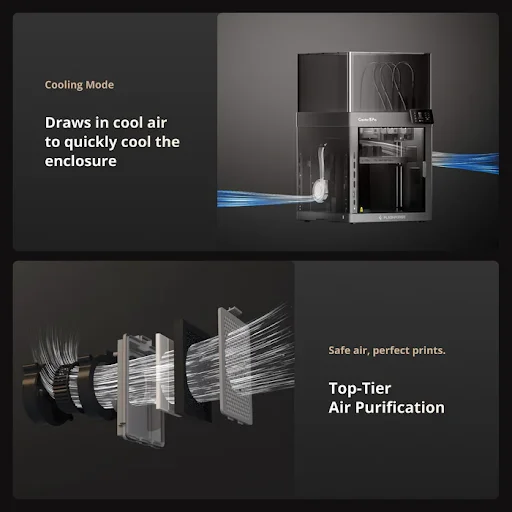
Desktop 3D printing is becoming a more practical tool for homes, schools, studios, and small businesses. A 3d printer now gives more people a way to turn digital ideas into physical objects without relying entirely on outside production. This does not mean traditional manufacturing is being replaced. Instead, desktop 3D printing is becoming a flexible option for prototyping, learning, repairing, and creating customized items in smaller quantities.
From Digital Design to Hands-On Creation
One major reason desktop 3D printing is gaining attention is the shorter path from idea to object. In the past, creating a custom part often required professional equipment, supplier communication, and longer lead times. Today, users can design a model, print a draft, review the result, and adjust the design within a much shorter workflow.
This process changes how people create. Instead of trying to make a design perfect before production, users can test several versions and improve them step by step. For students, this can make engineering, science, and design concepts easier to understand. For makers and small teams, a 3d printer can support faster product testing, visual modeling, and practical problem solving.
Why Desktop 3D Printers Fit Modern Workflows
Desktop 3D printers are useful because they support flexible production. They can be used for a single object, a small group of parts, or repeated design tests. This makes them suitable for early product development, classroom projects, hobby work, and small batch creative production.
Many current desktop printers are also easier to use than earlier models. Improved software, guided setup, and more stable hardware have made the process more approachable for beginners. Users still need to learn basic settings, print preparation, and maintenance, but the learning curve is becoming more manageable. This makes desktop printing more accessible to people who may not have a professional manufacturing background.
Filament Choices Shape Print Results
Material choice has a direct effect on what a printed object can do. The right 3d printer filament can influence strength, flexibility, surface quality, heat resistance, and ease of printing. PLA is often used for basic models and visual prototypes because it is generally simple to print. PETG can be useful for tougher parts, while TPU is often chosen for flexible objects. ABS, nylon, carbon fiber blends, and other materials may fit more demanding projects when the printer supports them.
This variety matters because users are no longer printing only decorative models. They may want tool holders, brackets, replacement parts, product samples, toys, or educational objects. Understanding 3d printer filament helps users choose materials based on function instead of focusing only on color or price.
Multi Filament Printing Adds More Possibilities
As desktop 3D printing develops, multi color and multi material workflows are becoming more common. A multi filament 3d printer can help users create objects with several colors, support materials, or different material properties in one print process. This can reduce some post processing work and make printed models closer to the original design.
For example, multi filament printing may help create a colorful display model, a prototype with brand colors, or a part that uses support material for more complex shapes. Some users may also explore combinations of rigid and flexible materials. A multi filament 3d printer may not be necessary for every beginner, but it can be valuable for creators who want more design freedom and more detailed results.
Customization Is a Key Advantage
Customization is one of the clearest benefits of desktop 3D printing. Users can create objects around specific sizes, shapes, and personal needs. This may include custom organizers, repair parts, teaching models, ergonomic accessories, cosplay items, or personalized gifts.
However, not every printed item will be cheaper or stronger than a store bought product. Print time, material cost, design quality, and durability all matter. Desktop 3D printing works best when users match the printer, material, and design to the purpose of the object. A simple visual model and a functional part may require very different settings and materials.
A More Flexible Creative Future
Desktop 3D printers are changing how people create by making production more immediate, flexible, and personal. They allow users to test ideas faster, learn through hands-on results, and make objects that may not be easy to find in standard sizes or designs. As printer hardware, software, and filament options continue to improve, the role of the 3d printer will likely expand across education, design, small business, and everyday creative work.
The future of 3D printing is not only about faster machines. It is also about giving more people a practical way to make, test, adjust, and learn from their own ideas.