Playing the violin well takes years of dedication, and the accessories you surround yourself with can make a real difference in how you practice, perform, and care for your instrument. Whether you’re a beginner assembling your first proper setup or an experienced player looking to fill a few gaps, the challenge isn’t finding options — it’s knowing what’s genuinely useful versus what just collects dust.
This list focuses on accessories that experienced players consistently reach for: the ones that protect your instrument, support better practice habits, and make the day-to-day work of playing more organized and sustainable. Here are eight violin accessories worth owning in 2026.
1. A High-Quality Violin Case
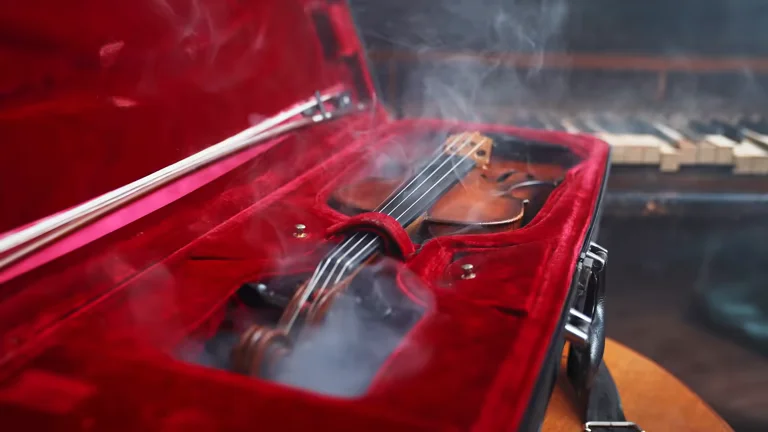
The single most important accessory you’ll ever buy for your violin isn’t rosin, it isn’t strings, and it isn’t even a bow — it’s the case that houses your instrument every time you’re not playing it.
Violins can last decades, or even centuries, when treated well. A poor case can ruin one in a matter of weeks through humidity fluctuations, accidental drops, or simple neglect. Yet this is one of the most under-invested areas in a typical player’s setup. Many beginners stick with whatever came bundled with their instrument, not realizing what they’re risking.
What separates a good case from a great one comes down to a few key factors: interior suspension systems, humidity regulation, exterior shell rigidity, and how well the case is shaped to your instrument’s dimensions. Suspension cases — which support the violin by the neck and body rather than letting it rest directly against foam — distribute impact forces far more safely and are widely preferred by professional players and teachers.
Brands like Gewa, Bam, Musafia, and Bobelock each have strong reputations in different price brackets, but finding the right fit for your specific instrument, budget, and carrying needs takes some research. Great Violin Cases is one of the most thorough and practical resources available for comparing cases across suspension styles, price points, and use cases — making it much easier to buy with confidence rather than guessing.
2. High-Quality Rosin
Every violinist needs rosin, but not every rosin performs equally. The resin coating on your bow hair creates the friction required to set the string vibrating, and the grade and type of rosin you use can meaningfully affect the clarity, warmth, and articulation of your tone.
Dark rosins tend to produce a warmer, thicker sound and are often preferred in cooler climates and on lower-pitched string instruments. Light rosins offer a brighter, cleaner response, favored in warmer conditions or by players focused on clarity in the upper register. Versatile mid-range options like Pirastro Goldflex and Leatherwood Bespoke have earned strong reputations across a range of playing styles.
A decent rosin upgrade typically costs between $10 and $50 — a small investment that can make a noticeable difference in bow response, especially if you’ve been using the basic block that came with a student outfit. It’s one of the easiest and most affordable improvements available to any player.
3. A Shoulder Rest That Actually Fits You
Shoulder rests are deeply personal. What works well for one player can feel completely wrong for another depending on neck length, shoulder shape, collarbone prominence, and posture. Despite this, many violinists spend years tolerating a poor-fitting rest because they haven’t taken the time to explore alternatives.
The most widely used options — Kun, Wolf, and Bonmusica — each take a distinct approach to adjustability and body contact. Kun’s classic model is a reliable all-rounder that suits many players right out of the box. Wolf offers a firmer, contoured design for players who need more lift. Bonmusica curves around the shoulder anatomically, and it’s frequently recommended for players who have experienced chronic tension or repetitive strain issues.
If you haven’t revisited your shoulder rest setup in the past year or two, it’s worth experimenting. Playing with poor posture or an ill-fitting rest doesn’t just cause discomfort — it actively limits your technique over time, and the cumulative effects compound.
4. A Clip-On Chromatic Tuner
Intonation is a practice skill, and it needs daily attention — not just a quick check before concerts. A clip-on chromatic tuner is one of the most practical accessories a violinist can own because it reads pitch through the vibration of the instrument rather than ambient microphone pickup. That means it works reliably in noisy environments: busy studios, backstage corridors, outdoor venues, and busy households.
The D’Addario NS Micro and Snark SN-5 are among the most consistently recommended models for their accuracy and ease of use. More advanced players sometimes prefer strobe tuners for their higher precision, particularly useful when setting open string reference pitches before extended intonation work.
Making it a non-negotiable habit to tune before every practice session — rather than just before performances — is one of the simplest things you can do to train your ear and build more reliable intonation over time. The tuner won’t do the work for you, but it keeps you honest.
5. A Reliable Practice Mute
Life doesn’t always accommodate violin practice schedules. Apartment walls, shared spaces, sleeping children, and neighbors are all real constraints that most violinists eventually need to work around. A quality practice mute reduces your instrument’s volume significantly without completely deadening the acoustic feedback your bow arm needs to develop proper technique.
Rubber mutes like the Spector or Artino models are popular for their effectiveness and low cost. Metal mutes in the Tourte style are lighter on the bow and still reduce volume meaningfully. For maximum attenuation — late-night sessions or very noise-sensitive situations — heavier mutes like the SilentPractice series bring the output down to a level that’s genuinely manageable in most apartment buildings.
It’s practical to own two: a lightweight model for everyday dampening and a heavier one for full near-silent practice when the situation demands it.
6. Spare Strings
Strings break at inconvenient times. That’s not a risk — it’s a near-certainty if you play with any regularity. Having at least one spare set on hand is the kind of practical habit that veteran players develop early and beginners often wish they had adopted sooner.
Beyond emergency replacements, string freshness matters for tone quality in ways that are easy to underestimate. Strings degrade gradually as oils, rosin buildup, and metal fatigue accumulate. Many players don’t notice how much their sound has dulled until they put on a fresh set and hear the difference immediately. For most players, changing strings every three to six months is a reasonable baseline.
Dominant, Thomastik Vision, and Pirastro Evah Pirazzi are among the most trusted options across different playing levels and instrument types. The right string depends on your instrument’s character, your bow arm’s preferences, and whether you’re prioritizing warmth, brightness, or projection.
7. A Recording and Content Setup
Recording your playing has become one of the most valuable practice tools available to violinists at any level. Listening back to your own playing reveals technical habits — bowing angles, intonation tendencies, rhythmic inconsistencies — that are genuinely difficult to notice in the moment. For many players, a simple recording habit accelerates progress more than almost anything else.
A basic home recording setup doesn’t require a major investment: a USB condenser microphone (the Blue Yeti and Audio-Technica AT2020 are well-regarded entry points), a decent tripod or mic stand, and a room with enough soft furnishings to reduce harsh reflections. That’s genuinely enough to start.
Violinists who share their playing online — through YouTube channels, social media, or teaching platforms — are also increasingly thinking about audio presentation beyond raw recording quality. If that describes you, the discussion around how to build a brand sound for a channel has become genuinely practical, particularly for players building a consistent content identity across platforms.
8. A Solid, Adjustable Music Stand
Few things interrupt practice focus more reliably than a wobbly stand, a surface that tilts at the wrong angle, or a stand that isn’t tall enough once you adjust your posture properly. The basic folding stands common in school settings are functional but rarely ideal for consistent home practice — especially for players working with larger orchestral scores.
Manhasset stands are the professional standard for a reason: they’re solidly built, easy to adjust, and stable enough to hold heavy binders without tilting forward. The investment is higher than budget alternatives but the stand will outlast multiple instruments with no maintenance required.
For players who move regularly between teaching studios, ensembles, and home — a well-built collapsible travel stand from Hercules or K&M offers a practical balance of portability and stability without the frustrations of bargain-tier options.
Summing Up
The best violin accessories are the ones you actually use consistently — the gear that makes practice more sustainable, protects your investment, and removes friction from the daily act of picking up your instrument.
You don’t need to build out this list all at once. Start where the gap is most noticeable. If your case feels like a liability, address that first. If intonation work is suffering, invest in a better tuner. If you’re playing late at night and avoiding your instrument because of the noise, a quality mute changes that immediately. Build the setup that supports the specific stage of playing you’re in right now, and let it grow from there.