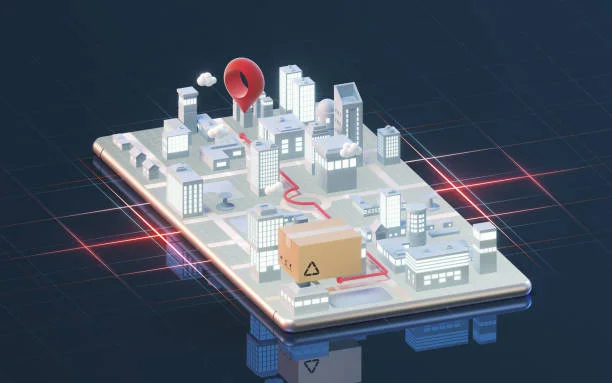
For years, logistics have been optimized everywhere except the last mile. Warehouses became more efficient, transportation networks improved, and supply chains grew more sophisticated. But the final step, getting a package from a local hub to a customer’s door, remained one of the most expensive, unpredictable, and frustrating parts of the process Last-mile delivery.
That’s starting to change. Smart technology is reshaping last-mile delivery in ways that are both practical and scalable. Instead of relying on outdated systems and constant manual coordination, companies are using data, automation, and connected infrastructure to make deliveries faster, more reliable, and less resource-intensive.
Smart Lockers Are Changing the Delivery Equation
One of the most impactful innovations in last-mile delivery is the rise of secure locker systems. Modern solutions are helping businesses rethink how packages are delivered and retrieved, with smart lockers playing a central role in this shift.
Traditionally, delivery required a direct handoff. If the recipient wasn’t home, the package might be left unattended, returned to a depot, or scheduled for redelivery. Each of those outcomes adds cost, time, and frustration.
Smart lockers remove that friction. Instead of delivering to an individual doorstep, couriers can deliver to a centralized, secure location where packages are stored until the recipient retrieves them. This approach dramatically reduces failed deliveries and eliminates the need for repeated attempts.
For property managers, retailers, and logistics providers, this creates a more controlled and efficient system. Deliveries can be consolidated, tracked, and managed with far less manual intervention.
Emerging Logistics Models Are Redefining the Last Mile
At the same time, broader innovations in logistics are reshaping how goods move through the final stages of delivery. There is a growing emphasis on technology-driven models that prioritize efficiency, adaptability, and real-time coordination.
Micro-fulfillment centers are one example. By positioning inventory closer to urban areas, companies can reduce the distance packages need to travel during the last mile. This not only speeds up delivery times but also lowers transportation costs.
Another key development is the use of dynamic routing. Instead of relying on fixed delivery routes, companies are using real-time data to adjust routes based on traffic conditions, delivery priorities, and customer availability. This allows drivers to complete more deliveries in less time while minimizing delays.
These models reflect a shift away from rigid systems toward more flexible, responsive approaches. The goal is not just to move packages quickly, but to do so in a way that adapts to changing conditions.
Data Is Driving Smarter Decision-Making
Behind many of these advancements is the increased use of data. Logistics companies are collecting and analyzing vast amounts of information, from delivery times and traffic patterns to customer preferences and order volumes.
This data allows for more informed decision-making at every level. Companies can identify bottlenecks, predict demand, and allocate resources more effectively. For example, if data shows that a particular neighborhood has a high volume of deliveries at certain times, additional capacity can be planned in advance.
Predictive analytics also plays a role in improving reliability. By anticipating potential issues, such as delays or disruptions, companies can take proactive steps to mitigate them. This leads to a more consistent delivery experience, which is critical for maintaining customer trust.
Automation is Reducing Complexity
Automation is another factor that is making last-mile delivery more efficient. From warehouse operations to delivery scheduling, automated systems are reducing the need for manual intervention and streamlining processes.
In the context of last-mile delivery, automation often shows up in the form of software rather than physical machines. Automated dispatch systems can assign deliveries to drivers based on location, capacity, and priority. Notification systems can keep customers informed without requiring human input.
This reduces the likelihood of errors and frees up time for teams to focus on higher-value tasks. It also creates a more predictable workflow, which is essential in an environment where timing and coordination are critical.
Sustainability is Becoming Part of the Equation
Efficiency is no longer the only goal. Sustainability is becoming an important consideration in last-mile logistics. The environmental impact of delivery operations, particularly in urban areas, is drawing increased attention.
Smart technology is helping address this challenge in several ways. Route optimization reduces fuel consumption by minimizing unnecessary travel. Consolidated delivery points, such as locker systems, decrease the number of individual stops required.
Electric vehicles and alternative delivery methods, such as cargo bikes, are also being integrated into last-mile networks. These approaches not only reduce emissions but can also improve efficiency in congested areas.
Balancing efficiency and sustainability is not always straightforward, but the two goals are increasingly aligned. Many of the same strategies that improve operational performance also contribute to a lower environmental footprint.
Ready for more? Dive into our full vault of expert insights at 2A Magazine.