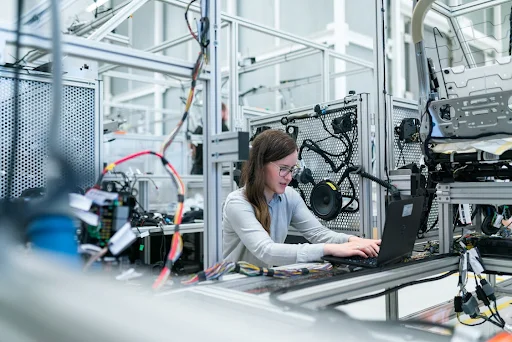
Factories and warehouses are getting smarter every day. Managers used to rely on clipboards and manual logs to keep track of inventory. Now, sensors and software do most of the heavy lifting. This shift helps businesses save money and avoid big mistakes.
It is about more than just finding a lost pallet. Real-time data changes how teams plan their shifts and move products. High-tech tools create a clear picture of what is happening on the floor. Every second counts in a busy industrial setting.
Tracking In The Modern Factory
Modern factories have changed a lot over the last 10 years. Before the rise of smart tech, managers had to guess how much time was lost to simple errors. Now they have data to prove where things go wrong.
Information flows from sensors to the cloud. From there, it is turned into maps and charts that anyone can understand. This transparency makes it easier for different departments to work together.
What Industrial Asset Tracking Professionals Provide
Companies need to know where every piece of equipment is at every minute. Many industrial asset tracking professionals from https://www.pozyx.io say that modern systems reduce the time spent searching for misplaced gear. This efficiency helps teams stay on schedule without constant delays.
Data shows where workers spend the most time. If a forklift is sitting idle for hours, the system flags it. This allows the manager to change the route or the schedule.
Tracking gear is not just about the items themselves. It is about the people who use them. Having the right tools in the right place makes the workday much smoother for everyone.
Safety And Hazardous Materials
Keeping workers safe is a top priority for any plant manager. One research paper from a Florida university mentions that tracking systems help monitor hazardous materials and heavy machinery in underground spots or warehouses.
If a spill happens, the team can find the source in seconds. Sensors can send an alert if a person enters a restricted zone.
Monitoring critical tools is just as important. If a specialized drill goes missing, it can stop an entire production line. Tracking keeps these expensive assets where they belong.
Managing Inventory In Large Spaces
Finding one small part in a massive warehouse is like looking for a needle in a haystack. Tracking systems solve this problem by giving every item a digital tag. Workers can use handheld devices to see the exact shelf where an item is stored.
This saves miles of walking every single week. It reduces the chance of items getting lost or forgotten in a corner. Accurate inventory counts are much easier to maintain with these tools.
Large spaces present unique challenges for signal strength and accuracy. Newer systems use radio waves or light to pinpoint locations within a few inches.
Improving Daily Workflows
Small changes in a process can lead to big savings over a year. Systems that track movement help find where time is being wasted. This data allows for better planning and fewer errors.
There are several ways companies use this data to improve:
- Speeding up the picking process in large warehouses.
- Reducing the time it takes to find shared tools.
- Tracking the maintenance history of heavy equipment.
- Monitoring the flow of materials through a factory line.
- Improving the layout of the floor for better movement.
When workers do not have to hunt for gear, they can focus on their actual jobs. This leads to higher morale and better productivity. The whole company benefits from a more organized space.
Moving Toward Intelligent Operations
The goal for many businesses is to reach a state of total connectivity. A global economic organization report predicts that future operating models will see humans and smart tech working together in real time.
Smart systems can suggest the best way to load a truck or store a crate. They learn from the data they collect every day.
Moving beyond small tests is the next step for most firms. They want to use these tools across every part of their business. It is a change that affects everything from the loading dock to the front office.
Building Digital Twins For The Future
A digital twin is a virtual copy of a real-world object or system. A tech study published in a digital archive points out that location systems are a core piece of the tech needed for modern industry. These twins allow managers to test changes before they try them in real life.
If a manager wants to move a conveyor belt, they can see the impact on a computer first. These systems are a core part of the newest industrial trends.
They provide the space and time data that makes automation possible. Without accurate tracking, these smart systems could not function.
Industrial intelligence is moving faster than ever before. New tools give managers the power to see every detail of their operations.
If you found this useful, you’ll love our deep dive into 2A Magazine.