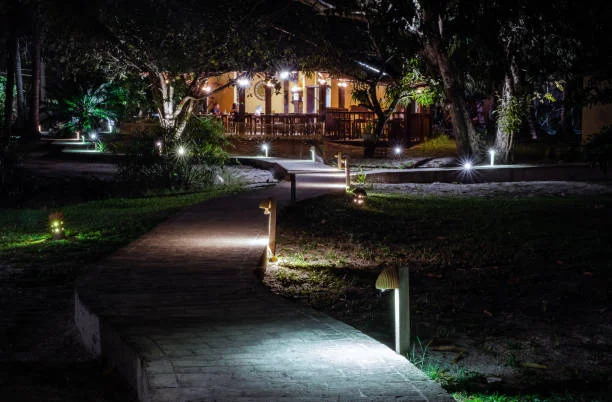
Energy efficiency in landscape lighting is no longer a compromise — it is a feature. Modern landscape path lighting from Sunbright Lighting prove that low energy consumption and beautiful illumination are not competing goals but complementary qualities Outdoor Path Lighting of well-engineered LED systems.
The Energy Efficiency Revolution in Pathway Lighting
The energy savings of LED pathway lighting compared to older halogen or incandescent systems are so substantial that they are almost difficult to believe. A typical halogen pathway light consumed 20 watts. Its modern LED equivalent producing equivalent light output typically uses 3 to 5 watts — an energy reduction of 75 to 85 percent.
For a complete system of twelve pathway lights running five hours nightly, this reduction means the difference between a monthly electricity cost of approximately $3.60 (halogen) and approximately $0.65 (LED). Over a typical 10-year LED lifespan, the energy savings alone total hundreds of dollars — making quality LED pathway lights a genuinely economic investment even before considering the reduced maintenance costs.
Low Voltage System Design for Maximum Efficiency
The efficiency of a low voltage pathway lighting system depends on more than just the LED fixtures. The transformer’s efficiency, the cable gauge used, and the quality of electrical connections all affect how much input energy becomes useful light.
Modern electronic transformers convert AC mains power to 12V output at efficiencies above 90 percent. Older magnetic transformers operated at 70 to 80 percent efficiency. If your landscape transformer is more than ten years old, replacing it with a modern electronic version provides an efficiency improvement that complements the savings from LED fixture upgrades.
Cable gauge affects voltage drop, which affects both efficiency and light output quality. Undersize cable wastes energy as heat in the cable resistance while simultaneously dimming the fixtures it feeds. Always use 12-gauge cable for landscape lighting runs longer than 30 feet.
For homeowners who want to pair landscape path lighting with landscape pathway lights from Kings Outdoor Lighting for pathway lights that complement the front yard and driveway approach, maintaining consistent fixture styles and colour temperatures throughout the front approach creates a cohesive welcome that reinforces the curb appeal goal.
Photocell and Smart Timer Integration
Even the most efficient LED pathway lights consume energy unnecessarily if left running after they are needed. Photocell-equipped transformers turn the system off automatically at dawn — no manual intervention required — and adjust automatically to seasonal changes in daylight hours.
Smart timer systems offer additional control: full brightness from dusk to 10pm, reduced brightness to 30 percent from 10pm to midnight, and complete shutdown from midnight to dawn. This multi-level scheduling optimises energy use across the night while maintaining appropriate security and safety lighting during higher-risk early evening hours.
The ROI Calculation for Low Voltage Pathway Systems
A complete LED low voltage pathway lighting system for a typical residential front yard — twelve fixtures, transformer, cable, and installation — might cost $400 to $800 installed. The ongoing electricity cost at modern LED efficiency might be $8 to $15 per year. At an energy cost savings of $45 to $55 per year compared to equivalent halogen, the energy savings alone recover the equipment cost within 8 to 15 years.
For homeowners wanting to add premium 120V exterior post lighting at the street entry that complements their efficient low voltage pathway system,120V Outdoor Post Lights from Sunbright Lighting offers a range of post fixtures that provide the architectural quality to match the quality of a well-designed low voltage landscape system.
Take the next step: See how these insights apply to your workflow at 2A Magazine.