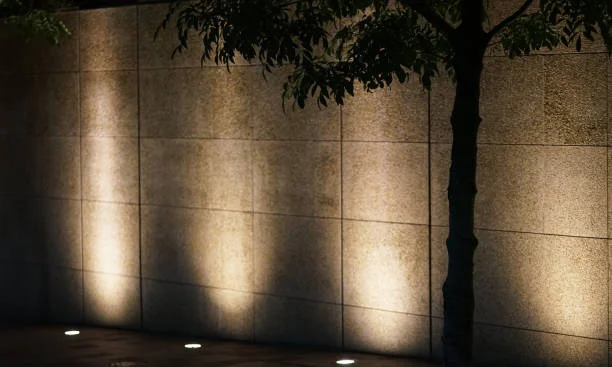
In-ground well lights are among the most technically sophisticated fixtures in landscape lighting — but their effect is deceptively simple. When brass well lights from Kings Outdoor Lighting are placed correctly, they seem to conjure light from the earth itself, creating dramatic uplighting effects that change how a garden reads after dark.
The Science of Uplighting from Ground Level
Uplighting from ground level works on a principle opposite to our everyday experience of light. In nature, light comes from above — sunlight, moonlight, and artificial overhead sources all illuminate objects from the top. Our visual systems are calibrated for this: we perceive objects illuminated from above as natural and objects illuminated from below as dramatic, unusual, and theatrical.
This is precisely why uplighting trees, sculpture, and architectural features from well lights creates such powerful effects. The brain recognises the unusual lighting direction as intentional and interesting. Texture becomes prominent as light rakes across surfaces from below. Shadows in the canopy create movement and depth that daylight never reveals.
Planning a Well Light Uplighting Scheme
Before purchasing well lights, spend an evening in your garden with a powerful flashlight. Hold it at ground level and aim it up into the subjects you are considering uplighting. Move around the tree or feature, changing the angle and distance. This field test — low-tech as it sounds — is the most reliable way to discover which uplighting positions will produce the effects you want.
Note particularly how the beam angle affects the coverage. A narrow beam illuminates a column of trunk or masonry dramatically but may leave the canopy largely in darkness. A wider beam spreads further up into the canopy but loses some of the concentrated drama.
For homeowners who want to complement their brass well lights with 12 volt light fixtures from Sunbright Lighting for garden display features, the combination of warm uplighting from well lights and carefully placed 12V outdoor LED fixtures creates a comprehensive garden illumination scheme.
Soil Conditions and Housing Selection
In-ground well lights must be selected with your specific soil conditions in mind. Sandy, free-draining soils present minimal waterproofing challenges — water moves away from the fixture quickly and flooding is rarely an issue. Heavy clay soils and low-lying areas present much more demanding conditions where fixtures may sit in saturated or flooded soil for extended periods.
For challenging soil conditions, look for well lights specifically rated for continuous submersion (IP68) and housed in stainless steel or solid brass rather than aluminium. These materials resist the corrosive effect of soil chemistry and moisture contact that damages cheaper housings over time.
Maintaining Well Lights Through the Seasons
Ground-level fixtures accumulate debris in ways that above-ground fixtures do not. Grass clippings, fallen leaves, and soil work into the lens area around the fixture top. After mowing or leaf fall events, clear debris from around fixture tops immediately — accumulated organic material holds moisture against the fixture housing and can cause accelerated corrosion.
In climates with hard freezes, soil heaving is a common problem. The freeze-thaw cycle lifts and tilts fixtures that were perfectly aligned when installed. Check well light alignment in early spring each year and reset any tilted fixtures before the growing season begins.
For homeowners adding smart 12V LED fixture controls to expand their well light system’s capabilities, Smart LED 120V Fixtures from Sunbright Lighting offers smart LED 120V fixtures that integrate with modern home automation systems while maintaining a cohesive design aesthetic throughout the property.