Some furniture styles never truly disappear. They evolve and reappear in fresh forms. Mid-century modern design is one of these enduring styles. Even after many years, it still influences how we add warmth, balance, and function to our homes.
The TV stand is a clear example of this lasting appeal. Once a simple piece of furniture, it has become much more important as living rooms have changed. Larger screens, more devices, and extra storage needs have made it a central feature in the room.
Instead of disappearing, the mid-century TV stand has gradually been reinterpreted within contemporary interiors. The familiar proportions remain, but materials, surface details, and storage solutions often reflect the needs of modern living rooms.
The Changing Role of the Television Console
To understand why mid-century TV stands are popular again, it helps to look at how living rooms have changed.
Years ago, TVs were smaller and often tucked inside cabinets or entertainment centers. These pieces were usually tall and bulky, made to hide the screen when it wasn’t being used. There was storage, but the TV was still the main focus.
Today, it’s often the opposite.
Modern televisions are large, flat, and stand out in the room. The furniture below them needs to balance this. Living rooms now serve many purposes, holding streaming devices, routers, game consoles, and sound systems. Storage isn’t just a bonus anymore—it’s a must.
In this setting, getting the proportions right is key. TV stand furniture needs to hold all the tech without overwhelming the room. This is where mid-century design stands out. Instead of hiding technology, it frames it. Rather than using heavy cabinets, it features lighter shapes with slim legs. The result is furniture that anchors a space without making it feel closed in.
Why Mid-Century Design Keeps Adapting
Mid-century furniture wasn’t just about looks. The style focused on clear structure and efficient shapes. Designers paid attention to proportions, used quality materials, and kept things simple and practical. These qualities fit well in today’s interiors.
Low consoles work well with wall-mounted TVs. Natural wood finishes soften the look of screens and speakers. Raised bases help rooms feel more open, which is especially helpful in small apartments and open layouts.
Mid-century design avoids too much decoration and instead focuses on details like shaped legs, smooth edges, and textured surfaces. These subtle touches help the furniture fit in with both simple and more layered modern interiors.
Because the style is simple at its core, it’s easy to update. Furniture designers can add new materials, textures, and storage solutions without losing what makes the design special.
When Furniture Becomes Part of the Architecture
A recent trend in furniture design is to create pieces that feel less like separate objects and more like anchors for the space.
The media console is a good example. In many modern living rooms, it sits right under the largest item in the room, the TV. Its size, material, and style shape the feel of the entire wall.
A console with the right proportions helps balance the room. If it’s too small, the TV looks top-heavy. If it’s too large, the furniture competes with the rest of the space.
Mid-century proportions solve this problem well. Long horizontal lines spread out the visual weight, and raised bases keep the space under the cabinet open.
Designers often experiment with new textures and storage ideas to refresh this style. Fluted wood, glass panels, and sliding doors are popular ways to add interest without making the design feel crowded.
One newer furniture brand exploring this area is Arrtle. The company stands out for its unique approach, blending art and everyday life in ways not often seen in the industry.
Arrtle sees furniture as more than just functional; it’s like sculptural art for the home. This unique perspective considers how lines, textures, and proportions work together to add an artistic touch, setting Arrtle apart from brands that focus more on decoration than design.
For Arrtle, mid-century shapes are a starting point, not a limit. The brand stands out by reimagining surfaces and details in a modern, artistic way, creating pieces that break from tradition but still respect their roots. In this approach, the traditional styles are less about strict historical accuracy and more about creative reinterpretation.
Case Study: A Walnut TV Stand with Arched Glass Doors
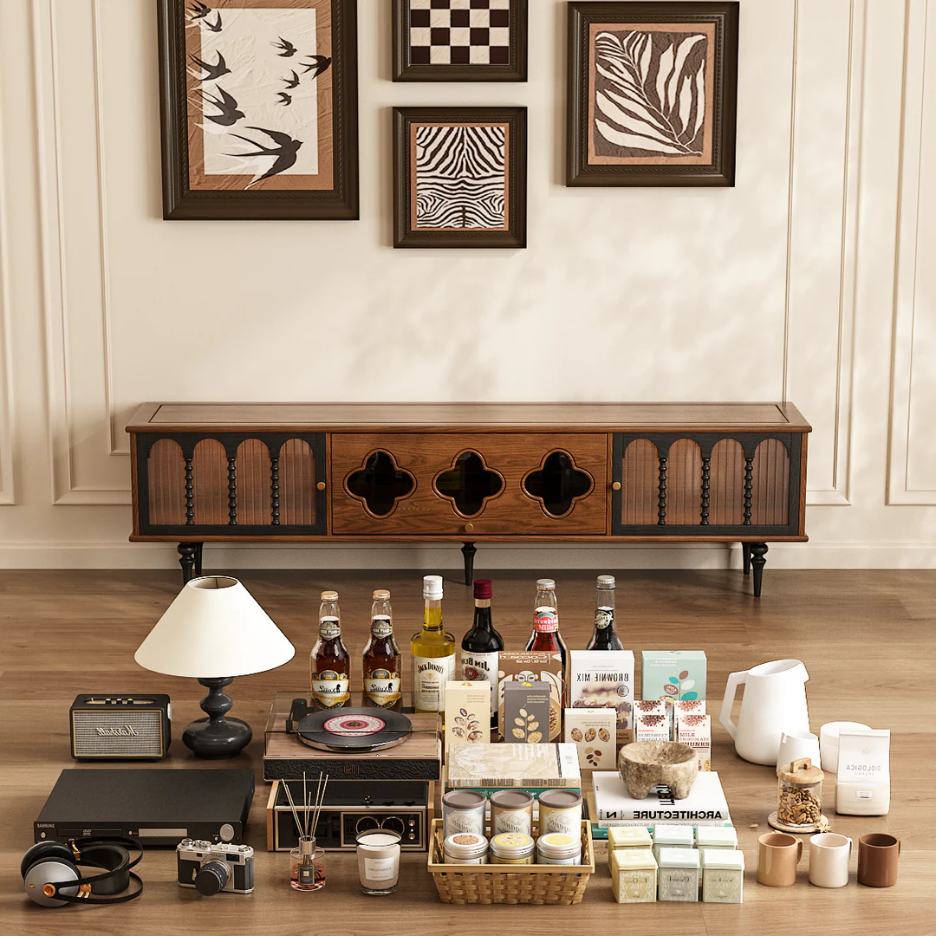
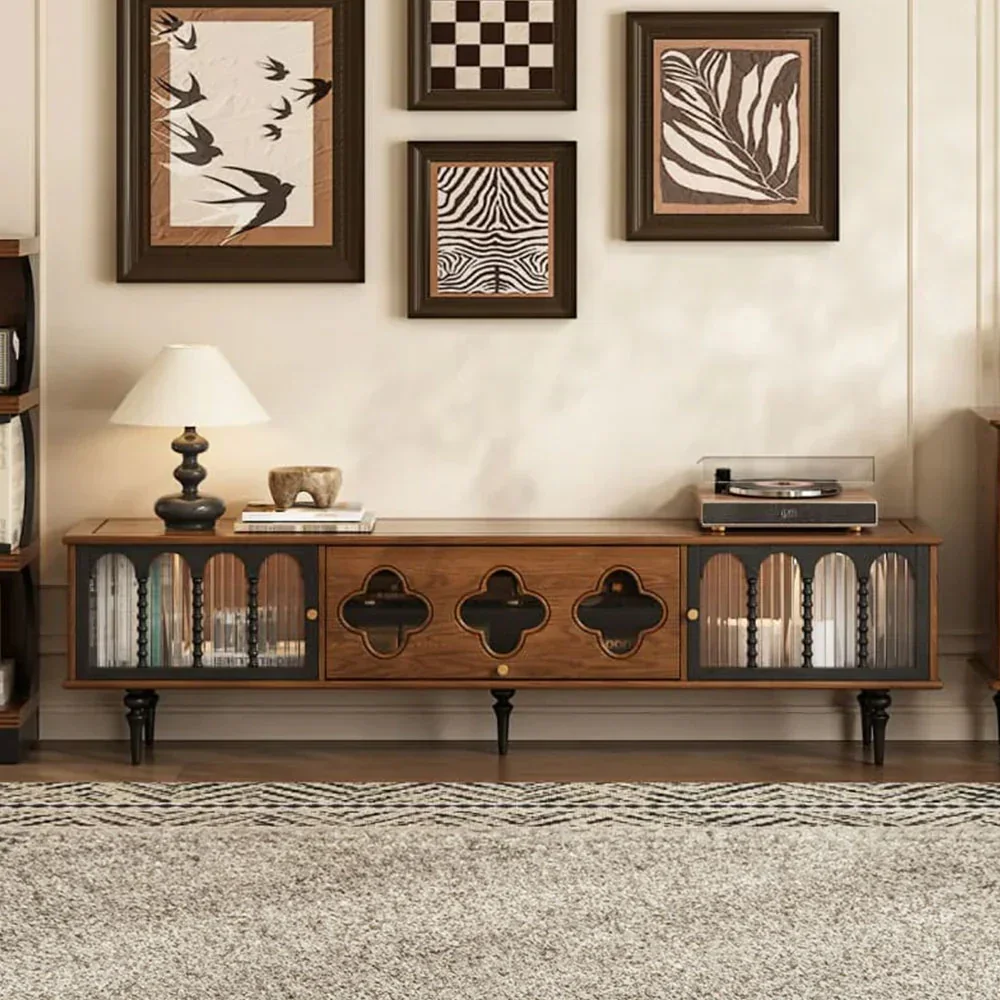
A good example of this new approach is Arrtle’s fluted glass walnut TV stand. It shows how mid-century ideas can evolve while keeping their original style.
At first glance, the console has many classic mid-century features. It stands on slim legs that lift it off the floor, making it look lighter. Its long, low shape helps balance out big TVs above it.
The material palette is equally familiar. Walnut finishes remain a hallmark of mid-century interiors, prized for their warmth and visible grain. Against neutral walls and dark screens, the wood introduces texture and depth.
The design’s details make it stand out.
Instead of solid doors, the console features arched glass panels in fluted frames. This combination adds gentle variety to the surface. Light passes through the glass, and the fluted pattern adds rhythm without making it look heavy.
Functionally, the cabinet also hides storage for devices and accessories, with cutouts for cables so everything stays connected but out of sight. This way, the furniture works for modern tech but still keeps the clean look of mid-century design. The piece reads as quietly sculptural—structured enough to anchor a media wall but refined enough to integrate with surrounding furniture.
The Arrtle Furniture Design Formula
Across its collection, Arrtle uses a clear design strategy that sets it apart in the market. The brand focuses on lasting design principles as well as its own creative philosophy.
Arrtle’s approach is based on four main ideas:
1. Respect the authentic proportion.
Mid-century furniture works because it balances height, width, and seat height. Keeping these proportions makes the design feel clear and balanced. Clear.
2. Introduce artistic surface detail.
Textures like fluted wood or patterned glass add interest without distracting from the main shape.
3. Integrate contemporary storage needs.
Modern living rooms need hidden spaces for electronics and accessories, so practical storage is essential.
4. Use warm, natural materials.
Wood remains central to the look. It softens the presence of technology and helps the furniture blend with the rest of the room. Ringing these ideas together with its creative vision, Arrtle keeps offering new takes on classic furniture. This approach helps the brand stand out in the design world.
Why the Mid-Century TV Stand Still Evolves
Furniture trends change quickly, but some designs last because they truly work. The mid-century modern TV stand is one of those enduring styles.
Its long, low shape helps support large screens. The raised base keeps rooms feeling open. The materials add warmth to spaces filled with technology.
As living rooms keep adapting to new lifestyles, with larger screens, more devices, and more uses, designers will likely keep returning to these principles. The basics of the design stay the same—it’s the details that change. That lens, the contemporary reinterpretation of mid-century consoles, is less about nostalgia yet more about continuity. The language continues to be familiar, but the conversation remains evolving.
As tradition and modern life come together, the mid-century TV stand becomes more than just a piece from the past. It shows the lasting power of good design and continues to shape how we live, both now and in the future.