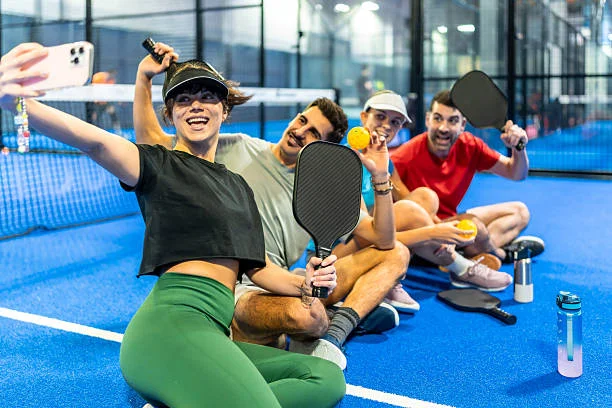
Every company faces the same challenge when planning team events: finding something that actually gets people engaged. The usual options — bowling alleys, escape rooms, ropes courses — have been done to death. Employees show up, go through the motions, and forget about it by Monday. But over the past two years, one activity has quietly taken over the corporate events space, and it is showing no signs of slowing down.
Pickleball has moved well beyond retirement communities and suburban recreation centers. It is now the fastest-growing sport in the United States for the third consecutive year, and corporate event planners have taken notice. The sport checks every box that makes a team building activity actually work: it is easy to learn, physically accessible to nearly everyone regardless of age or fitness level, and naturally creates the kind of casual interaction that breaks down workplace hierarchies.
What Makes Pickleball Work for Corporate Groups
The genius of pickleball as a corporate activity is the learning curve — or rather, the lack of one. Unlike golf, which can take years to become competent enough to enjoy, most people can rally a pickleball back and forth within ten minutes. That low barrier to entry means nobody feels excluded. The senior VP and the newest hire are on roughly equal footing, which is exactly the dynamic you want at a team event.
The court size plays a role too. A pickleball court is roughly a quarter the size of a tennis court, which keeps players close together and conversation flowing naturally. Doubles is the default format, so every game requires partnership and communication. Companies running round-robin tournaments find that employees who rarely interact in the office end up strategizing together between points.
The format also scales well. A single pickleball court can cycle through teams quickly with short games to 11 points, meaning a group of 40 or 50 employees can all play multiple matches in a two-hour window. Compare that to golf, where that same group would need an entire afternoon and a significant budget just to get everyone through 18 holes.
Branding the Experience
Smart companies are taking pickleball events a step further by incorporating branded gear into the experience. Custom pickleball paddles and accessories printed with the company logo turn a team outing into a lasting brand touchpoint. Employees take the gear home and keep using it, which extends the value of the event far beyond a single afternoon.
Companies like Custom Logo It specialize in providing personalized pickleball gear for corporate events, offering custom pickleballs, paddles, and accessories that can be branded with any logo or design. This kind of customization transforms generic swag into something people genuinely want to use, which is the entire point of promotional products.
Some organizations are going even further, building branded pickleball kits that include paddles, balls, and carrying bags as part of employee welcome packages or client gift boxes. It is a fresh alternative to the standard notebook-and-water-bottle gift set that most companies default to.
Planning a Corporate Pickleball Event
The logistics are simpler than most team activities. Many cities now have dedicated pickleball facilities that offer corporate event packages, but the sport is portable enough that companies can set up temporary courts in a parking lot, gymnasium, or outdoor space with minimal equipment. Portable nets cost under $100 and set up in minutes.
For companies planning their first pickleball event, the typical format is a round-robin doubles tournament lasting two to three hours. Teams rotate partners each round so everyone plays with different colleagues. Adding small prizes for categories like best sportsmanship or most improved keeps the energy high without making it overly competitive.
Catering is straightforward since pickleball is not as physically taxing as something like a company softball game. Light food and drinks courtside keep things social. Many companies pair the activity with an outdoor happy hour, letting the event transition naturally from competition to casual networking.
Why It Matters Beyond the Event
The business case for pickleball as a team building tool goes beyond a fun afternoon. Employee engagement surveys consistently show that workers who feel socially connected to their colleagues are more productive and less likely to leave. Activities that create genuine shared experiences — not forced icebreakers — build those connections more effectively.
Pickleball also sends a signal about company culture. Choosing a modern, inclusive, and energetic activity over the same tired options tells employees the company pays attention to what people actually enjoy. That matters more than most leaders realize, especially when competing for talent in a tight labor market.
The companies adopting pickleball for corporate events are not following a fad. They are recognizing that the best team building happens when people are genuinely having fun, and right now, nothing gets a mixed group of adults laughing and competing quite like a pickleball court.