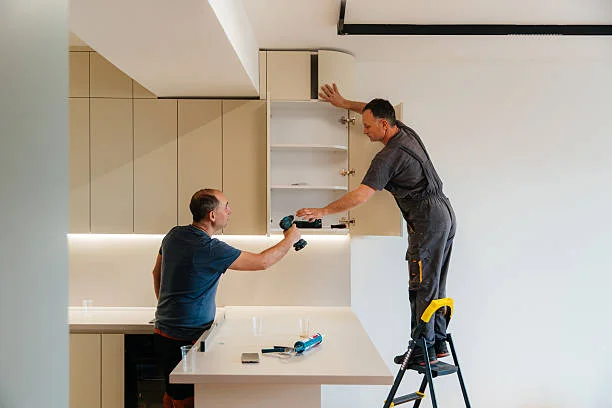
The great Australian property dilemma is a conversation that happens over dinner tables across the country. You love your neighbourhood, your local café knows your order and the kids are settled in school. However, the house itself just isn’t working anymore. Perhaps the kitchen is a relic from the 90s, the layout is too closed off or you have simply outgrown the space Renovate or Relocate.
This leaves homeowners at a crossroads: do you endure the dust and disruption of a major renovation, or do you pack up and find something better? It is rarely a simple choice. Both options come with significant financial and emotional costs. To make the right decision, you need to remove the emotion for a moment and look strictly at the logistics, the market conditions and the bottom line.
The Financial Reality of Renovating in 2025
For many, the preference is to stay put. Renovation offers the allure of customisation. You get to design the exact wardrobe space you need or finally install that butler’s pantry. However, the financial landscape of construction has shifted dramatically in recent years Renovate or Relocate. The days of a cheap cosmetic flip are largely behind us.
Before you start tearing down walls, it is crucial to crunch the numbers with current market rates in mind. Supply chain issues and labour shortages have driven prices up significantly. Recent data highlights that renovation costs in Australia have surged, with industry experts reporting that per-square-metre rates for quality projects have risen sharply. This means a standard extension could easily cost as much as a deposit on a new property.
If you do decide to renovate, the goal should be capitalising on Return on Investment (ROI). You want to ensure that for every dollar you spend, you are adding at least that much value to the property’s price tag. This means prioritising high-impact changes over purely personal tastes. For instance, curb appeal plays a massive role in valuation. As noted in general home improvement trends, investing in outdoor structures and visible upgrades can significantly boost your home’s market appeal, making the renovation effort financially worthwhile compared to interior changes that might go unnoticed.
The Hidden Costs of Relocating
If the thought of living on a construction site for six months sounds like a nightmare, relocating might seem like the cleaner option. It offers a fresh start and an immediate solution to your space problems. However, the “transaction costs” of buying and selling in Australia are among the highest in the world.
When you sell, you lose a chunk of equity to agent commissions and marketing fees. When you buy, stamp duty strikes a heavy blow to your budget. In cities like Melbourne or Sydney, stamp duty alone can amount to a year’s salary. These are “sunk costs” that you never get back, unlike renovation spending which adds value to your asset Renovate or Relocate.
Then there is the logistical cost of the transition itself. Moving house is often cited as one of life’s most stressful events, but proper financial planning can mitigate this. Many homeowners focus solely on the property price and forget the immediate expenses of the transfer. To avoid budget blowouts during the transition, it is essential to source accurate removalist quotes early in the process. This allows you to factor in the true cost of a professional, insured service rather than relying on rough estimates that can leave you out of pocket on a moving day.
Weighing Your Options
If you are still on the fence, it helps to break the decision down into three core categories: Time, Risk and Lifestyle.
- Time: A major renovation can take anywhere from three to twelve months. During this time, you might need to pay rent elsewhere, adding to the cost. Buying a new home is generally faster, usually taking 60 to 90 days for settlement, though finding the right house can take months of weekends spent at inspections.
- Risk: Renovations are notorious for “budget creep.” Once you open up a wall, you might find wiring issues or structural problems that cost thousands to fix. Relocating carries market risk. You might sell in a dip or buy at a peak, potentially losing equity if the market shifts during your settlement period.
- Lifestyle: This is the intangible factor. Renovating allows you to keep your community connections, your neighbours and your routine. Relocating forces you to rebuild those networks from scratch, which can be difficult for families with young children or teenagers.
Making the Final Call
Ultimately, the decision to renovate or relocate often comes down to the structural bones of your current home. If your block has good orientation and the house has solid foundations, renovating is often the smarter long-term play despite the high costs of construction per square metre. It allows you to manufacture equity rather than paying it to the government in taxes.
However, if your current home faces south, is on a main road or has a floor plan that cannot be fixed without a bulldozer, relocating is likely the better financial move. No amount of marble benchtops can fix a bad location. Before you commit to either path, speak to local real estate agents to value your home “as is” versus “renovated,” and get quotes from builders Renovate or Relocate.
Compare the gap between your current home’s value and your dream home’s price. If the cost to renovate is less than the cost to upgrade plus stamp duty, stay and build. If the numbers are close, pack your boxes and find a home that already suits your needs.
Unlock doors to ideas you didn’t know you were seeking at 2A Magazine.