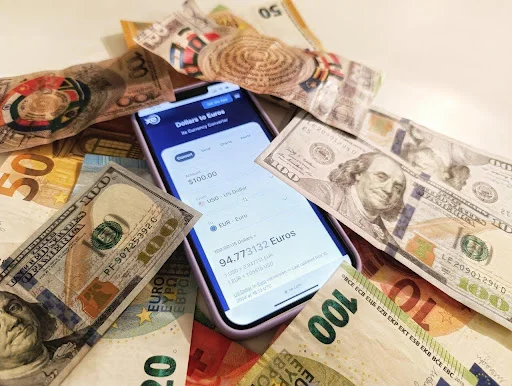
Sending financial support to family or friends in Guatemala is a vital connection for many living in the United States. You work long hours to earn your income, so naturally, you want to ensure the maximum amount reaches your intended destination Currency conversion.
The process of moving money across borders might appear instant and seamless on your phone screen, but several economic gears turn in the background to make it happen. These unseen mechanisms determine exactly how much value lands in your recipient’s hand.
Understand the Quetzal-to-Dollar Spread
When you search for the current value of a currency, you typically see the mid-market rate. This figure represents the midpoint between the buy and sell prices of two currencies on the global market. However, the rate you receive when converting USD to GTQ is rarely this pure number. Financial institutions add a margin to this rate to secure a profit for facilitating the trade. This difference is known technically as the spread Currency conversion. Watching this spread is crucial because a wider gap results in fewer quetzales for your recipient.
Money transfer operators like Western Union determine their own exchange rates based on their internal data and market conditions. Consequently, the rate you see can fluctuate significantly depending on which service you choose.
Always comparing the offered rate against the mid-market rate allows you to see the markup clearly. A smaller spread means more of your money actually makes it across the border rather than staying in the provider’s pocket.
Spot the Difference between Wholesale and Retail Rates
Wholesale rates are the exclusive prices available to major banks and large financial institutions when they trade massive volumes of currency directly with one another. These are the most favorable rates in existence. Retail rates are what individual consumers access.
The disparity between the wholesale rate and the retail rate is where the service provider generates revenue. While you cannot typically access the wholesale rate for a personal transfer, acknowledging its existence helps you evaluate the fairness of the retail rate you are offered.
Identify When the Rate Is Locked Versus Floated
Certain transfer methods secure the exchange rate the instant you agree to the transaction. You possess certainty about exactly how many quetzales will be available for pickup, regardless of market shifts during the processing time.
Conversely, other options utilize a floating rate. In this scenario, the actual conversion happens when the funds are processed or delivered. If the currency value shifts during that delay, the final total might differ from your initial estimate.
Compare Bank Rates to Specialized Remittance Providers
Banks are frequently the default option for many people simply because the account already exists. However, traditional banks often provide Currency conversion less competitive exchange rates for smaller, personal transactions because their infrastructure favors large corporate dealings.
Specialized remittance companies dedicate their entire operation to moving funds for individuals. Due to this specialized focus and high volume of specific corridors, they frequently offer tighter spreads.
Factor Conversion Fees into Your Total Transfer Cost
The exchange rate constitutes just one component of the total expense. Many services impose an upfront fee for the service of moving the funds. Occasionally, a provider might advertise an excellent exchange rate but then levy a heavy service fee.
Alternatively, you might see advertisements for “zero fees”, but the exchange rate is poor to compensate for the lost revenue Currency conversion. The only way to gauge the true cost is to calculate the total amount of dollars you spend versus the total quetzales received.
Find more valuable tips in our related article at 2A Magazine.