A Country That Repeats Itself Gently
Portugal rarely introduces itself directly. It prefers repetition. Light returns in familiar ways across different cities. Tiles reappear with slight variations. Streets slope often enough that effort fades into habit. Even before leaving Lisbon, there’s a sense that distance will matter less than duration — how long you sit, how quietly attention loosens, how little the idea of progress needs to be tracked.
Departure Without Ceremony
Departure doesn’t announce itself clearly. The Alfa Pendular train arrives, opens, closes, and begins moving without ceremony. Acceleration is subtle enough to miss. Suburbs slide past without insisting on farewell. Lisbon doesn’t fall away dramatically; it thins. Sound softens first, then density. Leaving feels procedural rather than emotional, as though motion were already built into the city’s everyday rhythm.
Lisbon’s Habit of Letting Go
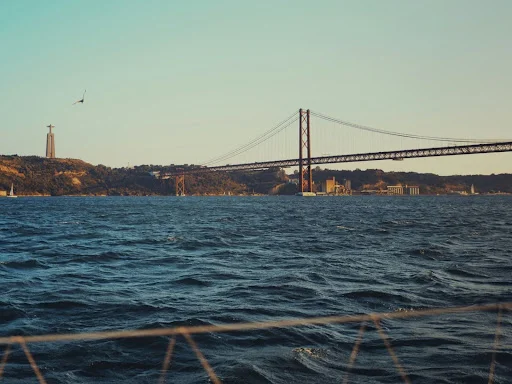
Lisbon is accustomed to letting things go. Ferries cross the river constantly. Trams crest hills and disappear again. Streets tilt downward, suggesting exit rather than enclosure. Even standing still, movement feels nearby. The city doesn’t ask to be held onto. It assumes continuation. That looseness stays present longer than expected, carried quietly into the journey itself.
A Landscape That Refuses Attention
Between Lisbon and Porto, the landscape avoids spectacle. Fields appear worked rather than admired. Towns surface briefly, then dissolve again without explanation. Nothing demands to be remembered. You stop trying to identify where you are. The window becomes peripheral. Attention drifts inward, then outward again, without settling on anything in particular.
Comfort That Doesn’t Perform
Inside the carriage, comfort doesn’t announce itself. Seats feel shaped for repetition, not display. Materials suggest durability rather than luxury. Sound remains low without enforced quiet. Nothing calls attention to itself. This restraint becomes noticeable only later, when you realise how little effort the journey required. Comfort exists so movement can disappear.
Time Without Accumulation
Time stretches without resistance. Minutes pass without adding up to anything concrete. There’s no sense of rushing, but no sense of delay either. The journey occupies a middle space — not something to endure, not something to celebrate. It simply happens, steadily, while thought moves elsewhere.
The Interior of the Country
Portugal’s interior doesn’t interrupt itself. Roads, fields, towns, and tracks feel aligned, adjusted gradually rather than imposed. Nothing signals that arrival is near. Nothing suggests it’s far away. The land behaves consistently enough that it stops feeling like scenery and starts feeling like duration.
Porto Gathering Itself
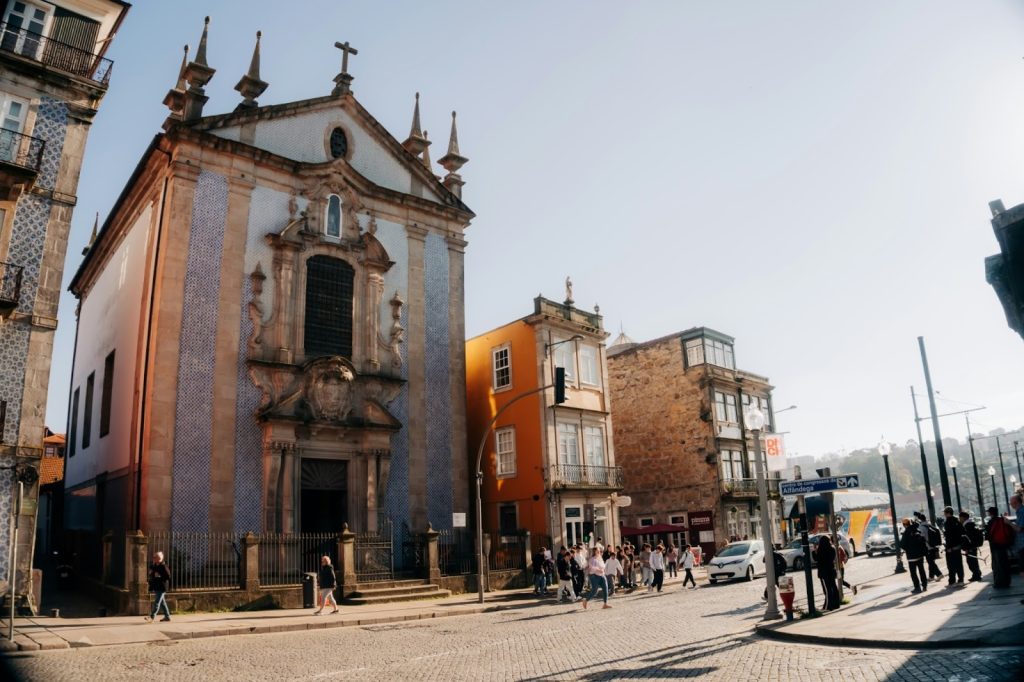
Porto gathers itself slowly. Arrival doesn’t announce contrast; it compresses. Streets narrow. Stone replaces tile. The city feels denser, held closer to the river. You sense elevation before you register landmarks. The Douro appears suddenly, anchoring everything around it. Porto doesn’t spread outward. It collects.
Difference Without Opposition
Lisbon and Porto are often described as opposites, but that framing fades once you move between them quietly. One releases. The other contains. Both resist explanation. Neither performs for attention. Familiarity replaces impact quickly. You adjust posture rather than perspective.
When Travel Stops Being a Journey
At some point, the idea of travelling dissolves. You’re no longer on the way to anything. You’re simply sitting, moving, existing within a corridor that doesn’t require engagement. Stations blur. Distances lose shape. What remains are small, unorganised impressions — light shifting, a brief stillness, the sensation of slowing without anticipation.
Infrastructure That Aims to Disappear
What stands out later is how ordinary the experience aimed to be. There’s no attempt to elevate the journey beyond function. It doesn’t frame itself as luxury or innovation. It operates. That ordinariness feels intentional. The system succeeds by becoming invisible.
What Remains After Movement Thins Out
When the journey returns in memory, it doesn’t arrive as an image of speed or scenery. It surfaces as continuity — of having crossed space without friction, of having arrived without interruption. Lisbon and Porto remain present, but loosely, as atmospheres rather than destinations. The experience doesn’t conclude. It disperses, settling quietly into memory without asking to be summarised.
Editor’s pick: A must-read for smart growth at 2A Magazine.