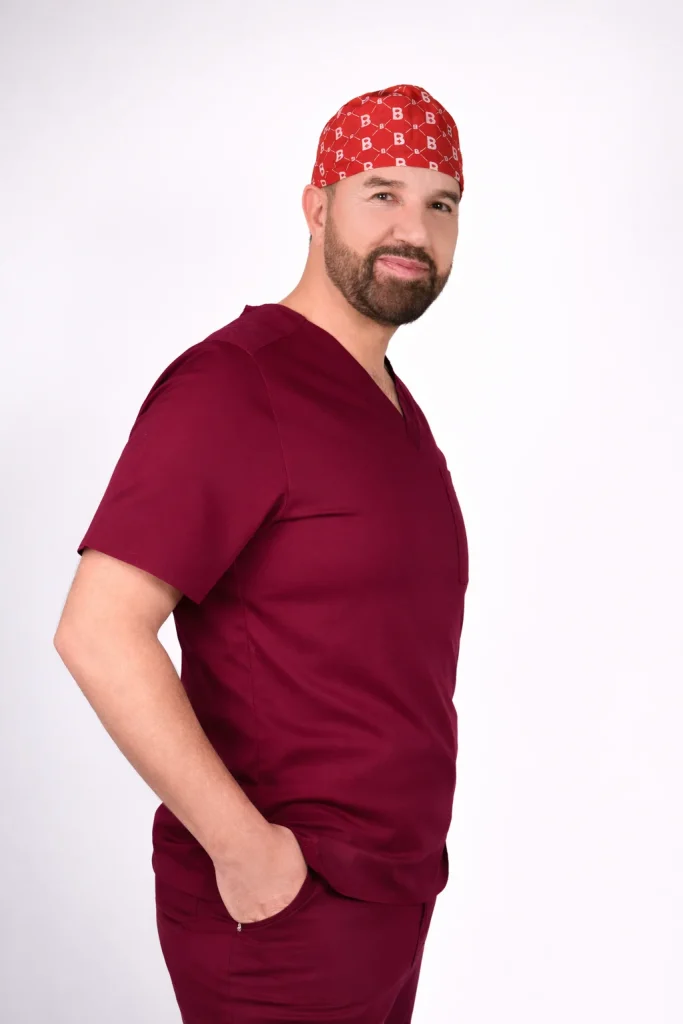
From the perspective of an artist who reads form, not merely that of a plastic surgeon.
Aesthetics is not simply about making a face or a body “better.”
It is the art of sensing proportion, reading light, and understanding how texture evolves over time. Surgery is merely the field where this art is practiced—no more, no less.
Dr. Bülent Cihantimur, founder of Estetik International, has built his career on understanding the human variables that shape surgical outcomes—variables that resist standardization and cannot be reduced to code.
Today, plastic surgery has long surpassed the technical boundaries of medicine. The question is no longer how many millimeters are cut or which suturing technique is used. The real question is this: Does the result bring a person closer to themselves, or does it confine them within a universal mold?
Art history teaches us one essential truth: Beauty begins with symmetry, but it is completed by character. Michelangelo’s David is compelling not because it is flawless, but because it is human. A slight asymmetry, an unexpected expression, a measured imperfection—these are what make a form feel alive. Plastic surgery must meet art precisely at this point.
Modern aesthetic thinking is moving away from the obsession with looking “younger” or “smoother.” In its place comes correct proportion, timeless expression, and an aesthetic identity unique to the individual. Every face has its own architecture: the structural role of the cheekbones, the balancing function of the jaw, the quiet dialogue between the nose and the rest of the face. Any intervention that ignores this architecture may be technically successful, yet aesthetically incomplete.
When we closely observe the aesthetic landscape in the United States, a clear shift emerges: from excess to restraint, from standardization to originality. CEOs, artists, and leaders are not seeking a “done” look, but a powerful sense of naturalness. Because leadership, like aesthetics, derives its persuasive force not from exaggeration, but from clarity.
The future of plastic surgery does not lie in more fillers or deeper incisions. It lies in a more refined way of seeing. In educating the eye before the hand. In being able to look like a sculptor—and knowing when to stop.
True aesthetics requires courage.
Not the courage to do more, but the courage to say enough at exactly the right moment.
And perhaps most importantly:
Well-executed aesthetics are not noticed.
They are felt.
Just like a true work of art.