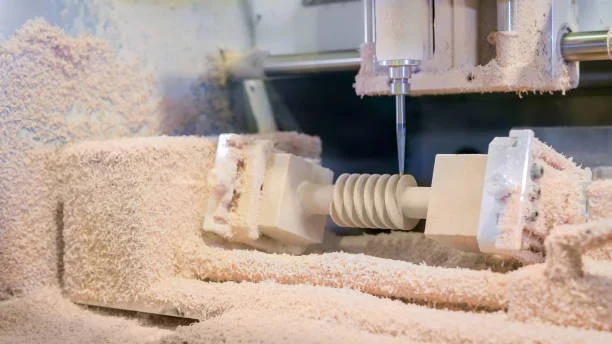
Stressing precision and performance? The services of PEEK CNC Machining will provide superior performance on CNC-machined components and parts.
Click here to read more about Expert PEEK CNC Machining Services -Lecreator
Understanding PEEK Material
PEEK is the best thermoplastic engineering material because of its unique mechanical, thermal, and chemical properties.
For more in-depth information, you should view Expert PEEK CNC Machining Services Supplier -Lecreator
Properties of PEEK Material
In comparison to other engineering thermoplastics, PEEK has a fantastic performance capability profile:
High Temperature Resistance: Can operate continuously at a temperature at 250°C (480°F)
Exceptional Strength: Is comparable to tensile strength of metals
Chemical Resistance: Can withstand aggressive chemicals, fuels, and solvents
Low Moisture: and maintains dimensional stability in moisture-laden environments
Biocompatibility: some grades of PEEK are FDA approved and are suitable for medical applications
Excellent Wear Resistance: PEEK is suitable for sliding and bearing applications
Application of PEEK in Industry
Across industries PEEK materials perform critical functions. Aerospace engineers use PEEK for structural components that are lightweight . PEEK is popularly chosen for surgical instruments and implants by medical device manufacturers. PEEK is used in the semiconductor industry for equipment that handles wafers because of its purity and static dissipative properties.
Benefits of Using PEEK
PEEK is up to 70% lighter than steel, which is an advantage over metals. The self-lubricating property of PEEK would cancel the need for external lubricant in many cases. PEEK is also a remarkable insulator and is even transparent to radar, which makes it important for use in electronics and defense.
PEEK and CNC Machining
Working with PEEK has benefits but it is also a bit challenging. PEEK CNC machining can be a lengthy process, which can be shortened by employing experts on the CNC machining of PEEK.
Use of CNC Machining on PEEK
Bushings, medical implants, seals, valve seats, electrical insulators, aerospace brackets, and other precision components can be made by CNC machining of PEEK stock. The process also allows the production of both prototypes and bulk production.
Tips for Machining PEEK
The right approach is needed for machining PEEK:
– Choice of Tools: for the best life span of the tools and for great finish, use carbide or diamond-coated tools. Tools with sharp edges will reduce the stress and heat built up.
– Cutting Variables: uniform feed rates and a spindle speed that isn’t too high are ideal for machining PEEK to avoid degradation of the material. Avoid machining metals because PEEK is thermally sensitive and requires careful handling.
– Coolant: to avoid losing the PEEK of its dimensions, air cooling or water-soluble coolants can be used. Some processes will need to do dry machining to avoid introducing a contaminant.
– Workholding: The right fixturing will reduce the chances of distortion of PEEK parts during machining.
Difficulties Faced When Machining PEEK
PEEK brings challenges to any shop unfamiliar with its machining. It has low thermal conductivity and therefore, localized heating can occur which can cause some surface damage and/or cause some dimensional changes. PEEK spring back requires tool path changes to avoid cutting the tool path. Lastly, PEEK stock is very pricey so machining mistakes can be very costly.
Using skilled PEEK CNC machining services helps get past these problems and provides more consistent and quality results.
Machined PEEK Components and Applications
Categories of PEEK Components
Some of the common PEEK machined parts are:
– Bushings and bearings for use in extreme temperatures
– Gaskets and seals for use in chemical processing equipment
– Insulators and connectors for electrical use
– Orthopedic implants and spinal fusion cages
– Components for handling semiconductors
– Fasteners and brackets for the interior of aircraft
PEEK Components Machined Parts in Different Industries
Aerospace: Interior fittings, cable insulation, and weight-critical structural parts
Medical: Devices that are implantable, surgical tools, and equipment that can be sterilized
Oil and Gas: Seals, rings, and tools for downhole use in extreme environments
Automotive: Components for transmissions, housings for sensors, and applications under the hood
Electronics: Insulating parts, sockets for testing, and carriers for wafers
Examples of the Use of PEEK
In spinal surgery, PEEK cages have dramatically changed fusion operations. With comparable mechanical support to bone, their radiolucency offers clear imaging. PEEK brackets in aerospace have replaced aluminum parts, providing a 40% reduction in weight while retaining structural strength.
Finishing Options for PEEK CNC Machined Parts
Techniques In CNC Machined PEEK Finishing
A variety of treatments can be applied to PEEK Parts. Finishing can enhance functionality as well as improve the appeal of the parts.
As-Machined: The standard finish that comes directly from CNC operations.
Polishing: This creates smooth, low-friction surfaces.
Vapor Polishing: This is used to create clear surfaces, especially for the transparent PEEK.
Coating: This is used to apply specific coatings to improve wear or lubricity.
Annealing: This relieves internal stresses to improve on dimensional stability.
Effects of the Different Types of Finishing
Different types of finishes affect how PEEK components perform. Polished surfaces can help lower the friction coefficient in bearing applications. Parts which are annealed are able to maintain tighter tolerances in precision assemblies. Different surface treatments can enhance resistance to chemicals or improve the biocompatibility of the part or component.
The Different Finishing Options for PEEK: A Comparison
Although there are many different options for finishing, the selection of the finishing is mostly dependent on the application requirements. Polished and biocompatible surfaces are typically necessary for medical implants. In bearing applications, there is a need for controlled surface roughness. In high-precision components, there is a need for post-machining annealing, as this will help ensure long-term dimensional stability.
In Summary
The potential of the exceptional engineering plastic, PEEK, is unlocked through PEEK CNC machining services. Precision-machined PEEK parts can deliver performance that materials that are traditional cannot. From aerospace to medical applications, the range of PEEK machining composit s is broad. High-performance applications have equally high requirements, and this can be achieved by partnering with experienced machining.
Get in touch with a specialized PEEK CNC machining service provider to understand how PEEK can address your engineering challenges.
Featured for impact—discover ideas that stand out from the rest at 2A Magazine.