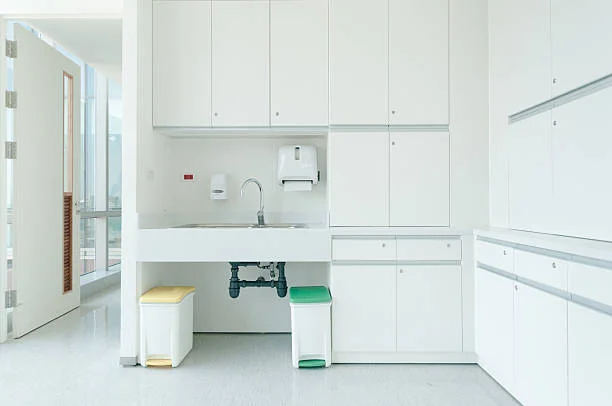
The centrifuge is balanced on a stool. The slides are in a cardboard box labeled “Maybe Fragile.” The pipettes? No one knows.
Welcome to lab chaos.
It starts innocently—a few extra supplies, a missing drawer, a rushed experiment. But before you know it, your lab is operating more like a high-stakes garage sale than a controlled scientific environment.
The fix? Not just more storage. The right kind of storage.
That’s where specialized laboratory cabinets step in, transforming your space from barely functional to confidently organized.
Let’s break down why these cabinets matter—and what to look for when it’s time to upgrade from “creative storage solutions” to actual, science-grade infrastructure.
Not All Cabinets Are Created Equal
At a glance, a cabinet is just a box with doors. But in a lab? It’s a piece of equipment.
The right laboratory cabinet protects delicate instruments, preserves sensitive materials, and ensures safety protocols are met—not just some of the time, but all of the time.
Different lab functions require different cabinet designs. Here’s how to match your cabinet to your task.
For Specimen Storage: Precision and Preservation
Biological samples, chemical specimens, histology slides—these don’t just need to be stored. They need to be protected.
Key features to look for:
- Sealed drawers or gasketed doors to block out dust and moisture
- Light-blocking designs for light-sensitive materials
- Non-reactive interiors (no wood or particle board—those off-gas and absorb moisture)
- Lockable compartments to control access and comply with regulatory guidelines
Long-term storage is about stability. A cabinet that controls exposure, minimizes contamination, and organizes with intention? That’s how you keep your specimens safe—and your data reliable.
For Equipment: Stability Meets Accessibility
Got benchtop tools? Backup devices? Sensitive electronics that shouldn’t be shoved into a drawer?
Then you need storage that holds weight and protects value. Equipment storage cabinets should:
- Support heavy-duty loads (think centrifuges, power supplies, microscopes)
- Include adjustable shelving to accommodate tools of all shapes and sizes
- Offer ventilation if housing powered equipment
- Be built from corrosion-resistant materials (because even dry labs can get messy)
Bonus points if the cabinet is mobile. Rolling cabinets let you reconfigure your lab layout without rethinking your entire workflow.
For Safety Storage: Follow the Rules—Then Exceed Them
Labs with volatile chemicals, flammable materials, or biohazardous samples must follow strict storage guidelines. This isn’t optional. It’s regulation.
Cabinets designed for safety storage often feature:
- Fire-resistant construction
- Self-closing doors
- Clearly labeled hazard compartments
- Spill-containment systems at the base
Even if your lab only handles mild reagents, setting aside clearly labeled, secure cabinets for chemical storage builds a culture of safety and clarity. And yes, it looks a lot more professional during inspections.
For Everyday Tools: Don’t Underestimate Organization
Not every cabinet has to be high-security or fire-rated. Some just need to keep pipettes, gloves, beakers, and tools in the right place.
But even basic lab storage can be smart storage:
- Drawer organizers for delicate tools
- Adjustable inserts for glassware
- Transparent panels for quick inventory
- Locking wheels for mobile workstations
The easier it is to access your supplies, the less likely you are to improvise (read: risk contamination or accidents).
Final Thought: Cabinets That Work as Hard as You Do
Your lab is a place of precision. Why should your storage be any different?
From fragile specimens to bulky equipment, laboratory cabinets do more than store stuff—they protect your work, support your workflow, and reduce the background noise that slows science down.
Whether you’re redesigning your lab layout or finally admitting that the stool isn’t a shelf, investing in the right cabinet setup isn’t just a win for organization—it’s a win for productivity.
Because science doesn’t thrive in clutter. And neither do you.