Most people overthink camping. They stress about gear lists, worry about bears, and convince themselves they need expensive equipment before they can spend a night under the stars. Here’s the truth: camping is simpler than you think Camping Trip, but it does require some practical preparation.
Whether you’re planning your first solo escape, a family weekend, or a trip with friends, the basics remain the same. You need shelter, food, water, and a plan. Getting these right means the difference between a relaxing getaway and a frustrating disaster. Let’s break down how to plan a camping trip that actually works.
Picking Where You’ll Sleep Under the Stars
Location matters more than almost anything else. Start by asking yourself what you want from this experience. Established campgrounds offer bathrooms, water spigots, and fire rings already set up. Backcountry sites give you solitude but require hauling everything in.
Distance plays a bigger role than most people realize. Weekend trips work better when you keep travel under three hours each way. Research what’s actually at your chosen spot—lakes for swimming, trails for hiking, or fishing access. Read recent reviews from other campers about mosquitoes, noise levels, or broken amenities. Book early if you’re aiming for popular spots during the summer.
Figuring Out What Type of Camping Fits Your Group
Solo camping changes everything about the experience. You move faster, make decisions instantly, and carry only what you personally need. It’s quieter and, honestly, a bit intimidating the first time. Just tell someone where you’re going and when you’ll be back.
Families need a different approach. Kids might love the idea until they’re actually cold or bored. Bring comfort items from home and extra snacks because children always eat more outdoors. Choose campgrounds with activities nearby—playgrounds, beaches, or easy trails.
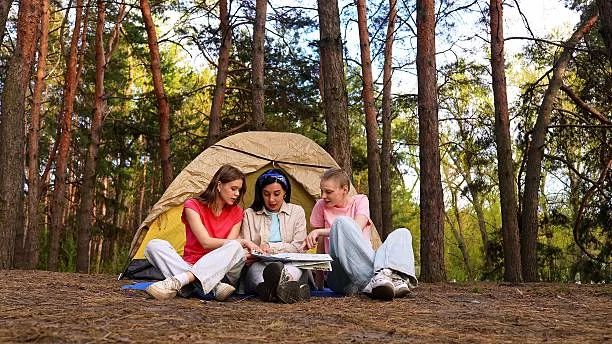
Group camping with friends splits the work but requires coordination. Who’s bringing the stove? Is someone a vegetarian? Hash out these details before you leave. Assign responsibilities so one person doesn’t end up doing everything.
Building a Checklist That Actually Works
Knowing how to plan a camping trip checklist prevents those midnight realizations that you forgot something critical. Start with the obvious: tent, sleeping bag, sleeping pad. Then think through a full day at camp.
Your gear breakdown looks like this:
- Cooking supplies: Camp stove with fuel, lighter, pots and pans, utensils, knife, cutting board, cooler with ice, aluminum foil, dish soap, garbage bags, food storage bins
- Light sources: Headlamp with fresh batteries, backup flashlight, lantern, extra batteries, glow sticks for marking tent lines
- Emergency and health: First aid kit, personal prescriptions, pain relievers, tweezers, insect spray, sunscreen, lip balm, whistle, pocket knife, waterproof matches, space blanket, duct tape
Don’t forget toilet paper, hand sanitizer, and wet wipes. A how to plan a camping trip checklist saves you from driving back to town or doing without essentials.
Sorting Out Food and Drinking Water
Meal planning separates good camping trips from hungry, disappointing ones. Skip complicated recipes. Go for one-pot meals or foil-wrapped food you can throw in the fire. Prep at home whenever possible—chop vegetables, mix spices, marinate meat, portion ingredients into labeled bags.
Map out meals before you shop. Day one: bagels for breakfast, sandwiches for lunch, hot dogs for dinner. Day two: pancakes, leftovers, then chili. Keep it straightforward.
Water is non-negotiable. Figure a gallon per person daily for drinking and cooking. Bring it from home in jugs. If camping near a stream or lake, carry a filter or purification tablets. Drink more than feels necessary—dehydration sneaks up on you.
Getting Your Clothes Right for Changing Conditions
The weather does weird things outdoors. Mornings start cold, afternoons get hot, evenings cool down fast. Layering handles all of this better than trying to predict exactly what you’ll need.
Base layers should wick moisture away from skin—skip cotton. Fleece or synthetic insulating layers trap warmth. Top everything with a rain jacket that actually keeps water out.
Pack twice as many socks as you think you’ll use. Wet socks cause blisters. Bring a warm hat even in summer. Wear boots you’ve already broken in. When you know how to plan for a camping trip with the right clothes, weather becomes less of a problem.
Getting Your Campsite Actually Set Up
Don’t just drop your gear randomly. Walk around first. Look for level ground without rocks. Avoid spots under dead tree branches. Stay away from low areas that turn into puddles when it rains. Pick a site at least 200 feet from streams—this protects water quality.
Divide your campsite into zones. Sleeping area here, cooking spot there. Keep food storage separate from where you sleep. Bears and other animals follow their noses to food. Use bear canisters in bear country or hang food bags from high tree branches.
Set up camp chairs around the fire ring. Designate one spot for sealed trash. Hang a line for drying wet clothes. An organization makes everything run smoothly.
Staying Safe Without Being Paranoid
Tell someone your plans before you leave—campground name, site number, return date. Cell service often disappears in camping areas.
Learn what animals live where you’re camping. Bears require specific food storage. Snakes hide under logs. Ticks carry diseases—check yourself each evening. Make noise when hiking so you don’t surprise wildlife.
Watch the weather closely. Get inside your vehicle during thunderstorms, not your tent. Know heat exhaustion symptoms: dizziness, nausea, heavy sweating. Know hypothermia signs: shivering, confusion, fumbling hands. Both happen faster than you’d expect.
Planning What You’ll Actually Do There
How to plan for a camping trip includes thinking about activities beyond just existing at the campsite. Hiking works if you’re near trails. Fishing requires water and a license. Simple games—cards, frisbee, a football—fill afternoon hours.
Evening activities matter once darkness falls:
- Looking at stars: Clear nights away from cities show thousands of stars, the Milky Way appears as a cloudy band, and meteor showers happen regularly
- Fire activities: Making s’mores is classic, telling stories works better without phones, teaching kids to safely tend fire gives them responsibility
- Watching nature: Early mornings are best for spotting wildlife, birds are most active at dawn and dusk, and identifying animal tracks entertains kids
Build in unstructured time. Some of the best camping moments happen when nobody’s doing anything particular.
Packing Up and Leaving It Clean
Breaking camp properly matters. Police the entire area for trash, even tiny bits. Collect every scrap you brought in. Grab other people’s garbage too if you see it.
Make sure your fire is completely dead. Pour water on it, stir the ashes, pour more water, feel with your hand to confirm nothing’s hot. Scatter the rocks from your fire ring unless they were already arranged.
Shake out your tent before packing. Check around your site one final time. Look under where your tent was. Scan the cooking area. Leave no trace isn’t just a slogan—it’s how we protect these places.
Getting Better at This Over Time
Learning how to plan a camping trip gets easier with practice. Your first trip will involve mistakes—forgotten items, poor meal choices, and terrible tent spots. That’s fine. You’ll know better next time.
Start small if you’re new. A single weekend close to home lets you test gear. You can always go bigger once you’re confident.
Each trip teaches you something. Maybe you realize you never use that fancy gadget. Maybe instant coffee tastes just as good and weighs less. You’ll develop systems that work for you.
Camping strips away the complicated stuff we think we need. Whether you’re heading out alone to think, taking your family to make memories, or meeting friends for a weekend away from normal life, camping offers something we don’t get much anymore—simplicity. Plan it right, and you’ll understand why people keep going back.
Wander deeper where curiosity gets rewarded at 2A Magazine.