Retail fit-outs used to prioritise price above everything else. That thinking is changing. Store owners and national chains alike are now paying closer attention to reliability for Australian-Made Retail Solutions, consistency, and how well shelving performs after years of daily use.
Supply interruptions, long replacement lead times, and uneven quality have pushed many retailers to reconsider where their core infrastructure comes from. Shelving is no longer treated as a disposable fixture. It is part of the store’s operational backbone. Australian-made and Australian-supplied systems are gaining traction because they reduce risk, not because they follow a trend.
Smart reads continue—explore related posts tailored to this topic.
What Modern Australian Retailers Actually Need from Shelving
Shelving decisions are now driven by practical needs rather than aesthetics alone. Retailers are asking tougher questions before committing to a system.
Common requirements include:
- Load ratings that handle dense or fast-moving stock without bowing
- Components that stay aligned after repeated restocking
- Layout flexibility for category changes and seasonal adjustments
- Consistent parts availability for repairs or extensions
- Compliance with Australian retail and safety standards
Many stores operate on tight margins. Downtime caused by failed shelving, missing parts, or incompatible add-ons costs more than the initial savings of a cheaper system.
Why Australian-Made Shelving Is Gaining Preference
Local supply brings advantages of Australian-Made Retail Solutions that go beyond manufacturing origin. Australian-sourced shelving systems are easier to support over the long term, particularly for growing retailers.
A comparison retailers often make:
| Imported Systems | Australian-Supplied Systems |
| Longer lead times for replacements | Faster access to stock and components |
| Inconsistent batch quality | Stable manufacturing standards |
| Limited after-sales support | Ongoing local support |
| Design mismatch with local stores | Built around Australian retail layouts |
The shift is less about nationalism and more about control. Retailers want fewer variables once a store is live.
Mills Shelving and the Move Towards Reliable Australian Retail Systems
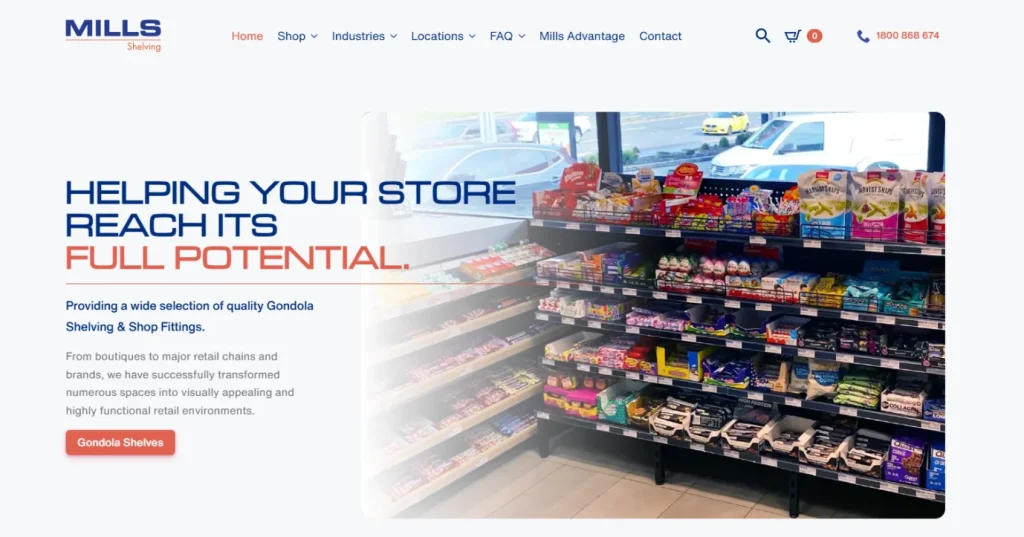
As more retailers reassess their shelving choices or Australian-Made Retail Solutions, suppliers with a strong understanding of real store conditions stand out. Mills Shelving has become a preferred option for businesses looking for commercial-grade retail systems that prioritise strength, longevity, and consistency.
Rather than offering decorative fixtures, the focus is on shelving designed for supermarkets, liquor stores, pharmacies, convenience stores, and high-traffic retail environments. The systems are built to support heavy stock loads, frequent planogram changes, and long operating hours without compromising stability.
Retailers also value the practical support behind the product. Layout guidance, system matching, and the ability to scale or reconfigure without replacing entire bays play a major role in long-term fit-out decisions.
The result is shelving that works quietly in the background. No sagging. No mismatched components. No surprises during expansion or refits.
Built for Real Retail Conditions, Not Showrooms

Shelving often looks impressive on day one. The real test begins months later when stock is moved constantly and staff rely on the system to hold weight without shifting.
In working retail environments, shelving must handle:
- Repeated loading and unloading without loosening
- Uneven weight distribution across shelves
- Cleaning routines that involve movement and impact
- Minor knocks from trolleys, pallets, and cages
Well-engineered systems are designed around these realities. Strong uprights, reliable bracing, and properly rated shelves prevent gradual misalignment. Over time, that stability protects both merchandise and staff.
Consistency Across Single Stores and National Rollouts
Retailers with more than one location face a different challenge. Visual and structural consistency matters just as much as strength.
Using the same shelving system across multiple stores allows:
- Faster store openings due to familiar layouts
- Easier staff training and merchandising
- Simplified maintenance and spare parts management
- A consistent brand presentation across locations
For growing retailers, consistency reduces friction. New stores do not require new systems, only a repeatable configuration that works from the first site onward.
Long-Term Value Over Short-Term Savings
Upfront pricing often dominates shelving decisions, yet lifespan tells a different story. Cheaper systems may appear cost-effective initially, but frequent repairs and early replacements quickly add up.
Retailers who prioritise long-term value usually consider:
- Expected service life under daily use
- Ongoing maintenance costs
- Compatibility with future store changes
- Availability of matching components years later
A shelving system that lasts ten years without structural issues often costs less overall than one replaced every three or four years.
Designed to Adapt as Stores Change
Retail does not stand still. Product ranges shift, store layouts evolve, and floor space is reallocated to suit demand.
Adaptable shelving allows retailers to:
- Add or remove bays without disrupting the full layout
- Adjust shelf heights as product categories change
- Integrate accessories such as end caps or signage
- Reconfigure sections during refurbishments rather than starting again
Flexibility protects earlier investment. Instead of replacing shelving, retailers reshape it.
Why the Trend Towards Australian-Made Retail Solutions Is Likely to Continue
Retailers are becoming more selective about infrastructure partners. Shelving is no longer treated as a background expense but as a long-term operational asset.
Australian-supplied systems continue to gain momentum because they align with practical retail priorities. Reliable stock access. Predictable quality. Support that extends beyond the initial sale.
As stores place greater value on durability, consistency, and adaptability, the preference for well-built local solutions is expected to remain strong. For many retailers, the choice is no longer about chasing the lowest price. It is about selecting shelving that supports the business for years, not seasons.
Expand your view—explore more content worth your attention at 2A Magazine.