
Search visibility in 2025 has little to do with chasing individual keywords. Businesses that still treat SEO as a ranking exercise often see traffic arrive without enquiries Successful SEO Campaign. The gap between being visible and being profitable has widened.
Modern campaigns focus on how search supports real buying decisions. Pages are judged on usefulness, clarity, and intent alignment, not volume alone. Search engines have matured, and so has user behaviour.
The result is simple. SEO that does not connect directly to business outcomes struggles to justify its value.
See what connects next—related posts that expand this topic beautifully.
Real Success Starts With Clear Commercial Intent
Successful campaigns begin with a clear answer to one question. What action should the visitor take after landing on the page?
High-performing SEO strategies in 2025 usually share the same traits:
- Each page targets a specific stage of the buying process
- Informational content supports commercial pages rather than competing with them
- Calls to action feel natural, not forced
- Page structure mirrors how people actually search and decide
Many businesses attract traffic that never converts because intent is misread. Ranking for the wrong query can look impressive on paper while delivering little commercial impact.
Technical Foundations Still Decide Winners and Losers
Technical SEO rarely feels exciting, yet it remains a major separator between growth and stagnation.
Common issues seen across underperforming sites include bloated URLs, poor crawl paths, duplicate content, and weak internal page relationships. Even strong content struggles when search engines cannot efficiently access or interpret it.
A well structured site allows search engines to prioritise the right pages. It also ensures authority flows to commercial URLs rather than leaking across low value pages.
Fixing these foundations often delivers results before any new content is published.
Internal Linking and Equity Flow Are Often the Hidden Advantage
Internal links control how authority moves through a website. When used correctly, they accelerate rankings without adding risk.
Well planned internal linking achieves several outcomes at once:
- Signals which pages matter most
- Strengthens commercial URLs using existing authority
- Reduces equity dilution across low intent pages
- Improves crawl efficiency for large or complex sites
Many real world improvements happen after internal link restructuring alone. Pages that struggled for months often move quickly once equity flows correctly. Despite this, internal linking remains one of the most overlooked optimisation levers in SEO.
Case Insight: How Marketix Digital Structures SEO Campaigns for Growth
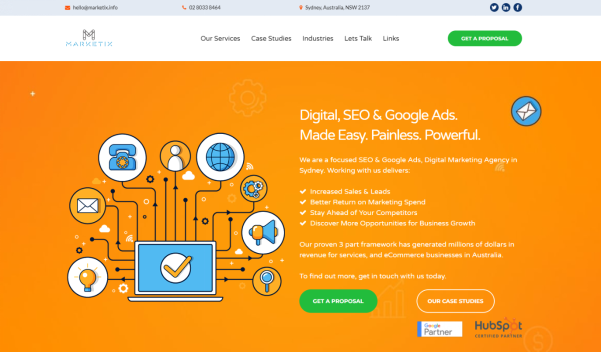
One agency that places heavy emphasis on intent, structure, and equity flow is Marketix Digital.
Their campaigns typically start with fixing technical barriers and reworking internal link architecture before scaling content or backlinks. Commercial pages are prioritised early, supported by tightly aligned informational content rather than competing articles.
Marketix Digital applies this approach across highly competitive Australian markets, where ranking improvements must translate into measurable leads and revenue. The focus stays on building sustainable growth, not short term ranking spikes, which reflects how successful SEO campaign operate in 2025.
Content That Reflects Real Buyer Behaviour
Content that performs well in 2025 reads like it was written after listening to customers, not keyword tools alone.
Successful businesses shape pages around how people ask questions, compare options, and assess risk before committing. Language taken from sales calls, enquiries, forums, and reviews often performs better than polished marketing copy.
Strong content usually follows a clear pattern. It answers the obvious question quickly, removes uncertainty, and provides proof before asking for action. Pages that do this consistently earn trust long before a form is submitted.
Authority Building Without Risky Shortcuts
Backlinks still matter, but the way they are built has changed.
Search engines have become far better at identifying artificial patterns. Campaigns that rely on volume or speed often see temporary lifts followed by decline.
More sustainable authority building focuses on:
- Relevance to the industry and audience
- Natural placement within real content
- Gradual growth that mirrors genuine brand visibility
- Strong internal support so external links reinforce key pages
Businesses that recovered from past SEO damage often share one lesson. Cleaning up poor link practices and rebuilding slowly outperforms chasing fast wins.
Measurement That Ties SEO to Revenue
Ranking reports alone no longer tell the full story. Businesses that succeed with SEO track outcomes that mirror real performance.
Effective measurement often includes:
- Lead quality by page type
- Conversion paths influenced by organic traffic
- Performance of commercial pages over time
- Assisted conversions rather than last click wins
When reporting focuses on revenue impact instead of keyword movement, SEO becomes easier to justify and easier to improve.
Final Takeaway: SEO Success Is Built, Not Chased
The most successful SEO campaign in 2025 share a consistent foundation. Clear intent, strong technical structure, disciplined internal linking, and content shaped around real behaviour.
Tricks fade quickly. Structure compounds.
Businesses that treat SEO as a long term growth system, rather than a checklist of tactics, are the ones that continue to see results long after algorithms shift.
Curiosity unlocked—explore more content designed to keep you engaged.