What Makes Bouclé a Standout Fabric Today
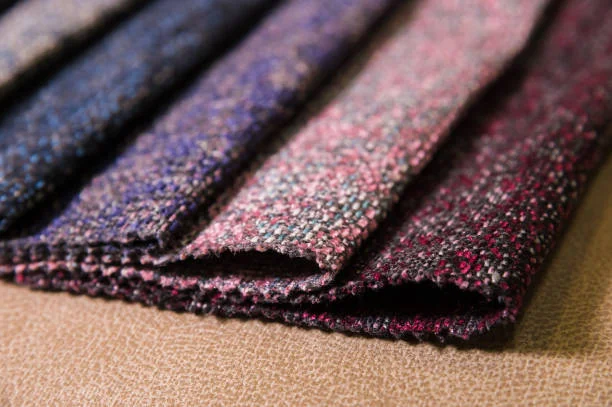
It’s funny how Bouclé fabric works on people. You touch it once and your fingers pause for a second, like they’re trying to understand what they’re feeling. There’s warmth in it, a little playfulness, and a sort of “lived-in elegance” that smoother fabrics never manage to pull off. Those tiny loops and curls aren’t just texture – they’re personality. Even a basic jacket pattern suddenly looks thoughtful, almost architectural, as if the fabric itself decided to participate in the design.
Bouclé also fits surprisingly well into the way people think about clothes today. Everyone is tired of fast-fashion pieces that lose their shape in a month. Bouclé refuses to behave like that. It’s usually woven in smaller batches, often intended for specific collections, so it already carries that quiet sense of rarity. And it holds its shape beautifully. A bouclé coat made today might still look good in ten winters – it’s that kind of fabric.
When it comes to buying bouclé, the landscape is more diverse than people expect. For deadstock materials – small quantities with designer origins – Beglarian Fabrics (beglarianfabrics.com) is one example of a boutique seller offering bouclé that once had a different destiny in high-end collections. If you prefer bigger selections, American retailers like Yardblox, Naturalclothing, Mood Fabrics, and Britex offer blends ranging from soft and cozy to crisp and structured. High-end? Budget-friendly? Eco-oriented? All versions exist.
Put together, these sources explain why bouclé remains a standout material today. It has texture, longevity, individuality – qualities that feel increasingly rare. In a world that tries to make everything uniform, bouclé gives you something with soul.
The Unique Texture That Sets Bouclé Apart
Bouclé’s texture is its signature – not just visually, but emotionally. It has that playful mix of loops, small bumps, and tiny imperfections that somehow make the fabric feel alive. Where smooth weaves disappear, bouclé steps forward. It asks to be touched, turned in the light, appreciated up close.
If you’ve ever held a classic bouclé jacket inspired by the old Parisian ateliers, you know the sensation. Soft, but not in a lazy way. Textured, but not scratchy. It gently resists your hand when you press it, almost like it’s reminding you that someone engineered every loop with a purpose. And because bouclé varies so much from mill to mill, each version has its own personality. Some weaves are dense and structured, perfect for tailored silhouettes. Others are loose and airy, ideal for oversized coats or cardigans that feel like a warm hug.
Designers love bouclé because it elevates simple designs without any extra effort. A basic shift dress suddenly looks deliberate. A minimalist coat becomes dimensional. Even a small accessory – a bag, a belt, a hat – can turn into something that feels handcrafted. And when the bouclé comes from deadstock sources like Beglarian Fabrics or from small Italian mills in Prato, it adds a layer of meaning: you’re not just choosing a fabric, you’re choosing a fragment of someone else’s unused creativity.
Don’t miss this related story—perfectly aligned with what you just explored.
How Designers Use Bouclé for Modern and Classic Looks
Designers reach for bouclé when they want to make a point quietly. It’s a fabric that can whisper and still be noticed. That’s why you see it in both vintage-inspired runway pieces and clean, modern silhouettes. Think of the iconic structured jackets with sharp tailoring – bouclé gives them their depth, their attitude.
But its versatility is what keeps it relevant today. Modern designers bend bouclé in ways traditional ateliers never imagined. Oversized coats with dropped shoulders gain warmth and softness without losing structure. Textured skirts and cropped tops play with light and volume. Sculptural dresses look more dramatic because bouclé naturally creates shadow and dimension.
Independent makers experiment even further. They use bouclé for handbags, laptop sleeves, belts – places where you don’t expect a fabric with this much presence. And because deadstock bouclé comes in limited yardage, every piece automatically becomes more personal. A jacket becomes one-of-a-kind. A skirt can’t be mass-replicated. A bag feels like a small collectible crafted with intention.
What ties it all together is that bouclé adapts. It can be elegant or casual, minimalist or ornate, classic or experimental. It bends to the designer’s vision instead of dictating it – and that creative freedom is exactly what keeps inspiring new generations of designers.
Why Beglarian’s Bouclé Collection Feels Truly Special
What makes the bouclé collection at a boutique deadstock supplier special isn’t just the fabric, but the quiet story behind each roll. Their team focuses on rescuing unused premium textiles from European mills – pieces originally woven for capsule lines, designer houses, or seasonal sample sets. These fabrics were never designed for mass production. They were made with intention, then paused in time.
Bouclé, with its long history in heritage fashion, carries emotional weight when sourced this way. You get the sense that the fabric once had a plan – a runway look, a winter collection, a tailored blazer – but it never reached that stage. Working with deadstock bouclé feels a bit like completing an unfinished sentence.
Limited Deadstock Pieces That Make Every Project Unique
Deadstock bouclé is never produced in huge quantities. And that scarcity is a creative blessing. Designers who want unique materials often look to American stores like Mood Fabrics or Britex, or to European makers like Manteco and small mills in Prato, where bouclé appears in short, exclusive runs.
Different suppliers focus on different strengths: some specialize in recycled fibers, others in wool-rich weaves with deep structure. But all share one reality – limited volume. That’s what makes working with bouclé feel personal. You’re not creating something that will appear in a thousand closets. You’re making something singular.
A coat becomes a signature piece. A skirt becomes a one-off experiment. A handbag turns into a tiny artifact of your own style. Small ateliers appreciate this individuality because it lets them compete with intention, not scale.
A Sustainable Choice That Supports Conscious Fashion
Deadstock bouclé also solves an ecological problem. No new energy is spent weaving it. No dyes, no chemicals, no industrial cycles. The fabric already exists, and choosing it simply prevents it from ending up as waste. Sustainable-oriented shops like The Fabric Store (NZ/US) or Swiss mills connected with Akris add to this movement, showing that responsible sourcing doesn’t have to compromise quality.
Bouclé stands apart here too. Even when sourced responsibly, it keeps its richness – the softness, the volume, the sculptural character. It proves that eco-friendly fashion doesn’t have to be plain or minimal. It can be textured, expressive, even dramatic.
By choosing bouclé from responsible suppliers – whether Mood, Prato mills, or a boutique deadstock seller – designers get both luxury and conscience in the same material.
Ready for more? Explore additional stories that fuel your curiosity at 2A Magazine.