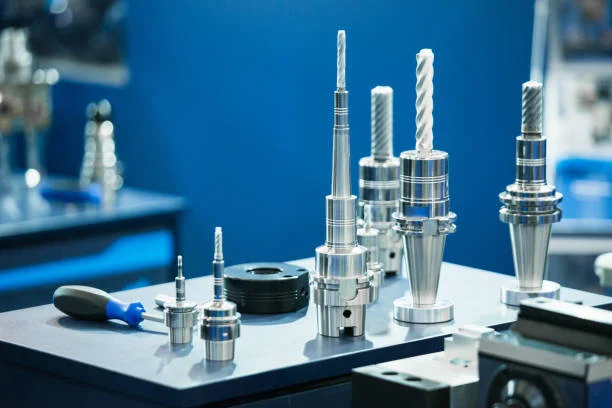
Precision machining depends on more than just advanced machines and well-written programs. At the core of every accurate cut, tight tolerance, and repeatable result are the tools doing the actual work. CNC tools directly influence how material is removed, how surfaces are finished, and how reliably parts meet specifications. Without the right tooling, even the best CNC machine will struggle to deliver consistent results. Understanding the role of end milling and other essential CNC tools helps explain why tooling is foundational to precision machining.
In modern manufacturing environments, expectations for accuracy continue to rise. Tighter tolerances, faster cycle times, and higher production volumes leave little room for inconsistency. CNC tools provide the control and predictability needed to meet these demands without excessive trial and error.
How CNC Tools Improve Accuracy and Repeatability
One of the primary reasons CNC tools are essential is their ability to deliver consistent cutting performance. Precision-ground cutting edges, controlled geometry, and advanced coatings allow tools to remove material evenly and predictably. This consistency directly translates to accurate part dimensions across repeated cycles.
Repeatability is especially important in CNC machining. When a tool performs the same way every time it engages material, machinists can trust their offsets and programs. This reduces the need for constant adjustments and minimizes variation between parts.
Tool geometry plays a major role in accuracy. Proper flute design, cutting edge sharpness, and helix angles help control cutting forces and chip evacuation. Balanced cutting action reduces deflection, allowing tools to maintain intended toolpaths even in demanding materials.
Tool holding also affects precision. Secure, concentric holding ensures that tools run true without wobble or vibration. Systems like 5c collets provide reliable grip and alignment, helping maintain tight tolerances and smooth finishes.
CNC tools also help manage heat during cutting. Excess heat causes tool expansion and material distortion, both of which affect accuracy. High-quality tools with proper coatings reduce friction and heat buildup, allowing for more stable machining conditions.
Another benefit is predictable wear. Quality CNC tools wear gradually and consistently, making it easier to anticipate replacement intervals. This predictability helps maintain accuracy throughout the tool’s usable life rather than experiencing sudden drops in performance.
Finally, CNC tools enable more precise control over surface finish. Smooth, controlled cutting action reduces chatter and tearing, producing parts that meet both dimensional and aesthetic requirements.
Why Consistent Tool Performance Matters in Production
In production environments, consistency is just as important as accuracy. CNC tools that perform reliably reduce downtime, scrap, and variability between parts. This consistency keeps production schedules on track and costs under control.
Consistent tooling performance simplifies process planning. When tools behave predictably, machinists can standardize feeds, speeds, and toolpaths across multiple jobs. This reduces setup time and minimizes the risk of errors during changeovers.
Tool consistency also protects machines. Tools that cut smoothly place less stress on spindles, bearings, and guideways. Over time, this reduces maintenance requirements and extends machine life—an important factor in high-volume operations.
Quality control benefits as well. When tools produce consistent results, inspection becomes more straightforward. Measurements are more stable, and deviations are easier to identify. Reliable inspection tools like a digital caliper help verify dimensions quickly and accurately, reinforcing confidence in the machining process.
Scrap reduction is another key advantage. Inconsistent tools often produce parts that drift out of tolerance before the issue is noticed. Reliable CNC tools maintain performance longer, reducing waste and rework.
Consistent tool performance also supports automation. Lights-out machining, unattended runs, and automated tool changes all depend on tools that behave predictably. Without reliable tooling, automation becomes risky and inefficient.
Ultimately, consistency improves profitability. Fewer tool-related interruptions mean more productive machine time, better throughput, and lower cost per part. This efficiency becomes a competitive advantage in demanding manufacturing markets.
Conclusion
CNC tools are essential for precision machining because they provide the accuracy, repeatability, and consistency modern production demands. From controlled cutting geometry to reliable tool holding and predictable wear, quality tooling supports every aspect of the machining process. Consistent tool performance reduces errors, protects equipment, and ensures parts meet specifications run after run. In precision machining, CNC tools aren’t just accessories—they’re the foundation of reliable, high-quality production.
Beyond this page lies a trail of ideas built to stretch your thinking at 2A Magazine.