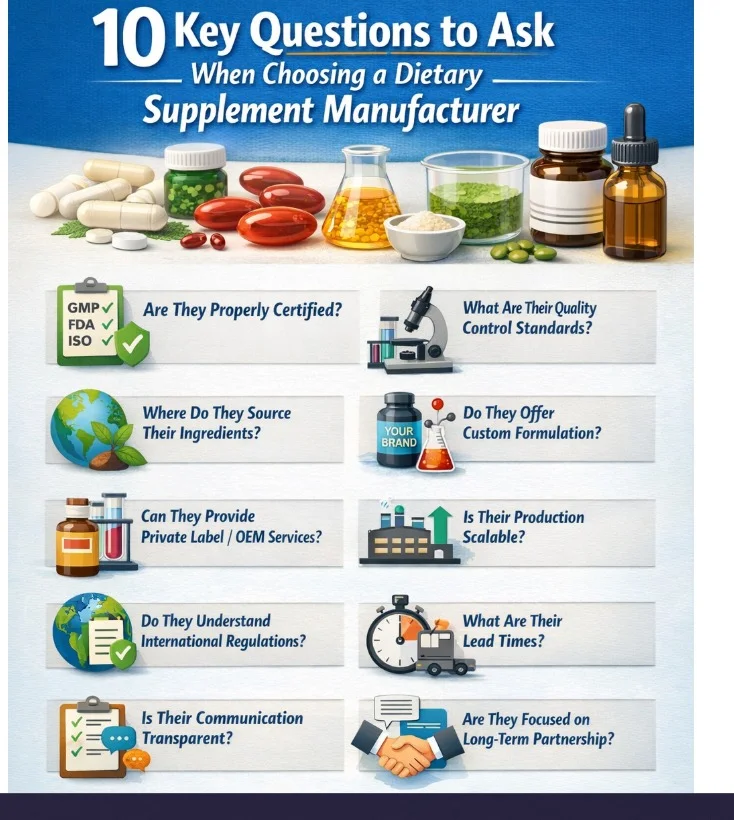
When building or scaling a supplement brand, selecting the right dietary supplement manufacturer is one of the most critical choices you’ll make Dietary Supplement Manufacturer. This decision will have an impact not just on how your product is manufactured, but also on the way in which customers view your brand, how safe your products are and how efficiently your business can scale over time.
Many brands err in selecting a dietary supplement manufacturer on price alone, or the quickest timeline. At first, it all seems good. But frequently, things go wrong down the line — quality complaints, late shipments, compliance violations or even squandered brand equity. That’s why wise brands slow down and ask the right questions before jumping in.
This guide walks you through ten essential questions that help you evaluate any health supplement supplier properly, so you can choose a partner that supports your long-term success instead of creating future problems.
Why These Questions Matter More Than Ever
The supplement market is already crowded, and consumers are more educated than they have been in the past. They’re now reading labels, looking up ingredients, and expecting transparency. If your manufacturing partner shortchanges, your brand is left footing the bill—no matter if you were aware of it or not.
Asking the right questions can also give you a peek at how a manufacturer works behind the curtain. It also enables you to evaluate fair comparisons between suppliers and to select one that aligns with your quality requirements, growth plans, and brand values.
Keep the insights coming—explore related posts that enhance your understanding.
Does the Manufacturer Follow GMP and Regulatory Standards?
That should always be your first question. GMP, or Good Manufacturing Practice, is a prerequisite to safe and reliable supplement manufacturing. It dictates how ingredients are treated, facilities cleaned, and equipment maintained, as well as how each step of a process is documented.
A GMP-compliant manufacturer operates in a moderated environment, where risks are lowered and errors are caught early. You would also inquire about FDA registration and other programs, such as ISO or HACCP. These signals that the facility is inspected, monitore,d and held to transparent standards.
If a manufacturer has to work too hard to explain how they’re complying, that’s not a good sign.
What Types of Supplements Can the Manufacturer Produce?
You want a manufacturer that will be behind your brand today and as it grows. Even if you have just one initial product on the launch pad, someday users may want you to offer more.
Inquire about the dosage forms they provide. Capsules, tablets, gummies, softgels, powders, and liquid drops — all can be made by a number of trusted manufacturers. Keeping all of these outlets under one roof helps maintain quality and makes for easier future growth.
The very fact that you have limited manufacturers means they can later force you to do business with multiple suppliers, adding cost and error.
Do They Offer OEM and Private Label Services?
This is especially important for new or growing brands. An experienced oem manufacturer allows you to choose between custom formulations and ready-made private label products.
OEM services are perfect for when you want to take full control of your formula. If you need to get to market faster with less risk, private label services are a great option. A good manufacturer would communicate these, the points on what is better for you and not just blindly push one possibility.
How Strong Is Their Research and Development Team?
R&D contributes to how well your supplement works. A strong R&D team can also assist with ingredient selection, dosage accuracy, and happy formula cross-referencing — such as taste or texture for gummies and powders.
Inquire as to whether the company’s R&D team is located in the plant and how accessible they are during product development. Manufacturers who don’t invest heavily in R&D typically only have access to basic formulas and not much flexibility, which can stifle your brand’s growth and creativity.
What Does Their Quality Control Process Look Like?
QC should occur as part of the production process, not just at the end. A reputable manufacturer will inspect the raw materials prior to use, follow the process during production, and test the finished product before shipment.
You should be able to feel confident that the following, at a minimum, can be explained by the manufacturer:
- How ingredients are tested before production
- What checks happen during manufacturing
- How final products are verified for safety and strength
Strong quality control protects your customers and reduces the risk of recalls or negative reviews.
Can They Handle Small Orders and Scale Up Later?
Not all brands are doing large volumes to begin with. Minimum order quantities that can be negotiated are vital, particularly when you are testing the market. At the same time, you need to ensure the manufacturer can go up-market as you do.
Inquire as to whether they have the ability to process a small trial order and larger runs without quality loss or time delays. Manufacturers that have sophisticated machines and good systems in place are typically far better equipped to scale.
How Transparent Is the Manufacturer?
Openness is a clear mark of the professional. A reliable manufacturer will be transparent on their methods, timelines, qualifications, and capabilities. They should be open to disclosing test reports, certifications, and production information required according to the order.
If the message feels murky or sluggish in the early going it nearly always rides out production worse than it arrived on-site. Transparency fosters trust and avoids misinterpretations in the future.
Do They Support Packaging, Labeling, and Design?
Manufacturing doesn’t end when the supplement is made. Packaging and labeling affect product safety, shelf life, and legal compliance.
A one-stop manufacturer may help with:
- Choosing suitable packaging for different supplement types
- Filling and sealing products accurately
- Making sure labels meet regulatory requirements
This support reduces mistakes and speeds up the launch process, especially for new brands.
What Are Their Production Timelines and Delivery Capabilities?
Those are stakes that can sometimes make such reliable alarms matter more than many people ever realize. Delays can mean everything for sales, marketing initiatives and customer trust.
Inquire about typical production times and how delays are managed and inquire about shipping options. A professional manufacturer schedules carefully and communicates ahead of time if those timelines change, rather than making promises they can’t keep.
How Much Experience Do They Have in the Supplement Industry?
Experience brings stability. Established players in the industry have already grappled with shortages of ingredients, changes in regulations and production snags. They know how to work out problems before they become serious.
Ask them how long they have been around, and what kinds of brands they deal with. Sound experience can also lead to fewer surprises as well as smoother cooperation.
How These Questions Help You Choose Wisely
These are the sorts of questions that help you look past mere surface claims. They provide a sense of how a manufacturer actually operates on the day to day. Most importantly, the right pre-workouts help you select a partner that values quality, transparency, and relationships.
Here’s what asking these questions helps you avoid:
- Poor-quality products
- Compliance problems
- Missed deadlines
- Damaged brand reputation
Why Jiabeikang Matches What Serious Brands Look For
Jiabeikang is a manufacturer that’s broadly in line with these requirements. They are here for all your dose forms, have strong certifications, and provide full OEM/PL and have been around for 20 years. Just to give you confidence when launching or growing a brand.
Final Thoughts
Selecting the right dietary supplement manufacturer is not just a production decision; it’s also a branding decision. The correct partner gives you the ability to protect your customers, develop trust, and grow moderately. By using these ten questions, you arm yourself with a concise guide to challenging manufacturers effectively and preventing costly errors.
Be patient, ask the tough questions, and find a partner who takes quality as seriously as you do.
There’s more to uncover—explore additional content curated for curious minds.