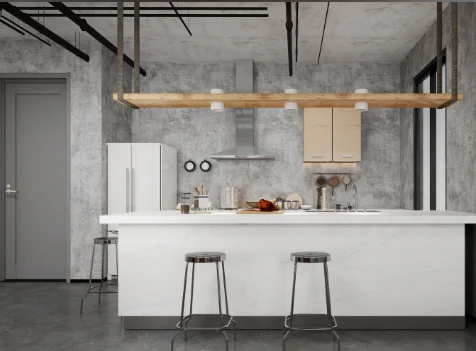
Industrial style kitchens are centered around “exposed authenticity and rugged vintage charm,” discarding superfluous decorations and perfectly integrating the original architectural structure with practical functionality. They possess a unique, robust texture and individual charm. A kitchen is not only a functional space that meets daily cooking needs kitchen design ideas, but also an important vehicle for showcasing the owner’s unique sense of style and elegant taste. The following 10 industrial style kitchen design ideas comprehensively break down everything from kitchen layout and appliance configuration to core elements and detailed pairings, helping you create an industrial style kitchen that is both practical and stylish.
1. Exposed Pipes
Breaking away from the “hidden renovation” mindset, the original architectural structure is exposed, using the raw textures of concrete, red brick, and metal to establish the rugged tone of the industrial style. Exposed beams and pipes on the ceiling kitchen design ideas, with electrical and plumbing lines and ventilation ducts painted in a uniform matte black, prevent clutter and become visual elements of the space.
2. Metal Elements
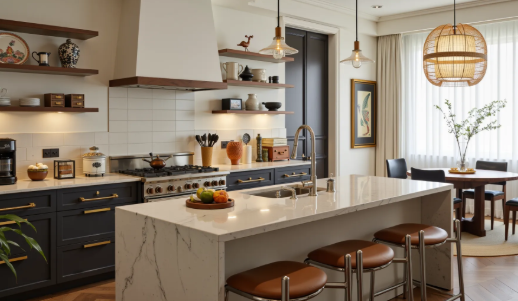
Metal is a signature element of the industrial style, primarily using materials such as black wrought iron, stainless steel, and brass. Through the combination of furniture and hardware, the robust and vintage feel of the space is enhanced. Cabinets use black wrought iron frames, paired with solid wood or concrete countertops. Stainless steel is the preferred material for countertops due to its high temperature resistance and ease of cleaning, fitting the practical attributes of the industrial style; hardware such as faucets, drawer pulls, and hanging rods use black wrought iron or brass, highlighting the industrial style in the details; metal storage racks and wrought iron baskets are added for storing cookware and tableware, combining practicality and decoration.
3. Black, White, and Gray Color Scheme
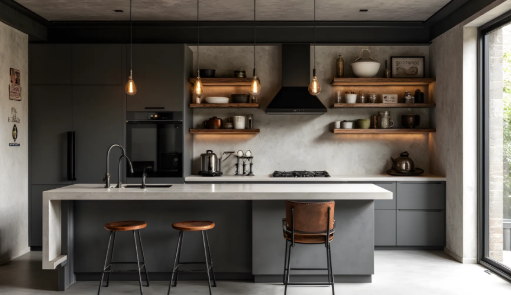
Using black, white, and gray as the basic color scheme, complex colors are avoided, and a simple, calm, and sophisticated industrial atmosphere is created through the contrast of light and dark colors. The main colors are dark gray, charcoal black, and pure white. Cabinets can be black or white, creating a strong color contrast; avoid using large areas kitchen design ideas of highly saturated colors, but a small amount of bright colors can be used as accents, such as red vintage appliances or green plants, to break the monotony of black, white, and gray; for smaller kitchens, using light gray as the main color can prevent the space from feeling cramped.
4. Open Layout
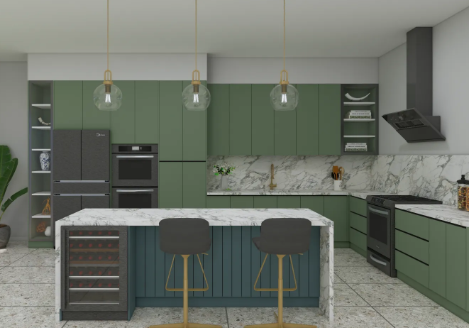
An open layout breaks down the barriers between the kitchen, dining room, and living room, using an island or bar counter as a space divider. The island features a metal frame and concrete countertop, serving as a preparation, dining, and decorative element. If concerns about smoke diffusion exist, a high-powered range hood can be installed, or a semi-open design can be adopted, using glass sliding doors or metal grilles as partitions to divide the space without blocking light. The style of the kitchen work area should be consistent with the dining and living areas or kitchen design ideas, using matching materials such as metal and concrete to create a more harmonious overall space.
5. Vintage Appliances
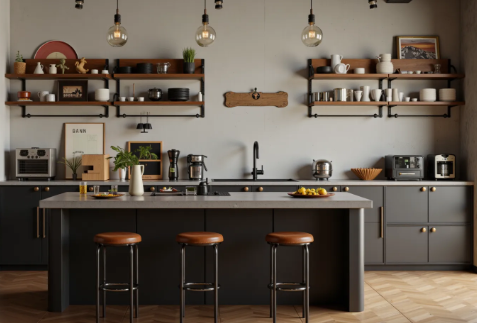
Incorporating vintage-style appliances adds both practical functionality and visual interest, infusing the industrial-style kitchen with a sense of nostalgic charm. Choose vintage-style refrigerators, ovens, and coffee makers in red, black, or stainless steel, with simple and robust designs that complement the industrial aesthetic. Hang vintage cooking posters, old recipes, or display a vintage clock on the wall to reinforce the nostalgic feel.
6. Open Storage
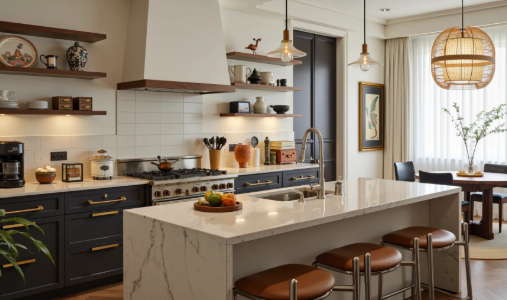
Open storage design displays cookware, tableware, and ingredients directly, eliminating the dullness of closed cabinets and giving the space a more lived-in and industrial feel. Install metal hanging rods and shelves on the walls to hang knives, spatulas, spoons, and other kitchen utensils, making them easily accessible and serving as decorative elements for kitchen design ideas. Use open metal shelving to display tableware, spice jars, and ingredients, and use storage baskets to organize miscellaneous items and prevent clutter.
7. Industrial-Style Lighting
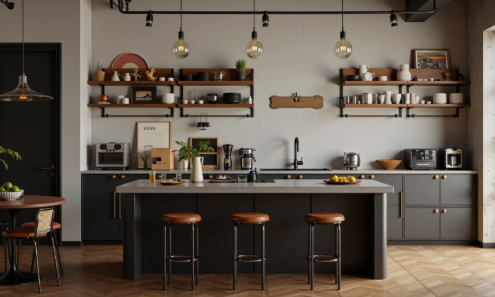
Lighting is a key element of an industrial-style kitchen. Choose vintage and robust light fixtures that meet lighting needs while reinforcing the industrial atmosphere. For the main lighting, choose vintage wrought iron pendant lights, Edison bulb pendant lights, or metal grille ceiling lights to create a warm and retro ambiance. Install metal wall sconces for auxiliary lighting. Avoid using ornate crystal or fabric lamps, maintaining the simplicity and robustness of the lighting fixtures.
8. Raw Concrete Materials
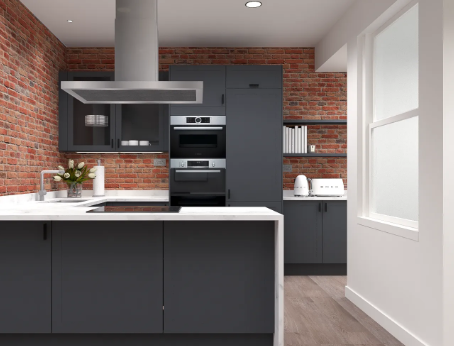
Using raw concrete and red brick materials establishes the rugged foundation of the industrial style. The walls are left largely unadorned, retaining the original concrete surface, or partially covered with red bricks. The bricks can be the original red color or a distressed gray, with clearly visible grout lines to highlight the industrial aesthetic. The floor is laid with vintage cement tiles, retaining subtle imperfections and textures to recreate the raw feel of an industrial space.
9. Wooden Elements
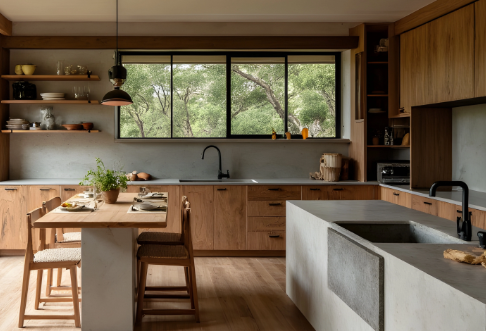
The metal and concrete materials of industrial style can be overly harsh; adding wooden elements can soften this coldness and make the space more warm and comfortable. Use solid wood for countertops, or incorporate solid wood cabinet doors into metal-framed cabinets, preserving the natural wood grain; or place wooden cutting boards and placemats on the worktop or island; pair with wooden dining chairs and bar stools to contrast with the metal elements and soften the space; hang wooden decorative paintings and shelves on the walls, or place wooden storage boxes, adding warmth in the details.
10. Personalized Decorative Touches
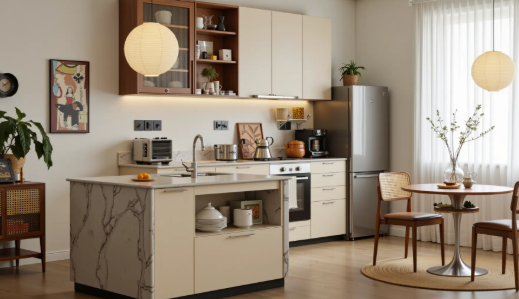
Through personalized decorative items, an industrial-style kitchen can become more unique and tell a story, showcasing the owner’s distinctive taste. Hang industrial-style decorative paintings, street art posters on the walls, or frame old newspapers and photographs in metal frames; display industrial-style ornaments such as metal gears, vintage compasses, and old cameras; add greenery such as cacti, monstera, and pothos, planted in metal or concrete pots, injecting natural vitality into the cold space; complement with personalized placemats and table runners, such as camouflage or striped patterns, to add vibrancy to the space.
Conclusion
The core of industrial-style kitchen design is “respecting the original, balancing practicality, and showcasing personality.” It doesn’t require elaborate decoration, but rather uses exposed structures, robust materials, and simple colors to reveal the authentic charm of the space. The above 10 design concepts cover everything from core elements to detailed pairings. You can flexibly combine and adjust them according to your home’s layout, lifestyle, and personal preferences to create an industrial-style kitchen that meets your daily cooking needs and reflects your trendy attitude, perfectly blending practicality and design.
Keep exploring—there’s more valuable knowledge waiting for you at 2A Magazine.